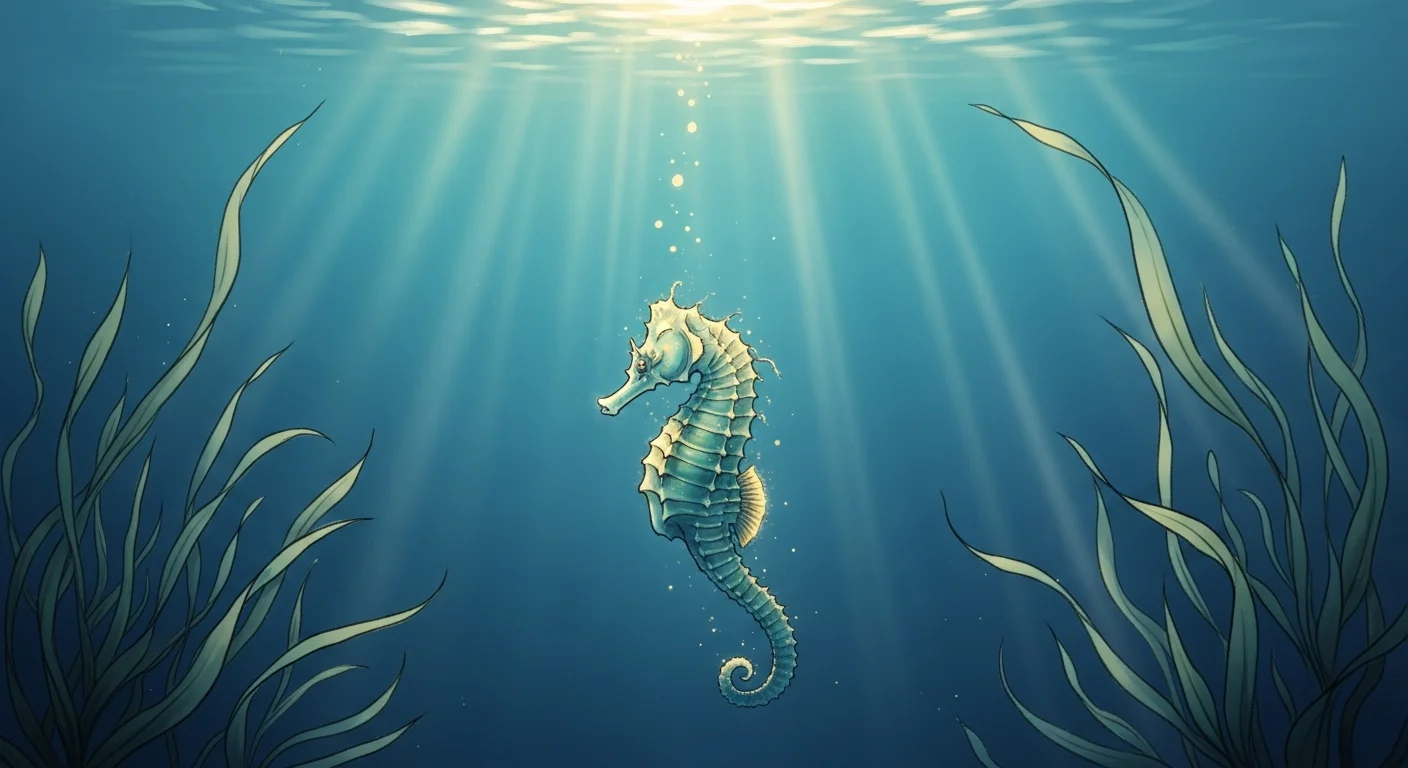
Seahorse Dream Meaning — Symbol of Safe Birth, Protection, and New Beginnings
A seahorse appearing in your dream is no ordinary nocturnal visitor. In Korean traditional medicine, the seahorse was enshrined in the Donguibogam — Joseon Korea's foundational medical encyclopedia — as a sacred charm guaranteeing safe and easy childbirth. As the only creature on earth where the male carries and gives birth to young, the seahorse stands as a living symbol of devoted parental love, patient perseverance, and the miracle of new life. Whether you dreamed of a golden seahorse, a pair swimming together, or one struggling in difficult waters, this guide will decode exactly what your dream is telling you.
Auspicious — Patient Perseverance and Smooth Achievement

A dream of a seahorse swimming gracefully is a classic auspicious omen representing patient perseverance overcoming current difficulties and steady progress toward one's goals. The Donguibogam (東醫寶鑑), the foundational Korean medical text of the Joseon era, records the seahorse as a medicinal charm for easy childbirth — a tradition that lends the seahorse dream associations of smooth, successful outcomes. Positive results in career or academic pursuits can be expected. Like the seahorse moving slowly but purposefully through the water, the message is clear: consistent effort, not rushing, is the key to lasting achievement.
Auspicious — Birth Omen and Family Protection
The seahorse dream is considered especially auspicious for pregnant women. Korean folk tradition holds that holding a dried male-female pair of seahorses during labor ensures easy delivery. Dreaming of a seahorse can therefore be interpreted as a propitious birth omen (태몽) predicting a safe delivery and a healthy child, suggesting the child will grow to have a patient, devoted, and protective character. Beyond pregnancy, the male seahorse's unique role as the one who carries and births young makes this dream a symbol of devoted family protection — foretelling family harmony and the safe growth of those you love.
Inauspicious — Warning and Caution
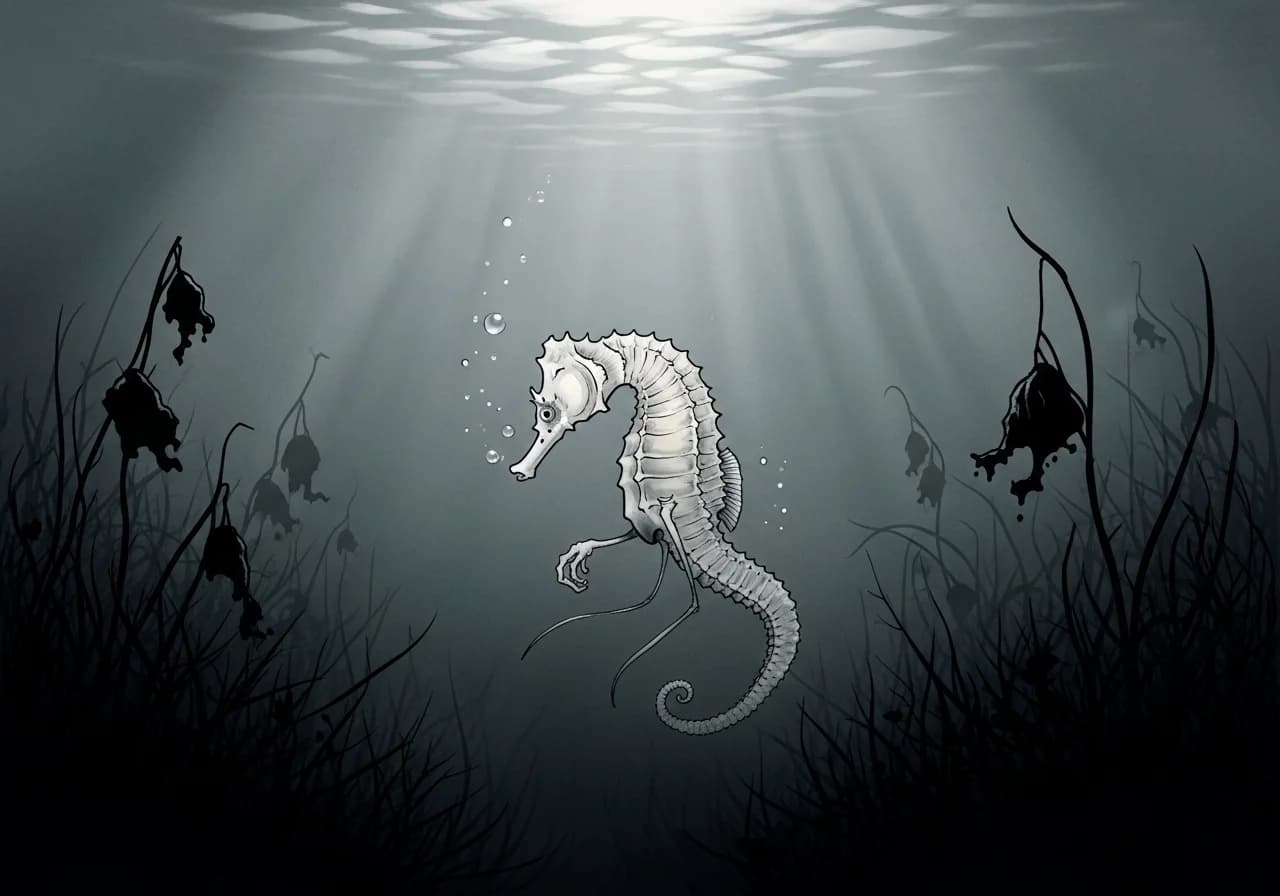
Dreaming of a dying seahorse or one struggling outside of water is a cautionary signal. This warns that a cherished relationship or responsibility you are nurturing may be in jeopardy. It may indicate that a family member's health deserves closer attention, or that you are over-extending yourself — sacrificing so much for others that your own wellbeing is suffering. If this dream visited you, take it as a gentle prompt to check in on the people and commitments that matter most, and to ensure you are caring for yourself as well as those around you.
Neutral — Patience and New Perspectives
The seahorse moves slowly through the ocean, yet always with consistent purpose. Observing a seahorse quietly in a dream is a neutral message reminding you to view your current situation from a fresh angle and to practice patience rather than rushing. It suggests that valuing the process over immediate results is the wisdom you need right now. Growth that appears slow on the surface often runs deep — this dream is reassurance that what is developing inside you is real and worth protecting.
Dream Variations
Golden Seahorse Dream — Wealth and Honor at Their Peak
A golden seahorse appearing in a dream is an exceptionally powerful auspicious omen. It heralds a significant rise in fortune and honor, and may foreshadow business success or unexpected financial gain. In Korean folk tradition, gold represents the highest good fortune, so a golden seahorse combines the seahorse's symbolism of safe outcomes with the power of wealth — making this one of the finest lucky dreams possible.
Seahorse Giving Birth Dream — New Beginnings and Successful Outcomes
Watching a seahorse give birth in a dream is a special auspicious omen. Since the seahorse has been revered in Korean tradition as a creature that enables easy childbirth, this dream signals the birth of new life or the successful launch of a new project or venture. For a pregnant woman, this is an exceptionally good omen predicting a safe and smooth delivery.
Pair of Seahorses Dream — Relationship Harmony and Devotion
Dreaming of a male-female pair of seahorses swimming together is a symbol of love and devotion. Just as dried pairs of seahorses were used as folk charms for easy childbirth in Korean tradition, this dream signifies harmony and stability in relationships and a deep bond with a life partner. It may also hint at positive changes coming to a marriage or partnership.
Large Seahorse Dream — Powerful Protection and Leadership
A particularly large and majestic seahorse appearing in a dream symbolizes a strong protective force. This dream means you have the strength to keep yourself and your family safe from any danger or hardship, and hints that an important opportunity involving leadership and responsibility is approaching. Now is the time to step into that role with confidence.
Seahorse Swimming Dream — Flexible Adaptation and Steady Progress
A seahorse swimming freely through water symbolizes the ability to adapt flexibly to life's currents while never losing sight of one's own goals. Even if progress seems slow on the surface, this dream signifies inner growth steadily taking root — a positive sign. It also signals that in work or study, you are moving in the right direction toward the outcomes you desire.
Catching a Seahorse Dream — Seizing Opportunity and Wish Fulfillment
Catching a seahorse with your hands in a dream is an auspicious omen meaning you will directly seize a precious opportunity or a stroke of luck. Since holding a seahorse was the key ritual act for ensuring easy childbirth in Korean folk tradition, dreaming of catching one foretells the fulfillment of a long-awaited wish or the arrival of good news.
Cultural Context
The seahorse (해마, 海馬) occupies a unique and revered position in Korean traditional medicine and folk culture. The Donguibogam (東醫寶鑑), the landmark Korean medical encyclopedia compiled by physician Heo Jun during the Joseon Dynasty, records that the seahorse has a 'peaceful nature with no toxicity' and is prescribed for difficult childbirth, stating that 'holding this in one's hand ensures delivery as easy as a goat giving birth.' The Muolmyeonggo (物名考), a 19th-century encyclopedic work, similarly records the practice of holding dried male-female seahorse pairs during labor. This tradition deeply embedded the seahorse in Korean folk belief as a symbol of safe birth, new life, and family protection. The Chinese characters for seahorse — 海馬 (sea horse) — are also significant: the horse (馬) is itself a symbol of dynamic energy, success, and good fortune in Korean folk tradition, so the seahorse was seen as combining oceanic mystery with equine vitality. Across East Asian culture, the seahorse has been regarded as a junior relative of the auspicious dragon, a bringer of good luck and courage — a perspective that harmonizes naturally with Korean folk tradition.
Western Psychological Perspectives
From a Western psychological perspective, the seahorse carries rich symbolic meaning across multiple frameworks. In Freudian analysis, the seahorse as an underwater creature symbolizes the depths of the unconscious — the realm of repressed emotions and instinctual desires. Its unique male pregnancy and birthing role may connect to unconscious exploration of gender identity beyond traditional expectations, while the seahorse's image of being small yet persisting with strength can symbolize the ego's mechanisms for protecting itself in a challenging world.
In Jungian analytical psychology, the seahorse connects to the Self archetype within the collective unconscious. The reversed parental role — where the male carries and births young — symbolizes the integration of masculine and feminine principles, a hallmark of psychological wholeness. As a creature living within the sea, the archetypal space of the collective unconscious, its appearance in a dream suggests that individuation is actively underway: a reconciling of one's shadow and an integration of inner opposites. The seahorse's patient, slow movement mirrors the gradual and careful pace of this inward journey.
Modern dream psychology highlights the seahorse's striking connection to the hippocampus — the brain structure sharing the same Greek-origin name — which is central to memory formation, emotional processing, and spatial awareness. A seahorse dream may therefore signal active inner work to process and integrate past memories or emotional residue. Modern therapists also connect seahorse imagery to the themes of adaptability, flexible thinking, and the readiness to embrace new perspectives in the face of change.
Across world cultures, the seahorse has consistently served as a symbol of protection and fortune. In ancient Greek mythology, the seahorse was the sacred steed of Poseidon, god of the sea, revered by sailors as a guardian of safe passage. In European heraldry, seahorses appeared as emblems of strength and distinction. These cross-cultural threads — protection, good fortune, and the arrival of new life — run in close parallel with Korean folk tradition, affirming the seahorse as a universally auspicious dream symbol.
Frequently Asked Questions
The seahorse dream is one of the most gentle and devotion-filled auspicious omens in Korean tradition. From the Donguibogam's medical prescriptions to the folk rituals of the delivery room, the seahorse has stood for centuries as a guardian of new life, safe passage, and patient perseverance. If this dream visited you, take it as a quiet but firm reassurance: your steady efforts and loving commitments are being watched over. Like the seahorse — small, unhurried, but always purposeful — the path you are on is the right one, and something beautiful is taking shape.
Related Dreams
Fish Dream Meaning — Wealth, Luck, and What Korean Tradition Says

Dolphin Dream Meaning — Korea's Favorite Omen of Joy and Good Fortune

Whale Dream Meaning — Korea's Most Powerful Fortune Omen

Shark Dream Meaning — Threat, Power, and What Korean Dream Interpretation Reveals

Crab Dream Meaning — Korean Interpretation & Symbolism
Sea Turtle Dream Meaning: The Dragon King's Sacred Messenger of Wealth and Longevity