Sewing Dream Meaning — Love, Effort, and Hidden Warnings
If you dreamed of sewing last night — needle threading through fabric, stitch by careful stitch — Korean dream tradition reads that image as rich with meaning about your relationships and the work you've been building. In Korean 해몽 (dream interpretation), successfully completing a sewing project is one of the clearest signs that a destined partner or life-changing benefactor is approaching, or that a long-prepared goal is finally about to bear fruit. This tradition runs deep: for centuries in Joseon Dynasty Korea, women of the inner chambers (규방) stitched their hopes and prayers for family fortune into silk with colored threads — sewing was never just labor, it was an act of devoted intention. There's a twist worth knowing, though — if the needle broke or the thread refused to follow, the interpretation flips entirely, and the dream becomes a warning worth heeding.
Auspicious: Completing Stitches and Threading the Needle
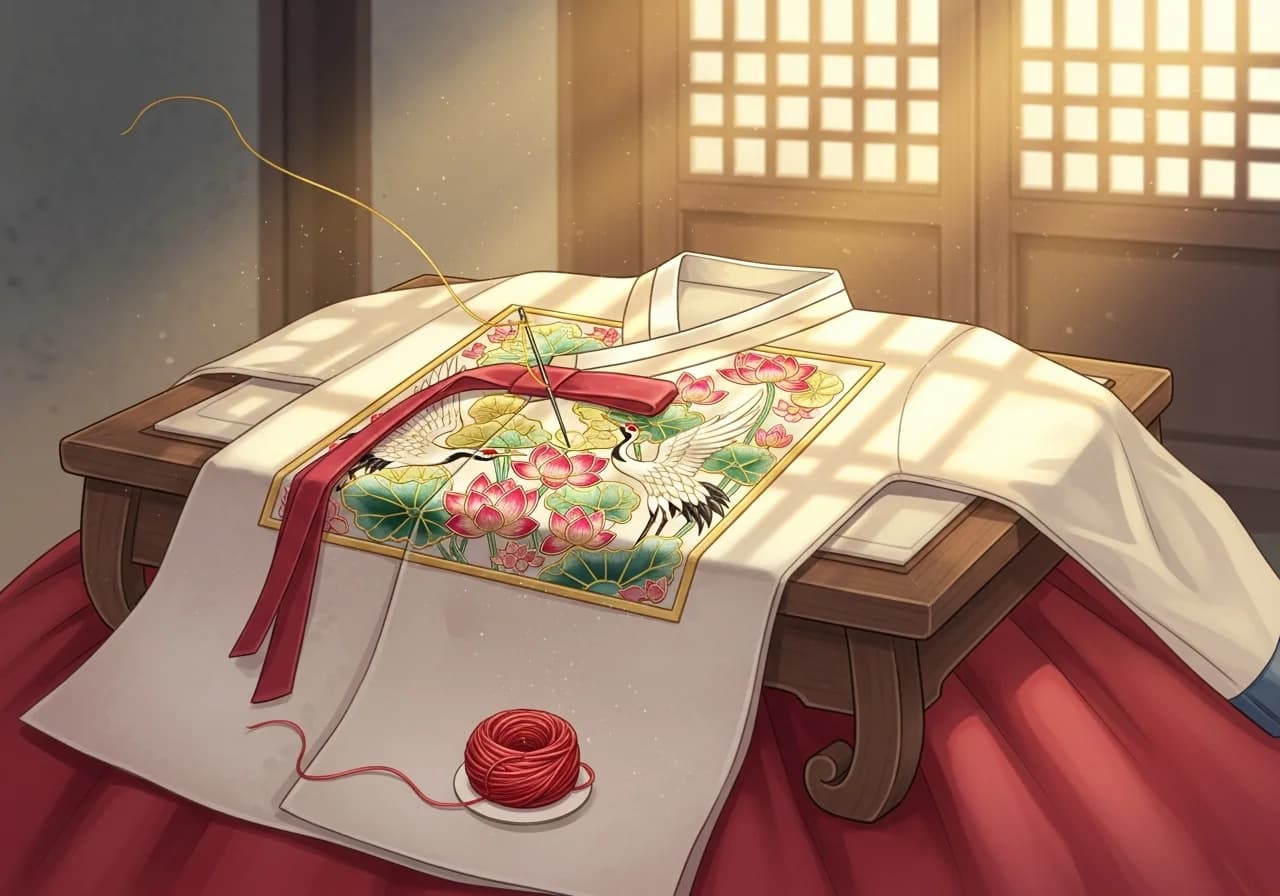
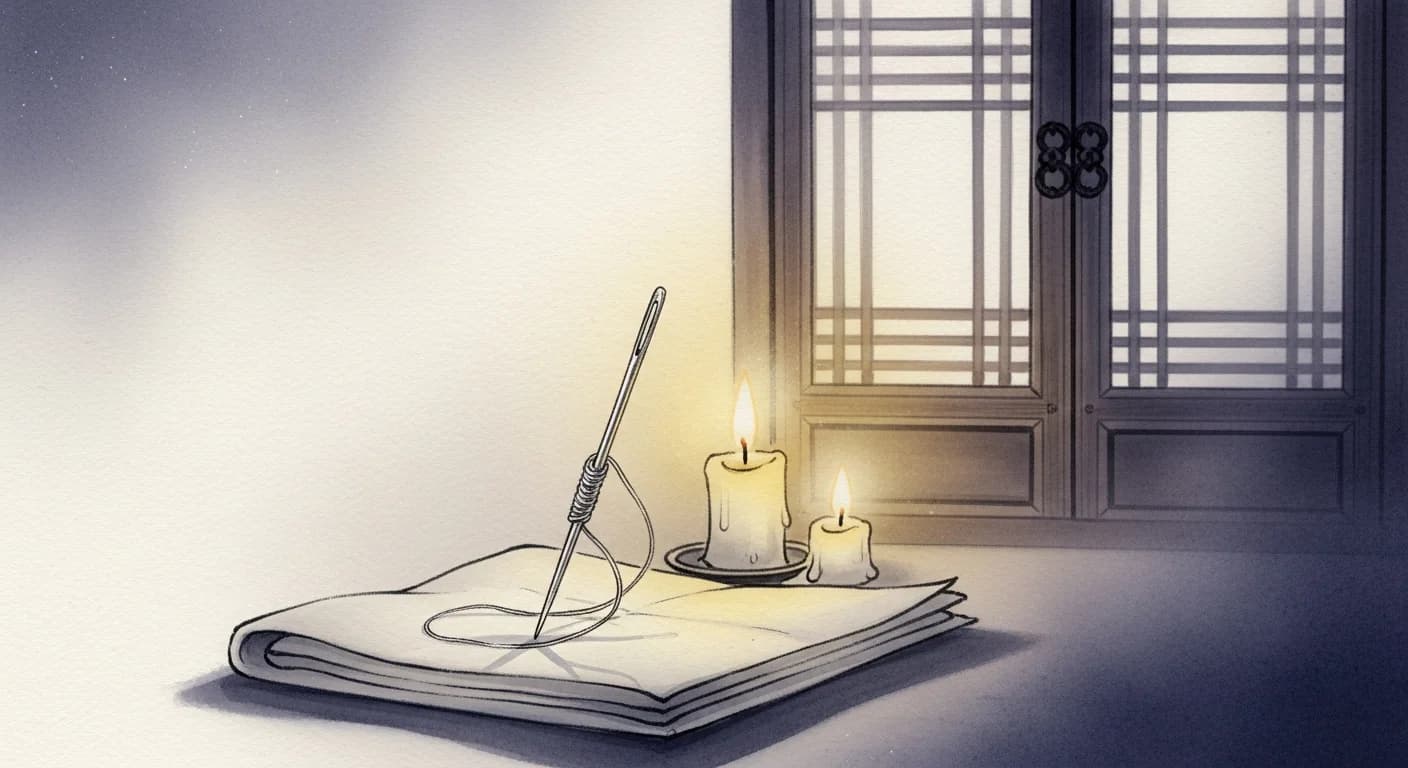
In Korean dream interpretation, successfully sewing new clothes is among the most auspicious dream scenarios you can experience. The act of joining two pieces of fabric together is a direct metaphor for connecting two people — so completing a new garment in a dream foretells meeting a fated romantic partner, a destined soulmate (천생연분), or a powerful benefactor who will bring positive change into your life. Threading the needle successfully carries the same meaning: the precision required to pass thread through the eye of a needle mirrors the rare, exact alignment of two fated people finding each other.
Beyond love and relationships, a completed sewing project signals that long-invested efforts are about to pay off — examinations passed, projects concluded, plans realized. Mending or repairing a torn garment has its own auspicious reading: unexpected income or the healing of a damaged relationship or situation. The unifying thread (so to speak) in all these positive interpretations is completion. When sewing moves forward — stitches accumulating, form emerging from fabric — the dream reflects forward motion in your waking life as well.
Inauspicious: Breaking Needles and Tangled Threads
When the sewing goes wrong in a dream, Korean tradition treats it as a genuine warning. Breaking a needle mid-sewing is a notably inauspicious sign, suggesting that years of careful effort may collapse at the worst moment — plans that seemed secure suddenly derailed, a relationship that felt solid unexpectedly strained. The Korean idiom applies here: '십년공부 도로아미타불' — ten years of study, undone in an instant. It is a call to review your most important current endeavors carefully and prepare backup plans.
Failing to thread the needle despite repeated attempts is also inauspicious, and carries a slightly different shade of meaning: it speaks to recurring failures and mounting psychological stress. If this dream recurs, it may be your unconscious signaling genuine burnout — a need to stop pushing and reconsider your approach before continuing. Being pricked or stabbed by a needle warns of unexpected interpersonal conflict, or a small carelessness in current projects that could spiral into a larger problem.
Neutral: Awareness, Preparation, and Careful Choices
Not all sewing dreams carry a strong verdict either way. Watching someone else sew — a seamstress at work, or a stranger stitching quietly — is a neutral prompt: now is the time to begin planning for the future. It may also hint at an unexpected change of environment or an unplanned journey ahead.
Sewing with a sewing machine introduces a nuance of caution: the dream advises careful judgment about whom you trust and collaborate with. Moving efficiently through tasks is good, but mechanical efficiency without genuine attention risks missing something important. Sewing while wearing a thimble signals a busy period approaching — domestic or professional responsibilities multiplying. Hand-sewing, by contrast, carries a message of patient endurance: demanding, painstaking work lies ahead, but the slow accumulation of careful effort will ultimately be rewarded.
Dream Variations
Sewing new clothes in a dream
Auspicious. Foretells meeting a destined partner or a person of great influence who will bring joy and positive change. Symbolizes new beginnings and favorable new relationships — a particularly good sign for those hoping for love or marriage.
Breaking a needle while sewing
Inauspicious. Warns that long-invested efforts may suddenly collapse. Plans may fail at the last moment; review your most important ongoing endeavors and prepare contingency strategies.
Threading a needle in a dream
Auspicious. A positive omen of finding a true romantic partner or approaching marriage. The act of connecting thread through the eye of a needle represents the precise, fated alignment of two people meant to find each other.
Failing to thread a needle
Inauspicious or cautionary. Indicates repeated failures in ongoing endeavors and excessive mental stress. A signal to rest and reconsider your approach before proceeding further — pushing harder is not the answer here.
Mending or repairing clothing
Auspicious. Points to unexpected income or the successful repair of a damaged relationship or situation. Symbolizes restoration, renewed stability, and recovery from setback.
Sewing with a sewing machine
Neutral or cautionary. Suggests the need to carefully vet the trustworthiness of partners, colleagues, or associates. May also warn against going through the motions without genuine commitment — efficiency without care can cause important things to slip through.
Sewing a wedding dress
Auspicious. Portends positive developments related to marriage or commitment, accompanied by good fortune and prosperity. Symbolizes building a new life, domestic happiness, and a new beginning shared with another.
Sewing together with someone
Neutral to auspicious. Suggests a period of collaboration or joint endeavor. If the sewing companion is a close person, it signals deepening bonds and a shared purpose — building something together that neither could create alone.
Hand-sewing in a dream
Neutral. Indicates demanding, painstaking work ahead. The message is one of endurance: slow, careful effort — stitch by stitch — will ultimately be rewarded. Speed is not the virtue this dream calls for.
Pricking a finger while sewing
Cautionary. Warns of an unexpected visitor, a sudden disruptive situation, or a minor carelessness that triggers unforeseen complications. Pay close attention to the details of current projects — a small oversight could have outsized consequences.
Sewing on a button
Cautionary. Suggests the dreamer may be clinging to unrealistic ideals or losing sight of larger goals by fixating on minor details. Step back and assess the bigger picture.
Cultural Context
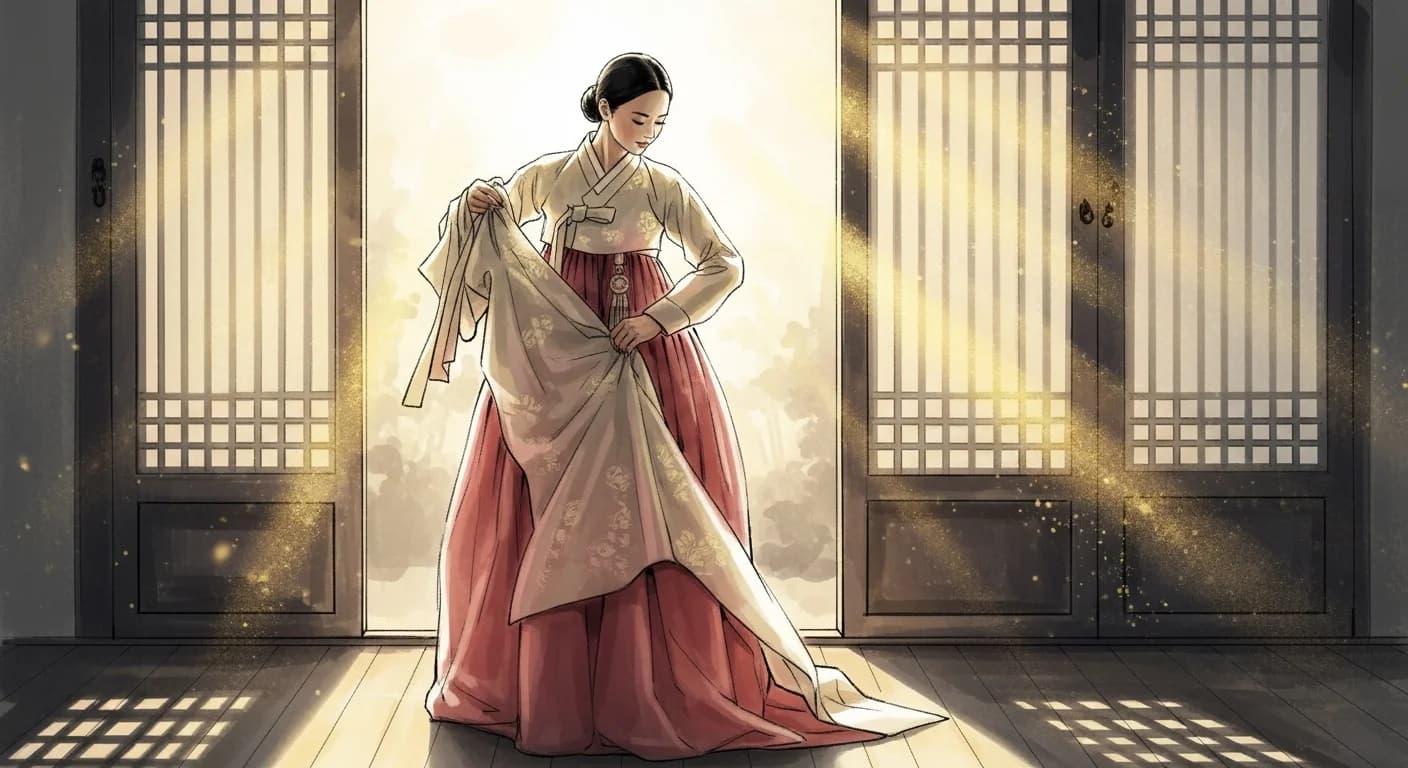
To understand why sewing carries such weight in Korean dream interpretation, it helps to understand the role needlework played in traditional Korean life. In Joseon Dynasty Korea (1392–1897), women from around age ten began learning needlework within the gyubang (閨房) — the inner women's quarters of the household. The practice known as gyubang gongye (규방공예, literally 'women's chamber craft') encompassed embroidery, patchwork quilting (조각보), and fine needlework, and was far more than domestic labor. It was a discipline for cultivating virtue and patience, an outlet for artistic expression, and one of the few arenas in which women could assert genuine creativity and emotional agency within the Confucian household structure.
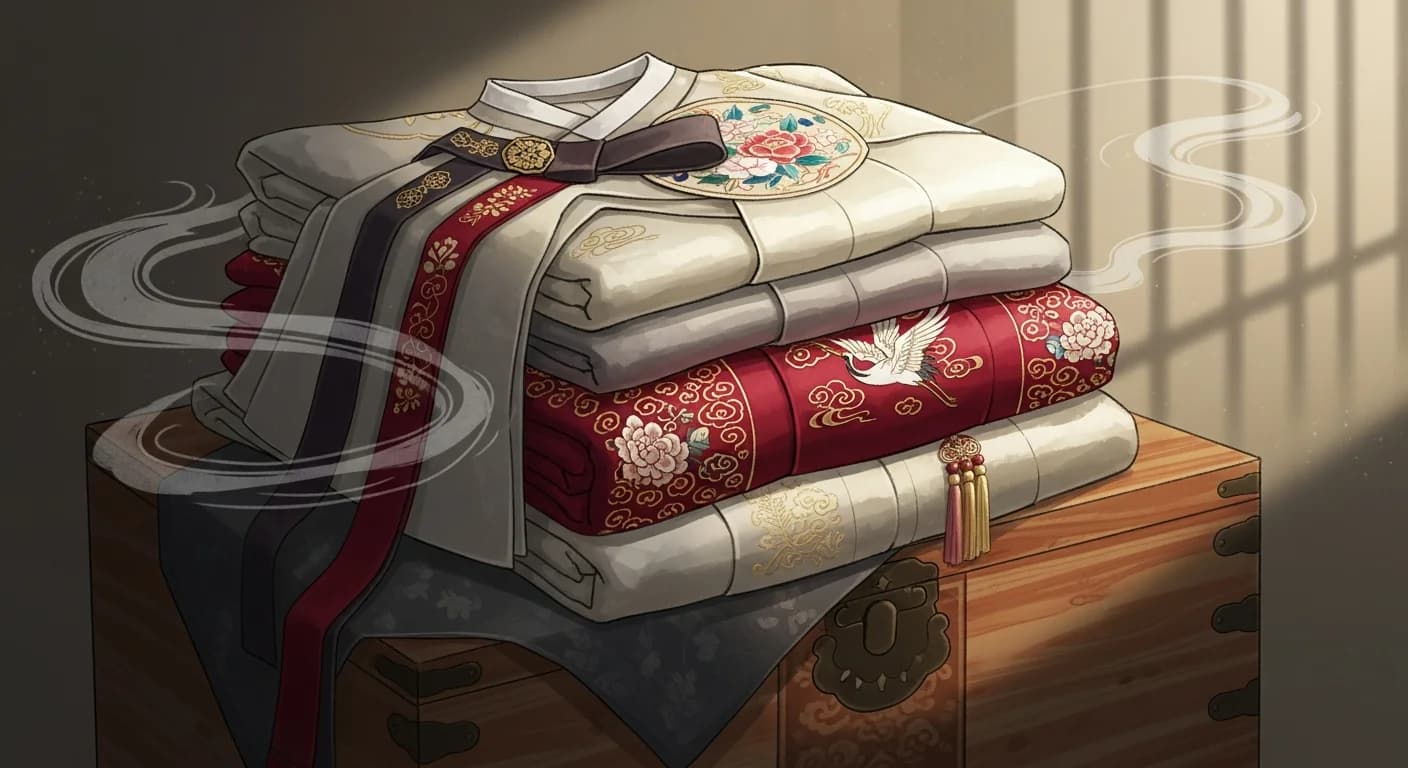
Skilled needlewomen stitched auspicious symbols — lotus flowers, phoenixes, cranes, geometric patterns — into garments and household items as living prayers for their family's health and fortune. For some women, saek-baneujil (삯바느질, paid commission sewing) offered a rare path to economic independence. The red thread (홍실) holds deep symbolic resonance across East Asia: in Korean and Chinese tradition, an invisible red thread is believed to connect destined romantic partners across time and circumstance, regardless of separation. Threading with red silk in a dream thus becomes not merely domestic work, but an act of fate itself being woven. This cultural heritage explains why dreaming of sewing speaks so directly to love, creation, devoted effort, and the forging of bonds that are meant to last.
Western Psychological Perspectives
Western psychology offers several complementary lenses for understanding sewing dreams — each illuminating a different dimension of the unconscious experience.
From a Freudian perspective, sewing dreams may encode repressed unconscious wishes. The needle, as a penetrating instrument, can carry phallic symbolism, while the act of threading it through the needle's eye has been interpreted as representing sexual union. More broadly, the act of sewing — stitching separated pieces together, closing a gap — can reflect a libidinal drive toward union and wholeness, or an unconscious impulse to heal old wounds and restore completeness after loss or rupture.
Jungian psychology reads sewing as a metaphor for the individuation process — the gradual integration of the psyche's conscious and unconscious aspects. The act of connecting fabric with needle and thread mirrors the inner work of weaving together fragmented parts of the self into a coherent whole. The sewing figure in dreams resonates with the archetypal Weaver — Ariadne, the Greek Fates (Moirai), Japan's Orihime — each representing the creative and healing dimensions of the anima archetype. A garment completed in a dream may thus symbolize the formation of a more authentic, integrated persona.
Modern psychological dream analysis reads sewing as an expression of the drive for repair and restoration. Mending torn fabric symbolizes the unconscious desire to fix damaged relationships or broken circumstances. Creating something new from cloth represents a wish to construct a new self-image or step into a new social role. Dreams of unfinished sewing frequently reflect psychological tension around unresolved commitments, incomplete relationships, or lingering tasks that demand closure.
Cross-culturally, sewing and weaving appear across world traditions as symbols of fate, creation, and connection. The Greek Moirai spin, measure, and cut the thread of every human life. Japan's Orihime is a celestial weaver separated from her beloved across the Milky Way. In Korea and China, the red thread of fate invisibly connects destined romantic partners. Japan's sashiko embroidery tradition celebrates mending as a virtue of resilience — broken things made beautiful through patient repair. Sewing dreams thus tap into a universal symbolic language: the patient, intentional act of joining separate pieces into something whole and meaningful.
Frequently Asked Questions
Sewing dreams, like the act of sewing itself, reward careful attention to detail. If the dream flowed well — stitches completing, garments taking shape — take it as an encouraging sign that good things are building in your waking life, whether in love, work, or finances. If the needle broke or the thread refused to cooperate, treat it as an honest message from your unconscious: something in your current path deserves a closer look before you push forward. Korean dream tradition has always seen the unconscious as a reliable, if subtle, guide — and sewing dreams, with their rich symbolism of creation, connection, and patient effort, are among its most nuanced messages.