Ship Sinking Dream Meaning — What Korean Dream Interpretation Reveals
If a ship sank in your dream last night, Korean dream tradition reads it as a direct signal that direction and control in your waking life may be under serious threat. In Korean 꿈해몽 (dream interpretation), a ship is not merely a vessel — it represents the entire journey of a person's life, and its sinking speaks to foundations giving way. Here is where it gets interesting, though: the outcome of the dream completely changes its meaning. Escaping the sinking ship, surviving it, or even dying in it all flip the interpretation from inauspicious to powerfully auspicious. The same image, two entirely different verdicts — and what happens after the ship goes under is the key.
When a Sinking Ship Is an Inauspicious Omen
In Korean dream interpretation, watching a ship sink — or being aboard as it goes down without escaping — is generally an inauspicious sign (흉몽). The ship represents a life's course or an important undertaking, and its sinking suggests that a current project, business venture, or key plan may be heading toward failure. If you had this dream before a major financial decision or contract signing, Korean tradition strongly advises pausing and reconsidering.
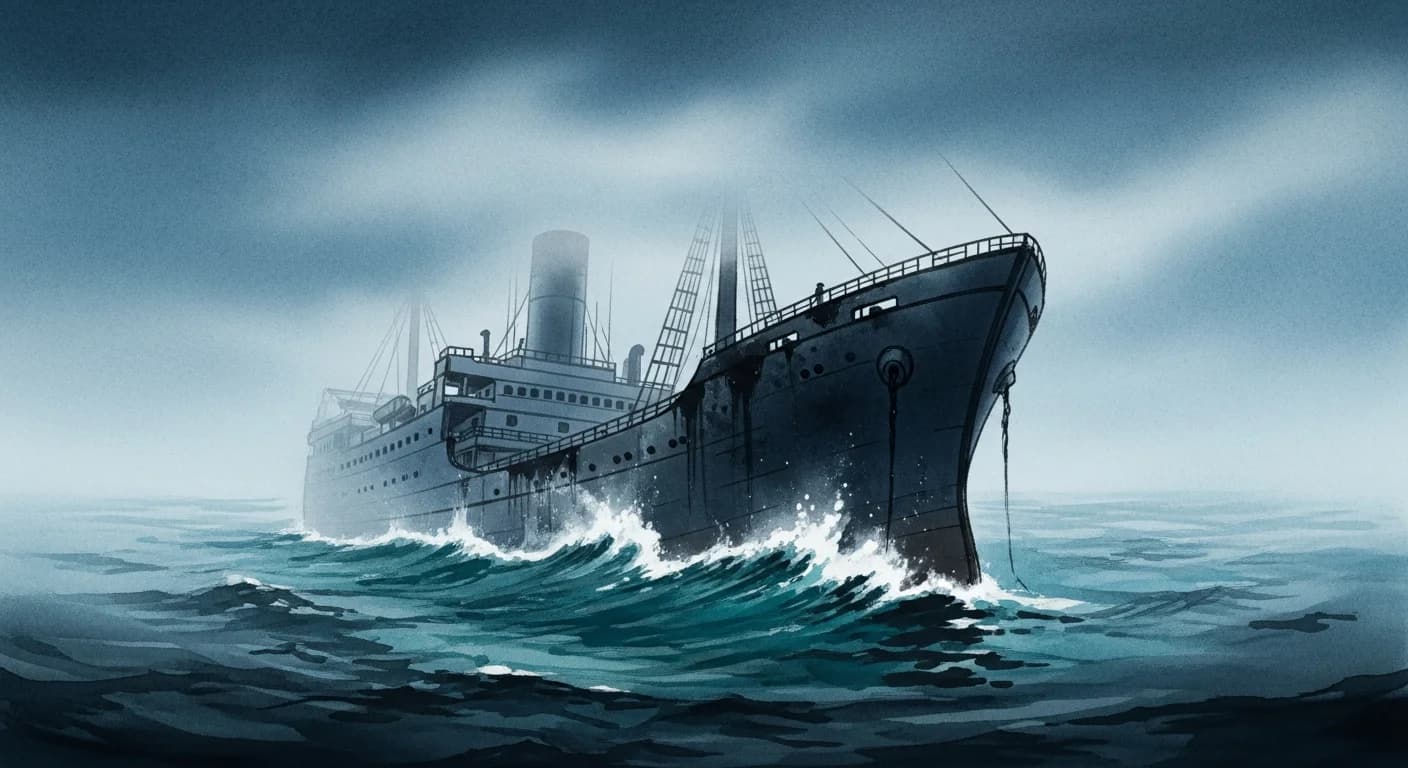
A ship sinking in a violent storm carries a more urgent warning: sudden external shocks or upheavals are on the way, and current preparations may be insufficient to weather them. Economic setbacks, unexpected personal crises, and strains on health or relationships may arrive simultaneously. The fiercer the storm in the dream, the greater the scale of the looming challenge.
If the ship sinks and many passengers fall into the water, the dream warns that your own decisions or errors could cause collateral harm to people around you. Leaders and managers in particular should read this as a signal to shore up organizational safeguards. A ship striking hidden rocks or an iceberg before sinking adds a specific warning about concealed betrayal or the interference of a hidden adversary — damage arriving from an unexpected direction.
When Surviving the Sinking Is a Good Omen
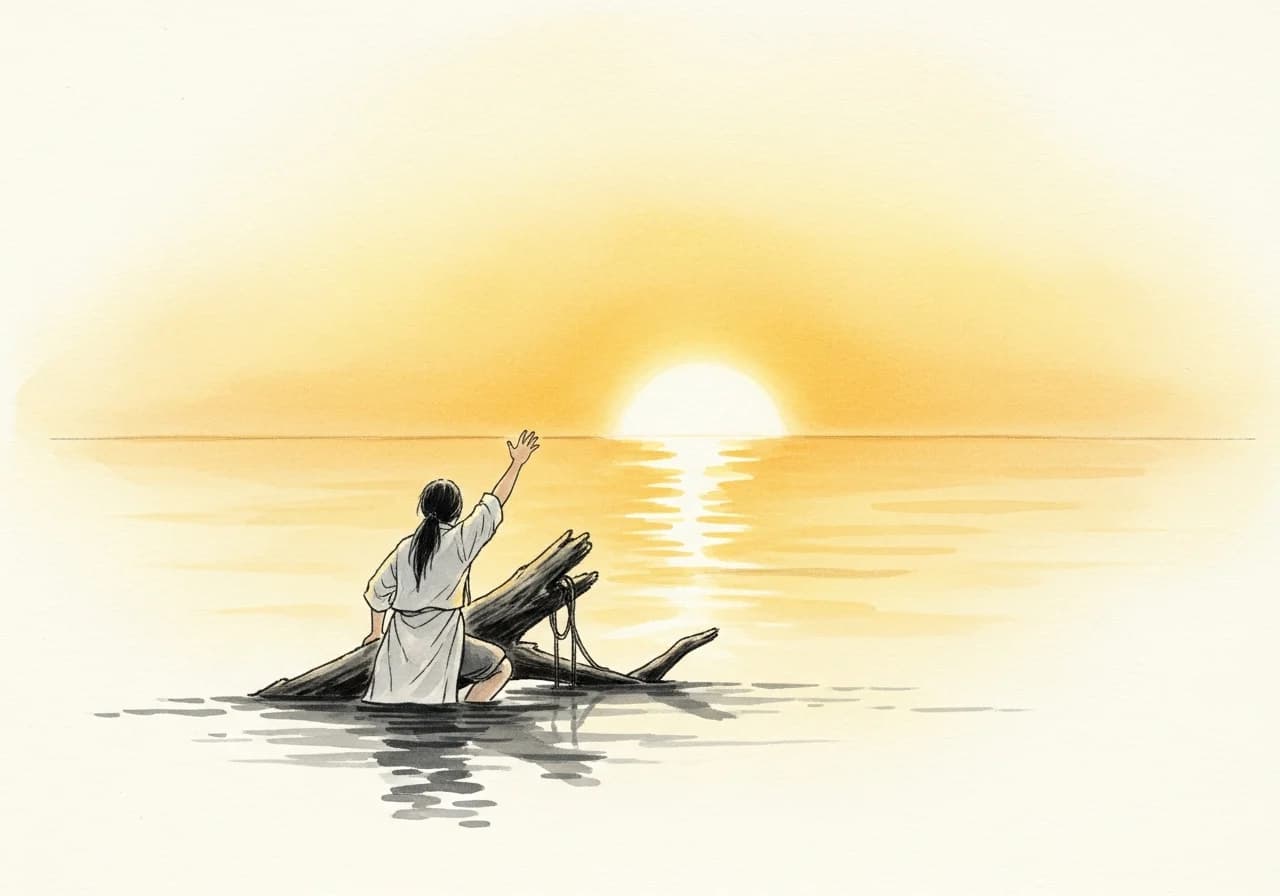
Escaping a sinking ship and surviving is a strong auspicious dream (길몽) in Korean tradition. It signals that you will break free from an intense crisis or difficulty currently gripping your life. If you escape through your own effort, that reflects real inner resilience — the capacity to overcome adversity by your own strength. If you are rescued by someone else, expect the arrival of a benefactor or an unexpected ally precisely when you need them most.
Even dying on a sinking ship carries auspicious meaning, by Korean interpretation's paradoxical principle: death in a dream symbolizes the end of an old phase and the beginning of something entirely new. Long-accumulated suffering concludes, and a dramatic reversal of circumstances — through a surprising opportunity or the help of a benefactor — is foretold.
Watching a ship sink from a safe distance is also interpreted as a positive sign of change coming to your status or environment. Because you are not aboard the sinking vessel, you are positioned as an observer of change rather than its primary victim. This variation is also read as signaling the failure or downfall of a competitor or rival.
Wealth and Career Implications
For those concerned about financial or career omens, the specific circumstances within the dream matter enormously. Going down with the ship — sinking and not surfacing — warns of serious potential losses in investment or financial dealings. Major commitments and large transactions warrant careful review before proceeding.
Surviving the sinking and reaching shore, however, carries a different message: even if a difficult financial period arrives, restoration of a stable foundation is ultimately assured. Endurance through the transitional period is the critical factor.
A ship sinking in unexpectedly calm water — with no storm to explain it — is a particularly pointed warning about hidden internal flaws in a seemingly stable situation. This variant calls for checking the foundations of key partnerships, contracts, or business arrangements for problems that haven't yet surfaced.
Relationships and the People on the Ship
A ship carries everyone aboard toward a shared fate, which gives its sinking particular relational weight. Pay attention to who was with you on the ship in the dream. If a specific person was present, tensions or a significant shift in that relationship may be approaching.
Saving others during the sinking suggests you may be called to sacrifice or take on extra responsibility for people close to you. Escaping alone without helping others signals a coming period when independent decisions — or perhaps a necessary parting of ways — will be unavoidable.
Being rescued after the ship sinks is one of the most hopeful variations: even when relationships fracture or financial crises hit, someone will appear to help you through. Korean dream tradition frames this as the arrival of a 귀인 (benefactor) — a person or opportunity that restores hope at the lowest point.
Dream Variations
Escaping a Sinking Ship Dream
Successfully escaping a sinking ship is a strong auspicious sign that you will overcome a current crisis through your own strength. The more dramatic and difficult the escape, the greater the real-world challenge — but also the stronger the confirmation of your capacity to prevail. A new opportunity or turning point is drawing near.
Being on a Sinking Ship Dream
Being aboard a ship as it sinks warns that a current business, career path, or important plan may be moving in an uncontrollable direction. The faster the sinking, the more sudden the change ahead; the slower it goes, the more gradual the problem developing beneath the surface. Heightened caution in relationships and financial dealings is strongly indicated.
Watching a Ship Sink From a Distance Dream
Watching a ship sink from the shore or another vessel foretells significant changes coming to your surrounding environment or relationships. You are positioned as an observer rather than the primary victim of the upheaval — and this variation sometimes specifically signals the downfall of a competitor or rival. Depending on timing, it can indicate you are standing at a crossroads where change can be turned into personal opportunity.
Ship Sinking in a Storm Dream
A ship going down in a storm is an inauspicious warning about a lack of preparation for sudden changes in external circumstances. Economic crisis, unexpected shocks, or rapid environmental changes may severely disrupt current stability. The more violent the storm, the greater the scale of the approaching challenge — proactive measures are essential.
Ship Sinking in Calm Water Dream
A ship suddenly sinking in calm, undisturbed water warns of hidden dangers or internal flaws within an apparently stable situation. Everything may look fine on the surface, but serious problems may be accumulating unseen. This dream specifically calls for examining hidden fractures in key relationships or partnerships before they break open.
Surviving a Ship Sinking Dream
Surviving the disaster of a sinking ship is an auspicious sign that you will endure adversity and emerge stronger. Reaching land alive signals the eventual restoration of a stable foundation. If rescued by others, it foretells that a benefactor's assistance or unexpected support will resolve a critical crisis at just the right moment.
Being Rescued After a Ship Sinks Dream
Being pulled from the sea after a ship sinks is a hopeful, auspicious dream signaling that the darkest period is ending and help is on its way. Even amid financial crisis or the collapse of important relationships, a benefactor or collaborator will appear to help you through together. The central message: do not give up.
Ship Capsizing Dream
A ship capsizing without fully sinking suggests a complete reversal of the current order or situation. During a period of hardship, this inversion may paradoxically shift circumstances in a positive direction. During a stable period, it warns that unexpected change may destabilize an existing foundation. The state of the sea and the overall mood of the dream are the key factors in determining the final meaning.
Titanic-Style Ship Sinking Dream
Dreaming of a massive ocean liner sinking Titanic-style symbolizes a large-scale project, organization, or life plan facing catastrophic crisis or total collapse. The scale implies an event affecting not just you individually but a group or collective. Those in leadership positions should treat this as an urgent signal to focus on organizational crisis preparedness.
Swimming to Shore After a Ship Sinks Dream
Swimming ashore alone after abandoning a sinking ship symbolizes the will and capacity to survive through your own strength, even when established systems or group support are no longer available. This dream often hints that an independent decision — such as changing jobs, leaving a partnership, or pivoting direction entirely — may actually be the best path forward.
Cultural Context
Korea is a peninsula surrounded by sea on three sides, and maritime culture has long represented the boundary between life and death in the Korean consciousness. During the Joseon Dynasty, when sea trade was vital, ships were not merely vessels of transport but symbols of the entire life journey — the wheels of fate. In Korean folk tradition, the sea is the sacred domain ruled by the Dragon King (용왕), and a ship sinking was seen as defying the Dragon King's will or running counter to the tides of fate. Coastal villages held ritual ceremonies — the 풍어제 (harvest of the sea ritual) and 용왕제 (Dragon King offering) — before each voyage to pray for safe passage, reflecting how deeply ships and the sea were imbued with spiritual meaning.
In modern Korea, dreaming of a sinking ship carries the additional weight of the 2014 Sewol ferry disaster, in which 304 passengers — the majority of them high school students on a school trip — perished when the vessel capsized and sank. The tragedy plunged the entire nation into prolonged collective grief and moral reckoning. Since then, ship-sinking dreams have taken on far heavier resonance in the Korean collective unconscious: beyond the traditional symbolism of business failure or financial loss, they now evoke irreversible loss, systemic failure, and collective helplessness. Dreamers experiencing this imagery are often carrying deep anxiety about the safety of loved ones or about their own capacity to meet social responsibilities.
Western Psychological Perspectives
Western psychology offers several illuminating lenses through which to understand why ship sinking appears so powerfully in our dream life. Freud viewed the ship as a maternal symbol — a protective womb navigating the waters of existence. Its sinking represents the unconscious fear that this protective foundation is being stripped away, threatening the deepest sense of security. Water, for Freud, was the primordial life source and the ocean of the unconscious itself; the ship going under can be read as the ego being overwhelmed by the surging unconscious tides. This dream type is also classified as an anxiety dream that surfaces when repressed fears of failure or frustrated needs for control reach a breaking point.
Jung's analytical psychology offers a more transformative reading. The ship is the structure the ego builds to traverse the vast ocean of the collective unconscious — a vessel of conscious selfhood. Its sinking represents the dissolution of the existing ego structure under the overwhelming pressure of deeper psychic forces. For Jung, this dissolution is not catastrophe but necessity: it is a core stage of the individuation process, the ego-death that precedes genuine psychological rebirth. Seen through this lens, the Korean interpretation that surviving the sinking is auspicious aligns strikingly with the Jungian hero archetype — the self that emerges from the depths transformed.
Modern cognitive neuroscience and sleep research read sinking ship dreams primarily as psychological products of loss-of-control anxiety. During REM sleep, an activated amygdala translates accumulated feelings of helplessness, overload, and social pressure into vivid disaster imagery. Research on South Korea following the 2014 Sewol disaster documented increased frequency of ship-sinking dreams across the population — a compelling real-world demonstration that collective traumatic events directly shape the dream content of individuals in affected communities. This finding supports both PTSD trauma research and the broader understanding that shared cultural grief can crystallize a specific dream image into a collective symbol. Those experiencing recurring versions of this dream should examine whether chronic stress or unresolved loss underlies the imagery.
Frequently Asked Questions
The most important question after a ship sinking dream is simple: did you get out? The outcome — whether you sank, escaped, were rescued, or watched from a distance — determines whether this is a warning to heed or a sign of resilience on the horizon. Korean dream tradition has read the sea and its vessels as mirrors of the human journey for centuries, and this dream, perhaps more than any other, asks you to take stock of where your ship is actually headed. Whatever the verdict, take it as an invitation to look clearly at what is truly anchoring you — and what may need to be let go.
Related Dreams

Ship Dream Meaning — What Korean Dream Tradition Says About Vessels at Sea
Drowning Dream Meaning — What Korean Dream Tradition Really Says

Ocean Dream Meaning — What the Sea Is Telling You

Flood Dream Meaning — The Color of the Water Changes Everything

Airplane Crash Dream Meaning — From Catastrophic Warning to Paradoxical New Beginning

Storm Dream Meaning — Korean Interpretation of Typhoon & Storm Dreams