Shivering Dream Meaning
You wake up and the sensation is still with you — your body was trembling in the dream, vividly, undeniably. Whether it was the cold grip of fear, a violent shiver of isolation, or a full-body thrill of overwhelming joy, the kind of trembling matters enormously in Korean dream interpretation. Body trembling dreams are among the most physically immersive the mind produces, and they carry layered messages: a warning from the body, a processing of suppressed emotion, or a preview of transformation about to unfold in waking life.
Auspicious: Trembling from Joy and Electric Thrill

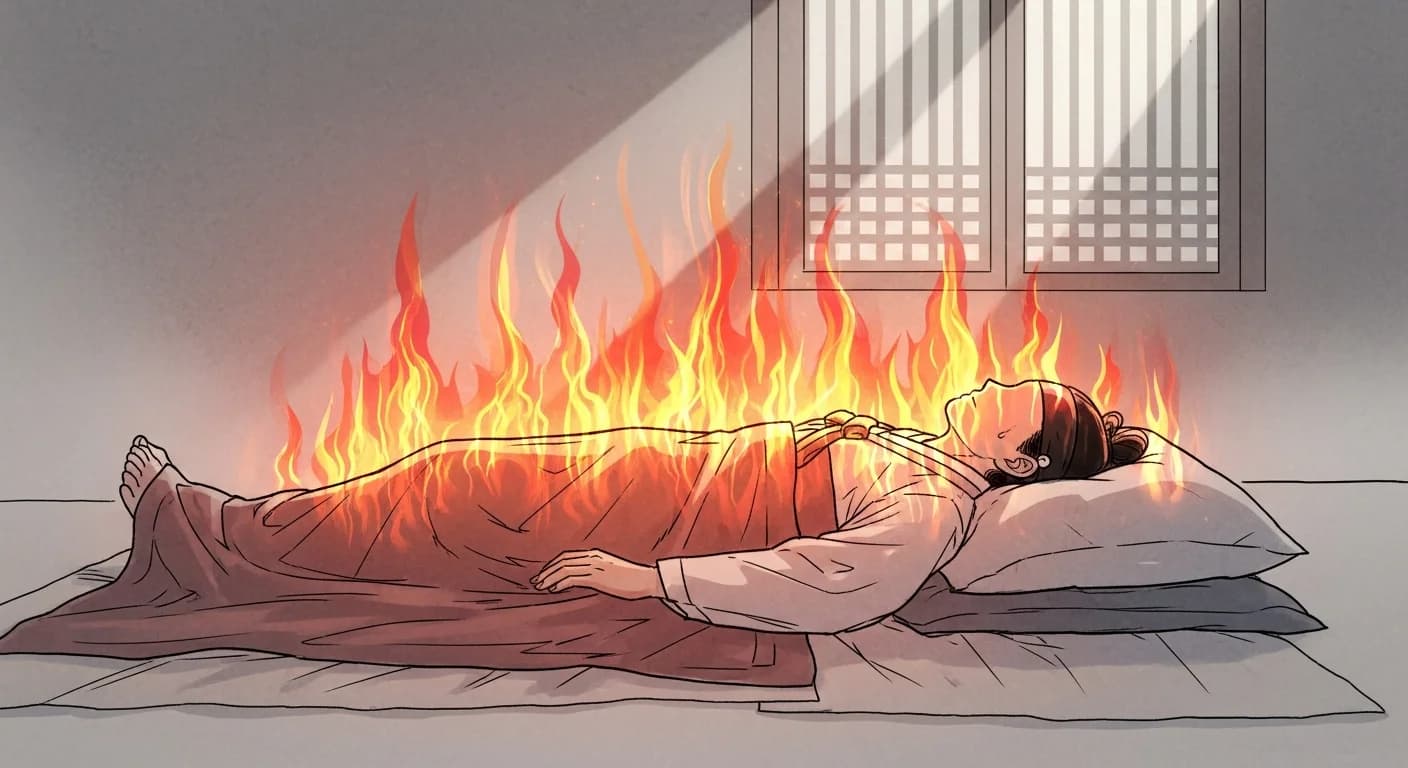
When the trembling in your dream comes from overwhelming joy, awe, or excitement, Korean dream tradition reads it as a powerful positive omen. This full-body thrill signals that a life-changing good event is approaching — a promotion, an exam pass, a business success, or a meaningful reunion with someone important. The sensation previews a real breakthrough before it arrives in waking life. Especially if light or warmth accompanied the trembling, the auspicious force is amplified. A second auspicious form: trembling from illness or pain that suddenly stops, replaced by warmth spreading through the body. This is one of the clearest dream omens of recovery — a long-standing ailment lifting, an old conflict resolving, or a hard chapter ending in relief.
Inauspicious: Trembling from Fear or Bitter Cold
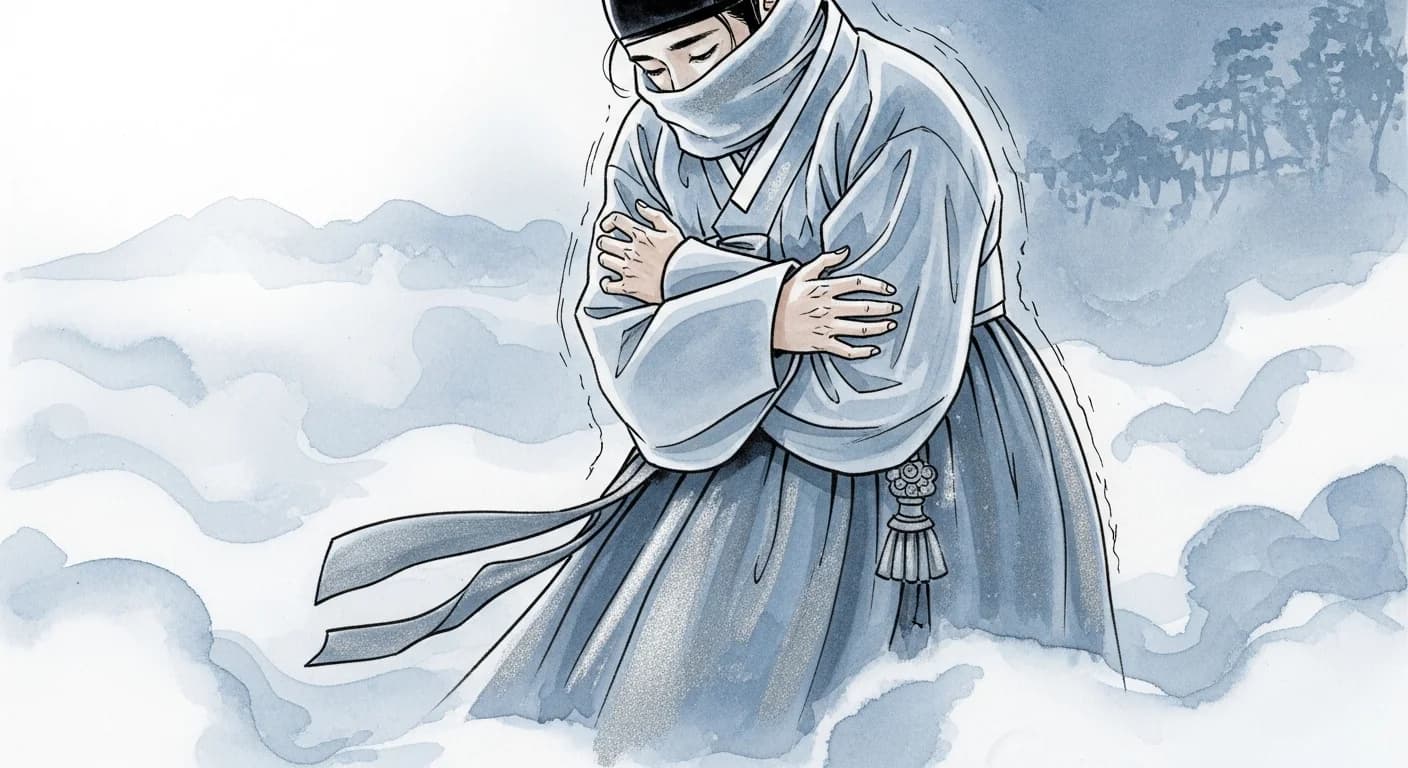
Uncontrollable trembling driven by fear — shaking so hard it can't be stopped — reflects severe anxiety and stress overwhelming the dreamer in waking life. An unresolved conflict, a high-stakes decision, or a situation that's become genuinely unmanageable is expressing itself through the dream body. Physical health may also be flagged: repeated fear-trembling dreams can serve as early warnings of imbalance. Shivering alone in bitter cold is a separate but equally important inauspicious symbol. It speaks to emotional coldness and isolation — the sense that support has disappeared or that a valued relationship is growing distant and cold. Traditional Korean interpretation also connects cold-trembling dreams to financial loss or missed opportunities, suggesting close attention to current circumstances is warranted.
Neutral: Trembling at a Threshold
Not all trembling in dreams is fear or joy — some sits right at the threshold between the two. Shaking hands before an important decision, trembling legs at a crossroads, a voice that won't hold steady: these signal that the dreamer is facing a significant challenge in waking life, not that it will go badly. When the dream shows the dreamer trembling but still moving forward, it is a symbol of courage and growth. Korean interpretation treats this type as a prompt: the shaking itself is honest about the difficulty ahead, but it does not predict failure. Use the dream as motivation to prepare more thoroughly, build confidence, and step into the challenge with eyes open.
Dream Variations
Hands Shaking Dream
Shaking hands in a dream reflect insufficient confidence before an important action — a contract to sign, a presentation to give, or a critical decision to execute. The subconscious flags that preparation or resolve may not yet be fully in place. Treat it as a prompt to prepare more carefully before the real moment arrives.
Legs Trembling Dream
Trembling legs symbolize inner conflict about whether to continue on the current path. The dreamer is caught between the impulse to flee and the obligation to press forward — a classic response when standing at a major life crossroads or facing a commitment that feels larger than expected.
Voice Trembling Dream
A trembling voice in a dream represents fear of failing to communicate clearly or convincingly with someone who matters. It signals anxiety about self-expression — the worry that one's true feelings or important words will fail to land, be misunderstood, or be dismissed by a significant person.
Frozen with Fear and Trembling Dream
Being both frozen and trembling simultaneously points to a situation in waking life that feels genuinely impossible to handle. This near-paralytic state often reflects the mind processing extreme stress, trauma, or chronic overwhelm that exceeds current coping resources. Professional support may be worth considering.
Shivering Violently from Cold Dream
Violent cold-shivering symbolizes an absence of warmth, support, or security in the dreamer's life. The current environment — at work, at home, or in key relationships — may not be providing adequate nourishment or protection. The dream can also serve as an early physiological signal, reflecting declining immune function before conscious symptoms emerge.
Fever and Chills Together Dream
Experiencing fever and chills simultaneously in a dream reflects extreme internal conflict — hot desire warring with cold fear, passion clashing with detachment. It signals that the dreamer's emotional and physical equilibrium is under severe strain. The dream may also mirror early physiological signs of an oncoming illness, making it worth monitoring physical health.
Full-Body Electric Thrill Dream
An electric, whole-body thrill is a strongly auspicious dream sign. It symbolizes a powerful awakening or sudden insight — discovering a long-sought answer, or receiving a revelation that reshapes the dreamer's direction in life. This dream appears most often during periods of heightened intellectual or spiritual sensitivity, when the mind is primed for a breakthrough.
Watching Someone Else Shiver Dream
Seeing another person tremble in your dream suggests that someone close to you is going through serious difficulty or hidden fear in waking life. The dream may reflect your helplessness to assist, or an unconscious recognition that a loved one's distress deserves closer attention. It is worth reaching out and checking in.
Cultural Context
In Korean folk tradition, bodily trembling was understood as far more than a physical sensation — it was a signal of contact with the spirit world. In shamanic (무속) practice, the onset of 신병 (divine illness), the calling of a future shaman, was characterized by uncontrollable shaking and chills as a deity prepared to enter the body. Dreaming of trembling could therefore indicate that supernatural forces were attempting to communicate, or that misfortune (액운) was approaching and the body's spiritual defenses were activating. Trembling from joy, by contrast, was read as auspicious — heaven's vital energy entering the body, presaging great blessings. In traditional Korean medicine (한방), chills and trembling signified the invasion of cold energy (냉기/寒氣) into the body's vital channels, with dream trembling taken as an urgent warning of depleted life force requiring attention.
Western Psychological Perspectives
Western psychology situates trembling dreams at a fascinating intersection of body and mind. In Freudian terms, physical shaking in dreams represents the somatization of repressed anxiety or intense emotion that bypasses the conscious censor — unconscious impulses breaking through ego defenses as bodily sensation. Fear-induced trembling may connect to dread of authority or suppressed aggression; excitement-trembling may encode repressed desire finding an outlet. Jungian analysis frames dream trembling as the moment the ego is overwhelmed by unconscious content — an encounter with the Shadow, or the Anima/Animus, that the ego can no longer contain. A thrilling, awe-filled trembling carries the quality of the numinosum: encounter with divine or overwhelming inner energy that signals imminent psychological transformation. For Jung, this kind of dream often appeared precisely when a person was on the threshold of meaningful individuation. Modern neuroscience explains trembling sensations in dreams through the lens of REM sleep processing: the amygdala reprocesses fear and stress from waking experience, integrating bodily sensation into dream narratives. Research on prodromal dreaming adds another layer — real physiological changes like early fever, immune activation, or periodic limb movement disorder can generate trembling imagery before the dreamer consciously notices any symptoms. The dream serves, in this view, as the body's earliest available alarm system, encoding physiological information in symbolic form before conscious awareness catches up.
Frequently Asked Questions
Shivering dreams speak an honest language. Cold-fear trembling is the unconscious refusing to pretend everything is fine — it surfaces the pressure, the anxiety, the isolation that daylight keeps buried. Pay attention: the body in the dream knows things the waking mind hasn't fully faced. The electric thrill of joy-trembling is the opposite message — something genuinely good is building toward you, and the dream is the first place you get to feel it. Whatever form the shivering took, remember the temperature and the emotion it carried. That detail is the interpretation. That is what your mind is trying to tell you.