
Dreaming of Spouse Dying — Korean Dream Interpretation
You woke up terrified after dreaming your spouse died — but in Korean dream tradition, that fear may be completely unfounded. Dreaming of a spouse dying is classified as a highly auspicious omen, rooted in the ancient principle that the most frightening dream images carry the most fortunate real-world meanings. There's one important caveat, though: the specific circumstances of the dream change everything.
Auspicious Interpretation — New Beginnings and Good Fortune

A spouse dying peacefully in a dream is one of the strongest auspicious omens in Korean dream tradition. Because death symbolizes the shedding of the old and the birth of something new, a spouse's death in a dream signals that career advancement, business achievement, or unexpected financial windfall is on its way in waking life.
If you wept intensely over your spouse's death within the dream, this is an especially powerful positive sign. Korean dream tradition holds that the more grief expressed in the dream, the more thoroughly accumulated stress and long-standing worries will dissolve in reality. Tears in the dream equal liberation in life.
Dreaming of a grand funeral ceremony after a spouse's death is also considered very auspicious. The more elaborate the funeral and the more mourners present, the greater the fortune foretold — including the arrival of a powerful benefactor or significant social achievement.
Inauspicious Interpretation — A Signal to Examine the Relationship
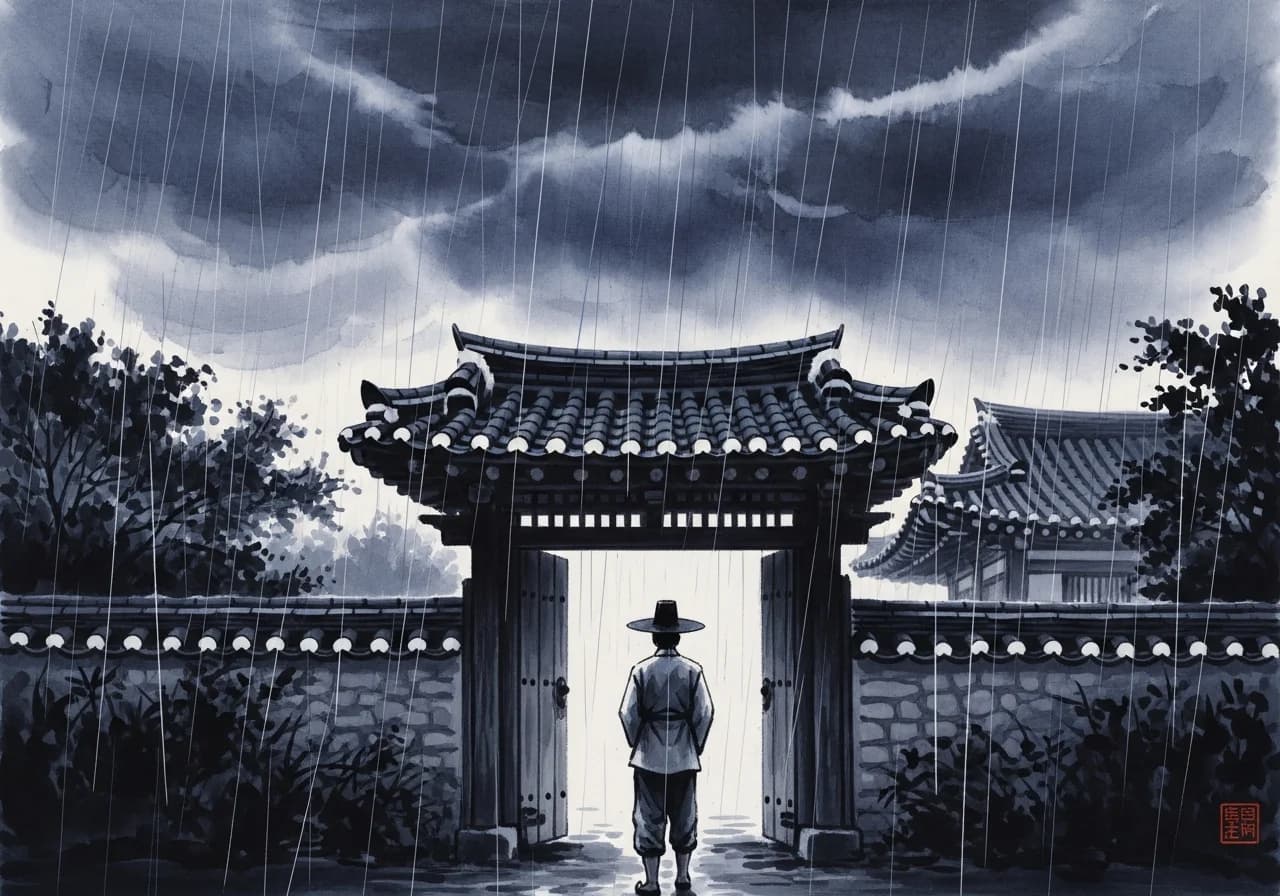
Not every version of this dream carries good news. If your spouse died by suicide or was murdered within the dream, the interpretation shifts to a warning. These scenarios signal external interference in the relationship, deep-seated conflict, or a dangerous breakdown in communication that needs urgent attention.
If this dream recurs repeatedly, it becomes harder to read as simply auspicious. Recurring dreams of a spouse's death may indicate that unresolved anxiety or relational strain is surfacing from the unconscious again and again — a cue to take your emotional wellbeing seriously.
If the dream followed a significant argument with your partner, treat it less as a fortune omen and more as a psychological reflection. Residual resentment or frustration from the fight is being projected into the dream. The most useful response is to have an open conversation with your partner and resolve the underlying tension.
Neutral Interpretation — A Turning Point and Transition
A spouse dying slowly from illness in a dream reflects real-world stress your partner is under, while simultaneously signaling that the struggle is nearing its end. It's a transitional omen — the difficult period is winding down.
A spouse dying suddenly in an accident signals that an unexpected major change is coming. While there may be temporary turbulence in the relationship, professionally it points to new doors opening in business or career. Rather than fearing the change, the dream calls for active readiness to embrace new possibilities.
Dream Variations
Husband Dying in a Dream
In traditional Korean interpretation, a living husband dying in a dream is a highly auspicious sign — one of the strongest omens in this category. It foretells the husband's continued health and longevity, along with family celebrations or financial gains to come. Because the husband traditionally symbolizes the economic pillar of the household, his death in a dream paradoxically signals that foundation growing stronger. If the dreamer wept intensely, accumulated worries are about to dissolve.
Wife Dying in a Dream
A wife dying in a dream signals that a long-standing worry will be resolved and great luck is approaching. The dream may also serve as a reminder of deep appreciation for one's partner, with the marital bond expected to grow closer as a result. Traditional Korean dream interpretation suggests treating this dream as an invitation to show more warmth and gratitude toward your spouse — which in turn amplifies the good fortune it foretells.
Spouse Dying in an Accident Dream
A spouse dying suddenly in an accident — car crash, fall, or similar — foreshadows an unexpected major change. While there may be temporary turbulence in the relationship, professionally it signals new doors opening in business or career. The dream's message is less a warning and more an invitation to prepare actively for change rather than resist it.
Spouse Dying of Illness Dream
A spouse dying gradually from illness reflects the real-world stress and strain your partner is enduring — while also suggesting that the ordeal is nearing its end. It is interpreted as a turning point: a difficult period is winding down. The dream is often a call to be more attentive and supportive toward your partner during a difficult stretch.
Dreaming of Attending a Spouse's Funeral
Attending a spouse's funeral in a dream is one of the most auspicious dream scenarios in Korean tradition. It signals an unexpected family celebration or major financial windfall. Traditional interpretation holds that the grander the funeral and the more mourners present, the greater the fortune that is on its way — including the help of an influential benefactor or unexpected social achievement.
Crying Over Spouse's Death in a Dream
Weeping loudly over a spouse's death in a dream is an especially positive sign — accumulated worries and long-unresolved problems will dissolve in waking life. The more one cries in the dream, the greater the real-world relief and good fortune expected to follow. Think of the tears as a cathartic release: the dream is processing and clearing burdens the waking mind has been carrying.
Spouse Shot or Stabbed in a Dream
Dreaming of a spouse being shot or stabbed and dying is considered an auspicious omen for financial fortune — it foretells a breakthrough in business or unexpected financial gains. While the violent imagery can feel alarming, in Korean folk tradition blood in a dream is itself a powerful symbol of incoming wealth. The more dramatic the scene, the stronger the omen.
Recurring Dreams of Spouse Dying
A recurring dream of a spouse's death is harder to read as simply auspicious. It may signal unresolved anxiety, fear about the relationship, or deep-seated stress that the unconscious keeps surfacing. If this pattern persists, it is worth improving communication with your partner and identifying the sources of worry in your life. If the dreams cause significant distress, speaking with a therapist or counselor can be genuinely helpful.
Cultural Context
At the heart of Korean traditional dream interpretation is the principle of 'reverse dreams' (역몽, yeongmong) — the belief that the most frightening images in dreams carry the most auspicious real-world meanings. Death in a dream is not an ending but a symbol of rebirth and renewal: the old shell is shed so something new can emerge.
This worldview is rooted in Korean shamanism (무속 신앙). In the initiation of a mudang (shaman), the experience of death and resurrection is a central motif — the shaman 'dies' symbolically through a period of spirit-illness (신병) to be reborn with spiritual power. This cosmological framework filtered naturally into folk dream interpretation.
Because a spouse has traditionally symbolized household stability, economic security, and social belonging, the spouse dying in a dream was seen as a powerful omen that these very foundations would be renewed and strengthened. A grand funeral with many mourners was particularly auspicious, indicating the arrival of a powerful benefactor (귀인) or significant social achievement.
Western Psychological Perspectives
Western psychology approaches this dream from a fundamentally different angle — and the contrast with Korean tradition is striking.
Freud interpreted dreams of a loved one's death as distorted expressions of repressed conflicts or unconscious wishes. Dreaming of a spouse dying may, in his framework, reveal hidden resentment toward the partner, a suppressed desire for independence, or unacknowledged ambivalence about the marriage — all filtered through the mind's censorship into symbolic dream imagery. For Freud, this dream is not a prophecy but a diagnostic signal: unresolved psychological tension is present beneath the surface of the relationship.
Jungian analysis takes a more generative view. In Jung's framework, the spouse in a dream often represents the dreamer's own inner contrasexual archetype — the anima (feminine soul in a man) or animus (masculine soul in a woman). A spouse's death therefore reflects the ego's readiness to shed an outgrown self-image and advance toward a new stage of individuation — a psychological deepening rather than literal loss. Remarkably, Jung's view of death in dreams as a symbol of transformation aligns closely with the Korean folk principle of the 'reverse dream.'
Modern cognitive psychology and sleep science take a more mechanistic view, seeing dreams of a spouse's death as the brain processing attachment-related anxiety. Fear of loss, relational insecurity, or accumulated daily stress can surface as this type of dream during the emotional regulation phase of sleep (particularly REM). Dream researcher Rosalind Cartwright described dreaming as 'the brain's way of processing complex emotions in a safe environment' — a framework that fits well with why this deeply distressing scenario appears so commonly in dreams across all cultures.
The cross-cultural contrast is illuminating: Western psychology reads this dream primarily as a projection of repressed emotion or attachment fear, while Korean folk tradition interprets it as the opposite — an omen of real-world good fortune and new beginnings. Both perspectives, however, agree that this dream signals significant inner change and connects to meaningful life transitions. The practical takeaway from both traditions is the same: pay attention to what this dream might be telling you about your emotional life and your relationship.
Frequently Asked Questions
Dreaming of a spouse dying is one of the most frightening scenarios the sleeping mind can conjure — and yet, through the lens of Korean dream tradition, it stands as one of the most auspicious omens you can receive. Death in the dream world signals rebirth in the waking one. If the dream was peaceful or involved you weeping, the signs point toward incoming good fortune, financial renewal, or a meaningful new chapter in your marriage. If the dream was violent or is recurring, treat it as an invitation to attend to your emotional world and invest more deeply in communication with your partner. Either way, this dream is asking you to pay attention.
Related Dreams
Family Dying Dream — Why Korean Tradition Sees This as a Sign of New Beginnings
Funeral Dream Meaning — Why This Dream Signals New Beginnings, Not Bad Luck
Parents Dying Dream Meaning — Why a Frightening Dream Can Be Good Fortune
Resurrection Dream — A Powerful Omen of Miraculous Revival
Someone Dying Dream Meaning