Buddhist Temple Dream Meaning — What Does a Temple Dream Signify?
If you walked through the gates of a Korean Buddhist temple in your dream last night, Korean dream interpretation has clear and exciting news: a major turning point is heading your way. In the rich tradition of Korean 꿈해몽 (dream interpretation), a temple is considered one of the most powerfully auspicious places a dream can take you — a space where long-blocked wishes break open and financial and career fortune surges. Here's the nuance worth knowing, though — the same setting transforms into a cautionary message when the temple is crumbling or its gates are locked.
Entering a Temple in a Dream — A Powerful Auspicious Omen
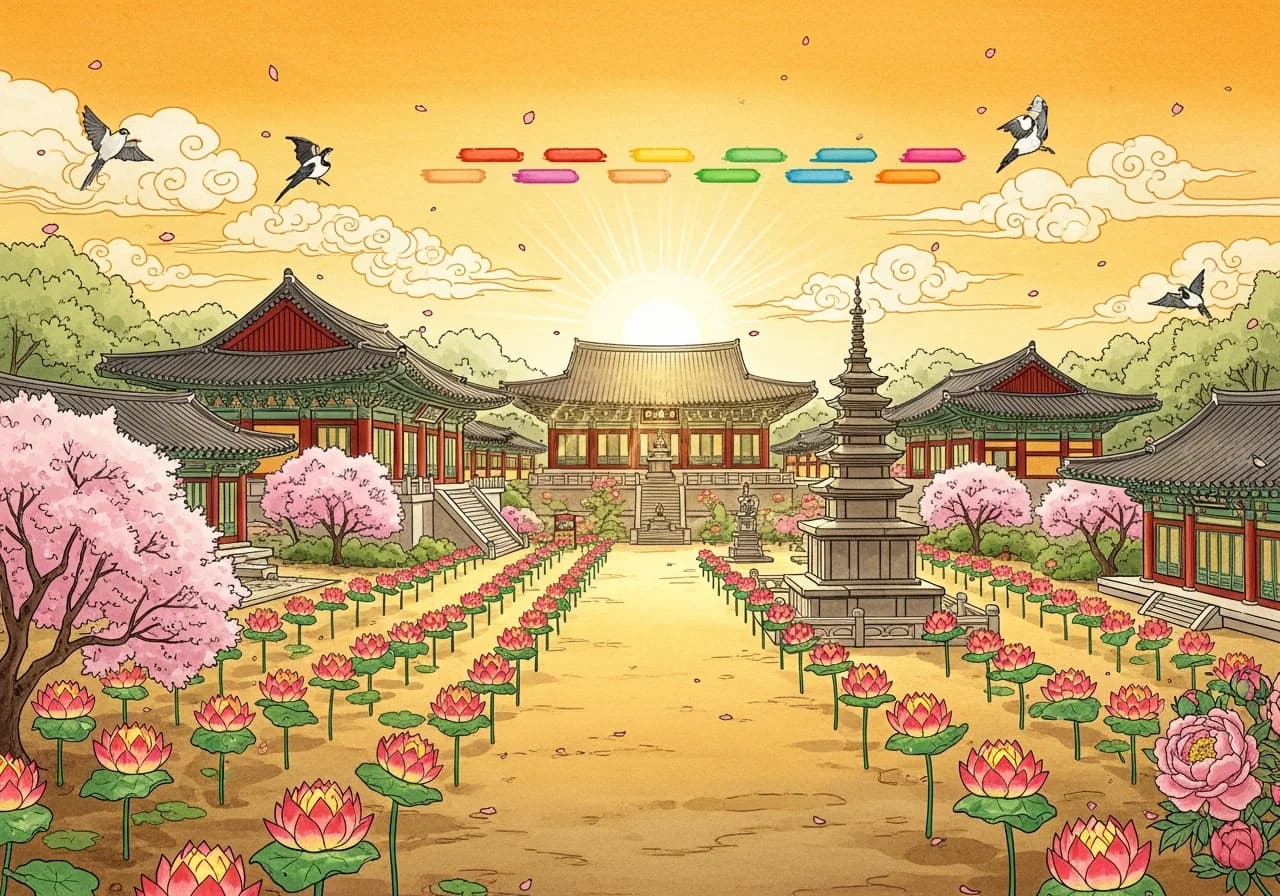
Passing through the main gate (일주문) of a mountain temple or stepping into its grounds ranks among the strongest auspicious omens in Korean dream tradition. The main gate is the threshold between the mundane world and the sacred — crossing it in a dream signals a real-world turning point is imminent. Long-stalled situations in employment, business, examinations, or relationships will break through, and new opportunities will come knocking. The brighter, more fragrant, and more peaceful the temple atmosphere felt, the stronger the omen. If you drew close to the main dharma hall or actually stepped inside, the dream foretells rising social standing and the arrival of a long-desired opportunity.
When a Temple Dream Turns Inauspicious — The Warning of a Collapsing Temple
A temple burning or collapsing, or temple gates locked against you, carries a warning that requires attention. The central dharma hall collapsing in particular signals that a foundation you have relied on — a relationship you trusted, your job security, or your financial base — may face unexpected turbulence. Getting lost while trying to find a temple also warns that reaching a desired goal or securing important support may face obstacles. After this type of dream, it is wise to pause on major financial decisions or significant contracts and take time to reassess the key relationships in your life.
Temple Dreams and Wealth Fortune — Which Dreams Signal Financial Luck?
In Korean dream interpretation, temples and financial fortune are closely linked. A grand panoramic view of a dharma hall gleaming in sunlight, five-colored clouds (오색구름) rising over the temple grounds, or a stone pagoda radiating golden light are among the highest omens for business and financial luck. Dreams of making an offering at a temple or placing coins in the donation box signal that financial abundance is growing and that acts of generosity will return as blessings. By contrast, stealing or behaving disrespectfully within a temple in a dream warns of financial losses or damaged social trust.
Temple Dreams and Wish Fulfillment — The Meaning of Stone Pagodas
Looking up at or circumambulating a stone pagoda (탑돌이) in a dream is the most direct symbol of wish fulfillment in Korean dream tradition. In Buddhist practice, walking reverently around a pagoda housing the Buddha's relics is a ritual act of prayer and petition. Performing this act in a dream strongly suggests that something deeply desired in waking life is finally about to be realized. The taller and more magnificent the pagoda, and the more it glows or shimmers, the more powerful the sign. For students, this may signal passing an exam; for job-seekers, an offer; for couples hoping to conceive, this dream can even connect to a conception dream.
Dream Variations
Dream of Walking Through Temple Grounds
Walking through temple grounds in a dream signals that a deeply held desire will be fulfilled and that spiritual peace and good fortune are approaching. The lighter your step and the more at ease you felt, the stronger the auspicious sign. Heavy footsteps or a sense of being lost, on the other hand, may reflect inner confusion or hesitation about a pending decision.
Dream of Passing Through the Temple Gate
Passing through the main gate (일주문) of a temple in a dream symbolizes cutting free from worldly difficulties and entering a new phase. It is an auspicious sign that long-stalled matters will break through and positive outcomes in employment, examinations, or business will follow. If the gate was wide open and you felt refreshed passing through, good news may arrive very soon.
Dream of a Temple Stone Pagoda
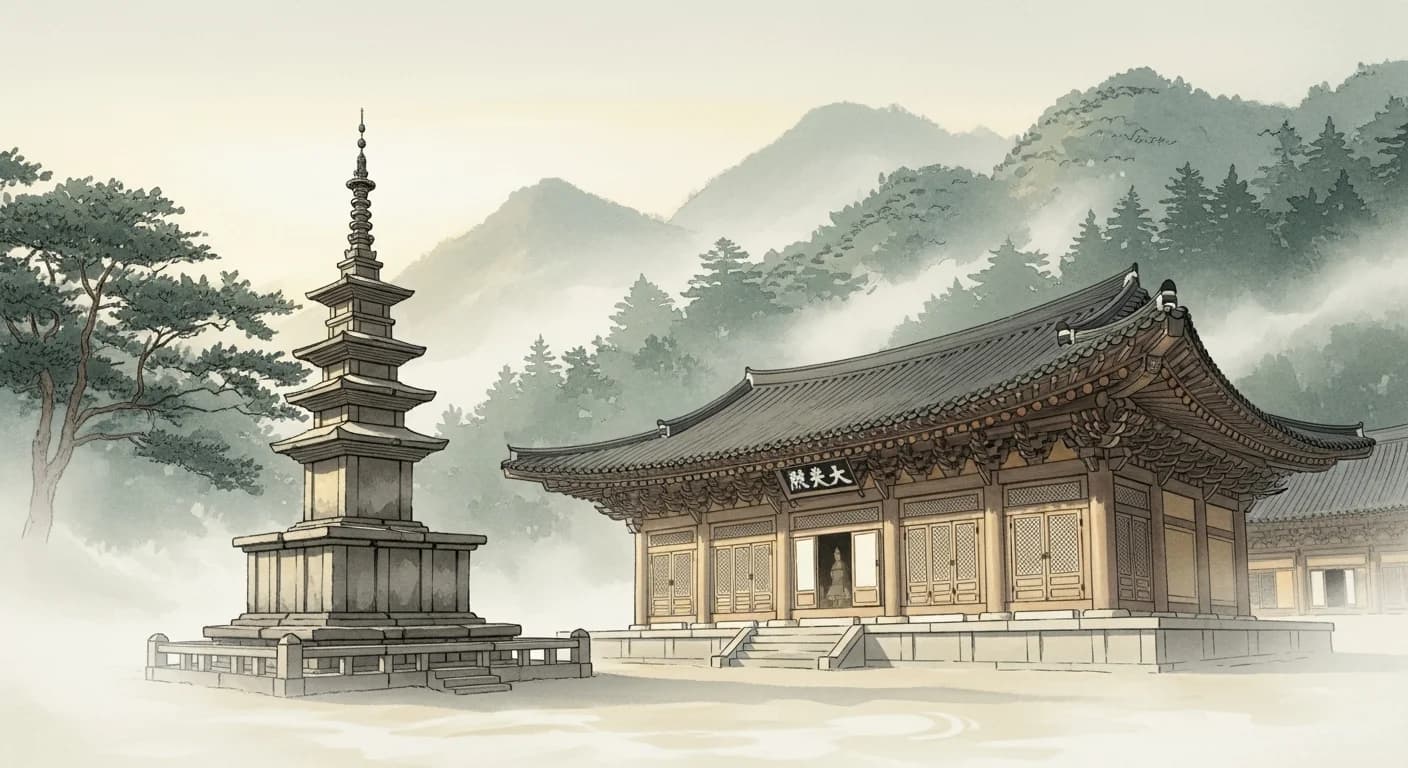
A towering stone pagoda standing magnificently in a dream foretells that accumulated efforts will bear fruit and a cherished wish will come true. If the pagoda emits a golden glow or radiance, even greater fortune is indicated. Circumambulating the pagoda or praying before it is considered one of the strongest wish-fulfillment omens in Korean dream interpretation.
Dream of the Main Dharma Hall (대웅전)
A grand and majestic main dharma hall appearing in a dream is an auspicious sign that social standing and authority will rise and important endeavors will reach favorable outcomes. Actually entering the dharma hall in the dream particularly suggests gaining a long-desired position or opportunity. If the hall glows with golden light or the Buddha statue radiates brightness, a major joyful event is foretold.
Dream of Going to a Mountain Temple
Heading to a temple deep in the mountains in a dream foretells attaining a higher spiritual level or finding answers to a difficult problem. If the climb was arduous but you arrived, it symbolizes achieving your goal through great effort. The harder the mountain path, the more meaningful and rewarding the achievement will feel in waking life.
Dream of Temple Lanterns
Seeing the beautiful sight of countless lotus lanterns lit throughout the temple grounds in a dream foretells the realization of hopes, brightening of relationships, and the arrival of joyful news. The warmer and more vivid the lantern glow, the stronger the omen of good tidings and favorable connections. Dreaming of walking under the lanterns with a romantic partner or spouse foretells happiness in love and family life.
Dream of Hearing the Temple Dawn Bell
Hearing the predawn pealing of a temple bell resonating through the dream is an auspicious omen signaling a new chapter beginning and long-awaited good news on its way. The clearer and farther the sound carries, the greater the joy that is foretold. If the bell sound was so vivid it felt like waking up, it signals that something important — an awakening or a key opportunity — is drawing very close in real life.
Dream of Incense Smoke at a Temple
Watching incense burn and its smoke curl upward in a temple is an auspicious dream suggesting that your wishes are reaching the heavens and will be answered. The higher and straighter the smoke rises, the stronger the omen of fulfilled desires. If you were personally lighting the incense in the dream, the fulfillment of your prayer is interpreted as near-certain.
Dream of Climbing Temple Steps
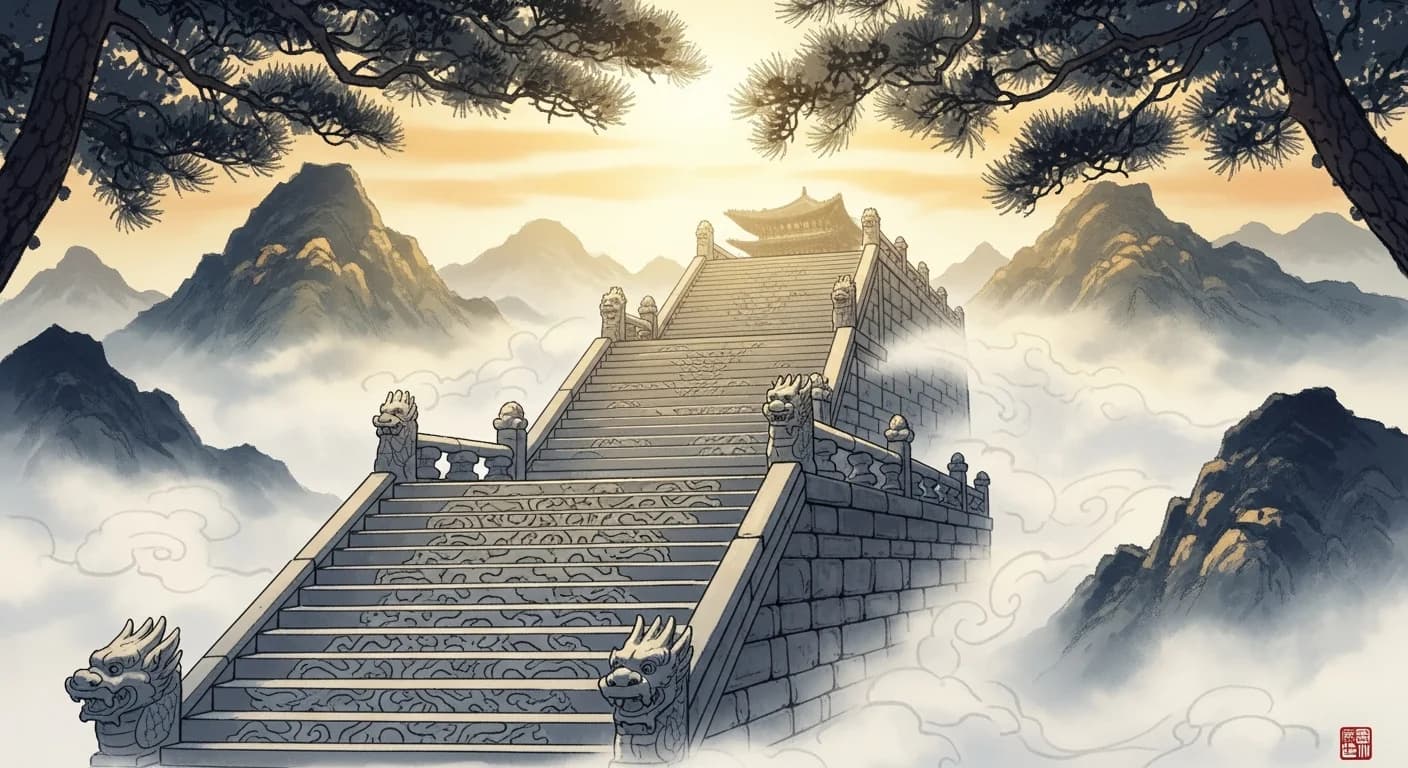
Energetically climbing the stone steps leading to a temple in a dream is an auspicious omen of imminent promotion, exam success, or elevation in status. Even if the climb is breathless, completing it symbolizes the determination and ultimate achievement of your goal. The moment the temple comes into view from the steps is a particularly positive sign that your target is now within reach.
Dream of a Temple Collapsing
A temple crumbling or collapsing in a dream is an inauspicious sign that a foundation or trusted relationship in your waking life may be shaken. Unexpected difficulties in health, finances, or key relationships may arrive, calling for careful preparation. If the dream showed a ruin left after the collapse, it warns that recovery may take time, making extra vigilance especially important now.
Dream of a Famous Korean Temple (Bulguksa, Haeinsa, Tongdosa)
When a historically prestigious temple such as Bulguksa, Haeinsa, or Tongdosa appears in a dream, it is generally interpreted as a stronger auspicious omen than a generic temple dream. These ancient, sacred sites carry centuries of spiritual authority, and their appearance suggests that great honor or lasting joyful events will come to the family. If the dream presented a vivid, panoramic view of the temple, good news concerning social recognition or reputation is likely near.
Dream of a Temple Stay
Dreaming of spending the night at a temple or participating in a temple-stay program indicates that the time has come for physical and mental renewal. The dream carries the message to step back from current stress and confusion before making an important decision. Rather than a direct auspicious or inauspicious sign, this dream is best understood as an inner signal to pause and gather clarity.
Cultural Context
Korean Buddhist temples are living archives of the peninsula's history and culture, far more than mere religious facilities. After Buddhism arrived during the Three Kingdoms period (4th–7th centuries CE), temples took root deep in the mountains, becoming threshold spaces where the mundane and the sacred converge. Traditional temple architecture — called garam (伽藍) — is deliberately designed so that visitors pass through the main gate (일주문), the Heavenly Kings Gate (천왕문), and the Gate of Non-Duality (불이문) in succession, gradually approaching the sacred core. This journey itself enacts a symbolic progression from worldly suffering toward liberation. Korea's most venerated temple complexes — Bulguksa in Gyeongju, Haeinsa in Hapcheon housing the Tripitaka Koreana, and Tongdosa in Yangsan — are UNESCO World Heritage sites that millions of Koreans visit each year for prayer and wish fulfillment. On Buddha's Birthday every spring, tens of thousands of lanterns light up temple grounds across the country, and the Yeondeung lantern procession becomes the nation's largest Buddhist cultural celebration. Since the 2000s, the temple-stay program has further redefined the temple as a healing space for urban Koreans seeking spiritual and physical restoration. In the layered spiritual geography of Korean culture — where shamanism, Buddhism, and Confucian values intersect — the temple stands as the archetype of the sacred place, and its appearance in a dream signals that its sacredness has been projected onto the dreamer.
Western Psychological Perspectives
Western psychology offers several compelling frameworks for understanding why temples appear so powerfully in dreams. From a Freudian perspective, visiting a space of strict discipline and sacredness — like a temple — reflects the moral demands of the superego and the ego's desire to live up to them. The temple, as a space of purification and asceticism set apart from ordinary life, appears frequently when the dreamer carries unresolved guilt, moral conflict, or a deep need for recognition. A dream in which the path to the temple is blocked or treacherous can be read as inner tension between the superego's exacting standards and the ego's sense of inadequacy. Jungian analytical psychology offers an especially rich reading: the temple as sacred place is where the mandala archetype and the Self archetype are projected. The temple's architectural movement toward the center — passing through gates, traversing the grounds, arriving at the dharma hall — maps precisely onto the individuation process, drawing ever closer to the core of the Self. Visiting a temple in a dream represents the psyche's spontaneous movement toward the sacred dimension embedded in the collective unconscious, the source of healing and wholeness. From a modern neuroscience perspective, temple dreams function as the brain's self-regulatory response to overload and stress. The image of a quiet temple nestled in nature carries the properties of a meditative and restorative environment — known to reduce amygdala activation and engage the default mode network. During periods of high stress or when a major life decision looms, the brain generates imagery of sacred, peaceful spaces as an attempt to restore emotional equilibrium. Across world cultures, dreaming of sacred religious sites is a universal phenomenon. Just as church or cathedral dreams in the West symbolize guilt, forgiveness, or divine protection, temple dreams in Korea carry similar connotations of sacred care — but rest on a unique interpretive framework shaped by the fusion of Buddhism, shamanism, and Confucian values. Where Western psychology reads a temple dream as an inner search for integration and peace, Korean traditional dream interpretation connects it more concretely to tangible real-world outcomes: financial luck, wish fulfillment, and success in examinations or careers.
Frequently Asked Questions
A Buddhist temple dream is one of the most auspicious settings Korean dream tradition offers. Whether you walked through glowing lanterns, circled a stone pagoda, or climbed steep steps toward its rooftop, these images carry a consistent message: something long-awaited is about to open up. Hold onto the sense of peace the dream gave you — it may be telling you that the door you've been knocking on is finally about to swing open.