
Tsunami Dream Meaning — How Awe vs. Fear Determines Your Fate
Few dream symbols carry the raw power of a tsunami. In Korean dream tradition, a tidal wave is not simply a disaster — it represents a force of change so overwhelming that no human effort can stop it. What matters entirely is how you met it. Did you watch the wave with awe from safe high ground, or did you feel it drag you under into dark, murky water? That single distinction is what separates one of the most auspicious dream signs from one of the most urgent warnings. This guide breaks down every scenario.
Auspicious Signs — Surviving, Watching with Awe, Rescuing Others
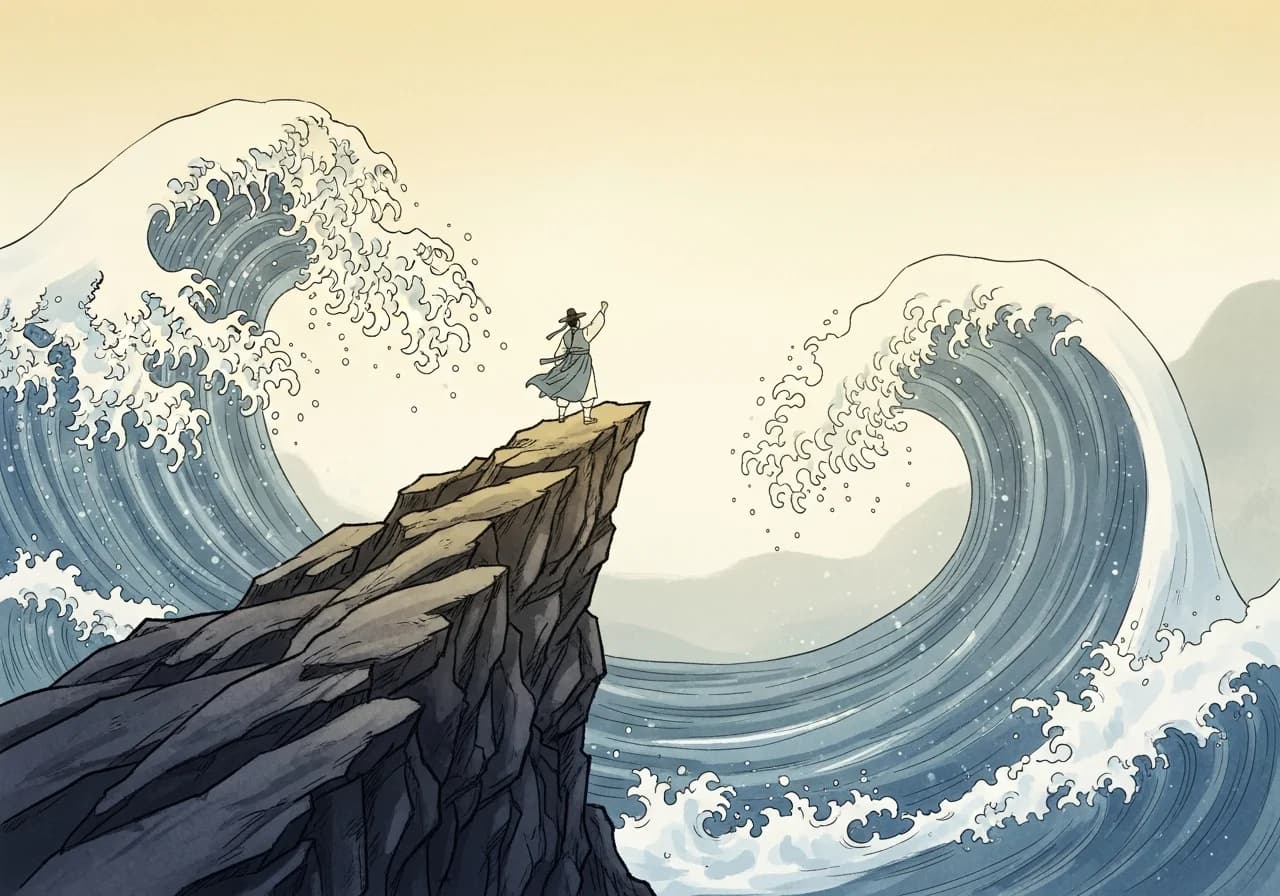
Watching an enormous tsunami approach from a safe distance, feeling wonder rather than terror, is one of the most powerful auspicious omens in Korean dream tradition. The larger and more majestic the wave, the greater the fortune it heralds. For business owners, it predicts a surge of clients and thriving commerce. For employees, a dramatic career advancement. For pregnant women, it is a pregnancy omen (태몽) of exceptional strength — the dream of carrying a child destined to become a person of great power, cultural influence, or pioneering artistry.
Escaping the wave by climbing to high ground and surviving is equally powerful. It affirms that you have the inner resilience and resourcefulness to conquer even the most overwhelming adversity in waking life, and often foreshadows promotion, business success, or an unexpected financial windfall.
Helping or rescuing others during the tsunami signals that past efforts and good deeds are about to be rewarded. Recognition as a trusted leader within your organization, or crucial support from a key mentor, is on the way.
Finally, if a tsunami of clean, crystal-clear water floods into your home, this is a highly auspicious sign of unexpected wealth and family prosperity. The home symbolizes personal fortune and family — clean water filling it completely is a traditional portent of great abundance.
Inauspicious Warnings — Swept Away, Murky Water, Fleeing and Failing
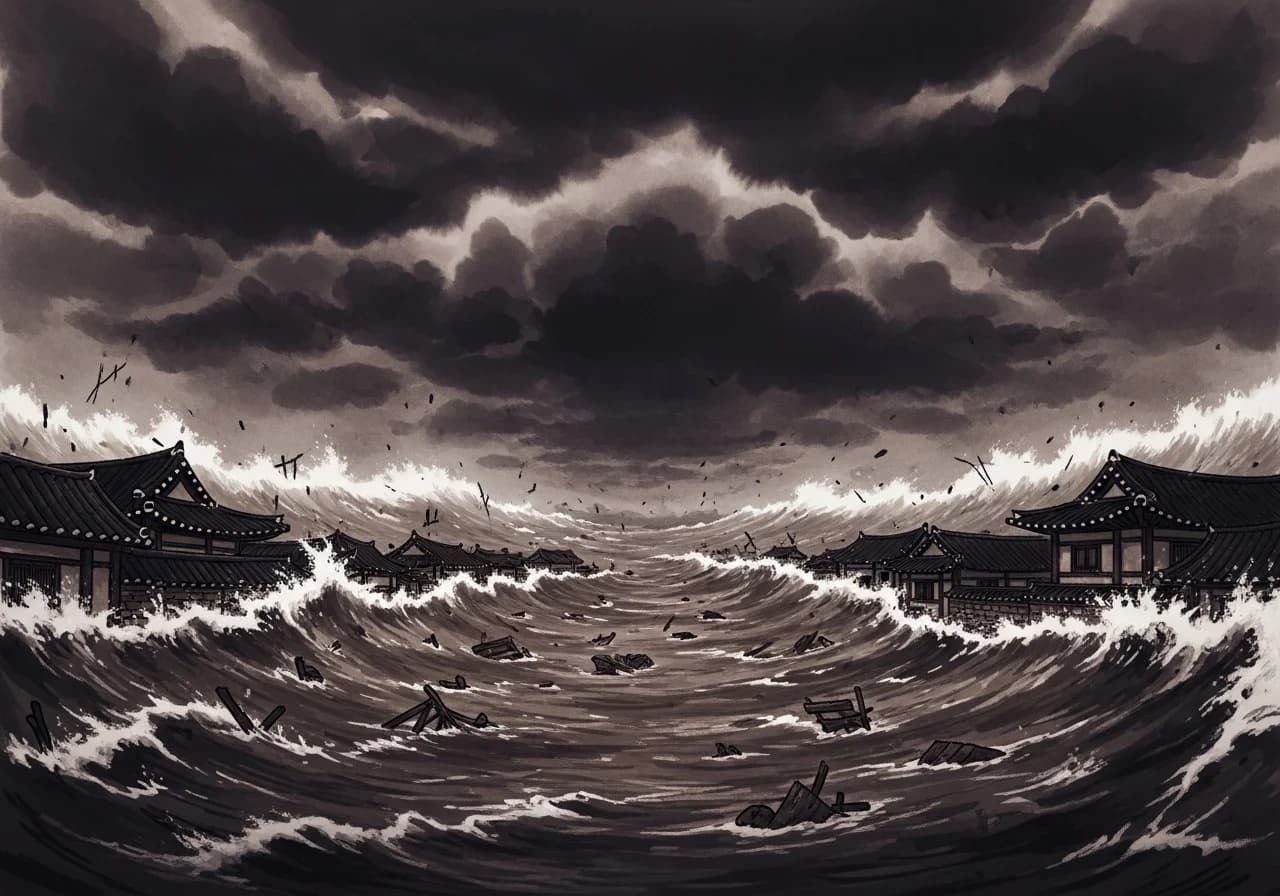
Being swept away and submerged by a tsunami is a clear warning: you may be overwhelmed by forces beyond your control in waking life. Ongoing projects or plans may hit sudden walls, financial loss is possible, and health deserves attention.
Watching a tsunami obliterate an entire town warns that your current plans or ventures could face severe, potentially total, obstacles. Relationship crises or family tension may accompany this upheaval.
A tsunami of murky, muddy, or dark reddish water intensifies the warning. It foretells financial setbacks, family discord, and particular concern for the health of elderly relatives or parents.
Fleeing the tsunami but failing to escape — being caught or cornered — signals avoidance behavior. Real-world problems you are sidestepping are accumulating and will eventually demand a reckoning. The dream urges direct confrontation rather than continued flight.
Neutral — Sensing the Wave Early, Standing in the Aftermath
Sensing a tsunami coming before it arrives and calmly preparing to evacuate is a neutral but encouraging sign. Your intuition is sharp and functioning. The dream suggests you still have time to prepare before a real crisis hits — act thoughtfully and the storm can be weathered.
Standing in the quiet aftermath of a tsunami, surveying a now-still landscape, symbolizes that a major period of upheaval is ending or has already passed. It is time to begin rebuilding and preparing for a fresh chapter rather than dwelling on what was lost.
Dream Variations
Surviving a Tsunami Dream
Surviving a tsunami is one of the most auspicious dream scenarios in Korean tradition. It predicts that you will overcome a major real-world crisis and emerge successful. The dream affirms extraordinary inner strength and resilience, and often foreshadows career advancement or major business success.
Being Swept Away by a Tidal Wave Dream
Being swept away by a tidal wave signals that you feel powerless against circumstances beyond your control. It warns of potential business failure, financial loss, or an emotional blow that may feel devastating. Take this as a prompt to shore up vulnerable areas of your life.
Watching a Tsunami from a Distance Dream
Watching a tsunami approach from a safe distance represents awareness of sweeping change or powerful new forces moving toward you. If you felt awe rather than fear, it is a strong auspicious sign of major opportunity. If you felt terror, it warns of an approaching crisis.
Fleeing from a Tidal Wave Dream
Fleeing a tidal wave and escaping successfully can signal career advancement or thriving business. However, if you are caught or cornered while fleeing, the dream warns of avoidance — problems you are not confronting will not resolve themselves and may grow larger.
Tsunami Hitting Your House Dream
A tsunami engulfing your home is an auspicious sign of unexpected wealth and family prosperity — if the water is clear. If the water is murky or the house collapses, it warns of family discord or serious financial difficulty that requires prompt attention.
Clear Water Tsunami Dream
A tsunami of clean, crystal-clear water is a highly auspicious omen of great fortune and incoming wealth. Korean dream tradition holds that the clearer the water, the greater the blessing it carries. This is one of the most positive water dream variants.
Muddy Tsunami Dream
A muddy or dark-colored tsunami is a warning dream, pointing to financial setbacks, family tensions, or health concerns. Pay particular attention to the wellbeing of elderly relatives or parents in the period after this dream.
Tsunami Dream as Pregnancy Omen (태몽)
In Korean tradition, dreaming of a tsunami while pregnant is one of the most powerful pregnancy omens available. It indicates you are carrying a child destined to become a person of great power, cultural influence, or pioneering achievement — a transformative figure of their generation.
Facing a Tsunami with Family Dream
Facing a tsunami together with your family signals that a shared challenge or collective hardship may be approaching for your household. It is a prompt to strengthen family communication, reinforce bonds, and prepare together rather than individually.
Post-Tsunami Devastation Dream
Surveying the ruins left by a tsunami warns that current plans or ventures may face severe — potentially fatal — obstacles. The dream can also signal the need for a fundamental reassessment and a fresh start, rather than attempting to patch what may be beyond repair.
Cultural Context
In Korean folk dream interpretation, water is the primary metaphor for wealth, vitality, and social momentum — and a tsunami or tidal wave represents that force at its most overwhelming and unstoppable. Unlike an ordinary flood, a tidal wave in Korean tradition symbolizes forces 'beyond human resistance': a cultural wave, a power shift, or an idea whose time has irresistibly come. Historically, Korea's coastal communities treated tsunami dreams with particular gravity, reading them as omens predicting the outcomes of fishing voyages or the arrival of powerful outside forces. For merchants and entrepreneurs, the image of a wave bringing everything before it was read as an omen of surging business; for scholars and artists, it predicted works or ideas that would reshape society. As a pregnancy omen (태몽), a tsunami was one of the grandest signs available — forecasting a child destined to become a transformative figure of their era. The critical interpretive variable, as in all Korean water dreams, remains the water's clarity: clean waves bring fortune, murky waves bring ruin.
Western Psychological Perspectives
Western psychology and Korean folk tradition approach the tsunami dream from remarkably different angles, and understanding both enriches the interpretation.
From a Freudian psychoanalytic perspective, a tsunami represents the extreme end of flood symbolism: suppressed libidinal energy or long-unprocessed traumatic material erupting through the ego's defenses with catastrophic force. The tsunami's sudden, overwhelming nature — far more violent than an ordinary flood — indicates that the repression has been especially intense or long-standing. Something buried deeply is demanding to be acknowledged, and the psyche is using the most dramatic imagery available to make that demand heard.
Jungian analytical psychology reads the tsunami as an eruption of archetypal energy from the deepest layers of the collective unconscious, overwhelming the conscious ego's structured persona. This is the individuation process at its most dramatic: the Self dismantling an outgrown ego structure so that a more authentic, integrated identity can be reborn from the wreckage. Surviving the tsunami in the dream is, in Jungian terms, a profoundly positive sign — it suggests successful passage through this psychological death-and-rebirth cycle toward a more whole self.
Modern cognitive psychology and trauma research link tsunami dreams closely to extreme stress, overwhelming anxiety, and post-traumatic stress responses. Research following real-world disasters like the 2011 Tōhoku earthquake documented a dramatic surge in tsunami nightmares among survivors and witnesses — the brain replaying and attempting to process what it could not absorb in waking life. If tsunami dreams recur frequently, they may signal unresolved trauma or an overwhelming burden that deserves attention, possibly with professional support.
What is particularly striking is how differently the Korean and Western traditions read the same dream. Where Western psychology focuses almost exclusively on the overwhelm and the threat, Korean tradition actively embraces the tsunami's scale and majesty as a potential symbol of powerful positive change. The Korean insight — that awe in the face of a tsunami is categorically different from terror, and leads to a categorically different outcome — is a genuinely distinct and valuable perspective. Similar nuance appears in other tsunami-prone cultures: in Japan and Indonesia, tidal wave dreams are often read as omens of transformative change rather than purely negative portents.
Frequently Asked Questions
A tsunami is among the most powerful symbols a dream can offer. The same scale that makes it one of the most auspicious omens when met with awe makes it one of the most urgent warnings when met with helplessness. The decisive question is always the same: how did you face the wave? If you watched it with wonder, climbed above it, or survived its passage, the current of life is moving in your favor. If you were swept under into murky water, something in your waking world demands honest attention. Either way, the dream is doing exactly what dreams are meant to do — bringing what is most essential into undeniable focus.
Related Dreams
Flood Dream Meaning — The Color of the Water Changes Everything

Ocean Dream Meaning — What the Sea Is Telling You
Drowning Dream Meaning — What Korean Dream Tradition Really Says

Water Dream Meaning — The Clearer the Water, the Greater the Fortune
Rain Dream Meaning — Korean Interpretation from Fortune to Warning
Falling Into Water Dream Meaning — Good Omen or Bad?