Vomiting Dream Meaning — What You Expel Changes Everything
If you dreamed of vomiting last night, Korean dream tradition has a nuanced answer for you — and it hinges entirely on one question: did you feel relieved afterward, or distressed? In Korean folk dream interpretation (해몽), vomiting is not a sign of illness but a powerful symbol of purification (정화), and what comes out of your body determines whether fortune is flowing toward you or away. Vomiting blood or jewels, for instance, has been considered one of the most auspicious financial omens in Korean shamanistic tradition for centuries. But here's where it gets interesting — vomiting food carries the exact opposite meaning, signaling that received blessings are slipping away. The difference between a lucky dream and a warning sign is literally what you're throwing up.
Auspicious Vomiting Dreams: Signs of Wealth and Purification

The most powerfully auspicious vomiting dream in Korean tradition is vomiting blood — specifically bright red blood. This is consistently interpreted as a sign of major incoming financial gain and a rise in social standing. The more blood expelled, the greater the expected wealth. The key qualifying condition is feeling refreshed and unburdened after the dream, which confirms liberation from long-held worries and the fulfillment of desires.
Vomiting jewels, gold, or precious metals is equally, if not more, auspicious. When luminous gemstones or golden objects emerge from your mouth in a dream, Korean tradition reads this as inner wealth becoming real and visible — expect unexpected financial windfalls, a helpful benefactor appearing in your life, career advancement, or a pivotal business opportunity. The brighter and more beautiful the jewels appear, the stronger the expected outcome.
Expelling insects, parasites, or foreign objects through vomiting also carries a positive meaning. The body ridding itself of what should not be there mirrors life clearing itself of longstanding troubles, anxieties, or toxic influences. For the sick, this dream predicts recovery. For those in professional conflict, it signals resolution. Crucially, in any vomiting dream, the emotional state upon waking is the primary interpretive key: feeling clean and light is a good omen, regardless of what was expelled.
Inauspicious Vomiting Dreams: Warnings of Loss and Stress
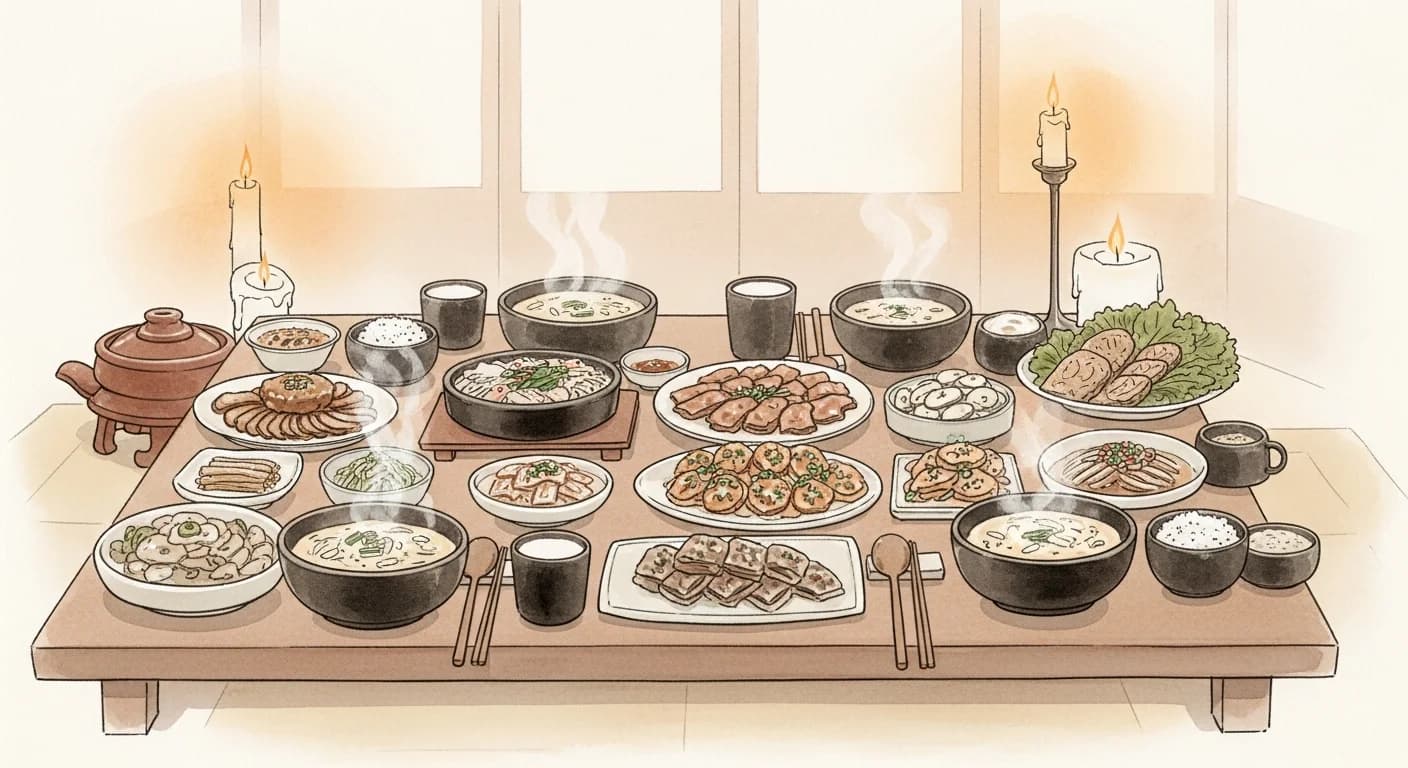
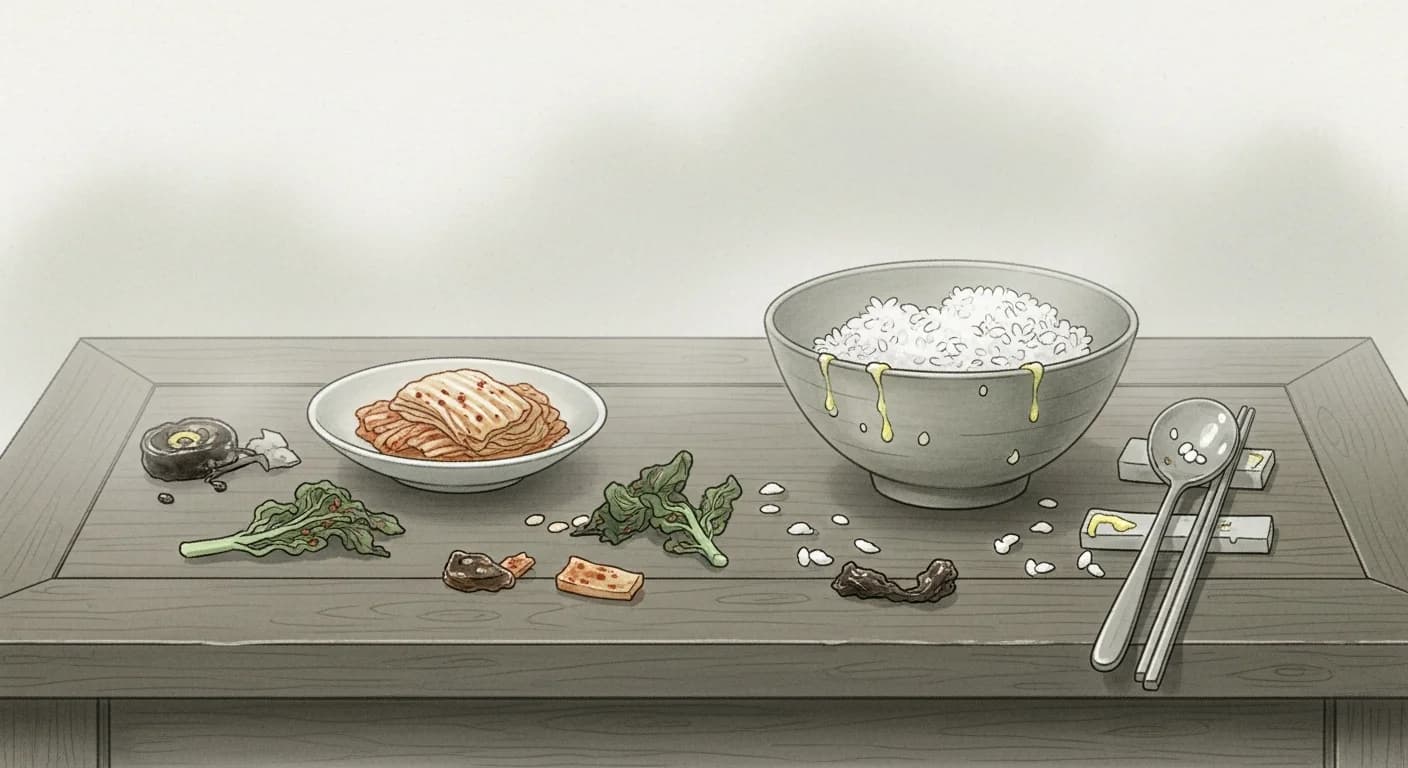
Vomiting food after eating is the clearest inauspicious vomiting dream in Korean tradition. Food symbolizes received blessings and fortune (복록, pronounced bok-rok). To vomit food is to return those blessings — a powerful symbol of power, prestige, or wealth flowing out of your life. This dream warns of losing one's position, reputation, or authority. Traditional interpretation also advises pregnant women to take extra care of their health after having this dream.
Vomiting while drinking alcohol warns of domestic discord or business failure. It may also reflect a loss of personal agency — feeling pushed around by others and unable to make your own decisions. This dream calls for reflection on whether you are genuinely in control of your current path.
Uncontrollable or sudden vomiting in a dream reflects severe accumulated stress, both mental and physical. It signals deteriorating relationships or an impending health concern that needs attention. Watching someone else vomit is also inauspicious, foretelling illness or misfortune for that person, or warning the dreamer of becoming entangled in another's difficulties.
Neutral Vomiting Dreams: When Context Matters Most
Trying to vomit but being unable to do so is a neutral dream that leans cautionary. It reflects efforts that fall short of expectations, problems that refuse to resolve, or words and emotions that remain trapped inside. This dream invites honest self-examination about what you are holding back.
Seeing a rival or competitor vomit carries a favorable edge — it suggests the dreamer holds the upper hand in a competition, with fortune tilting in their direction over the opponent.
The central interpretive principle across all vomiting dreams is consistent: the nature of what is expelled and the emotional quality of the experience — refreshed versus distressed — determine whether the dream is a message of incoming fortune or an invitation to protect what you have.
Practical Guidance: What to Do After a Vomiting Dream
Korean dream interpretation is not purely fatalistic — it offers guidance on how to respond. If you had an auspicious vomiting dream (blood, jewels, insects expelled with relief), this is a favorable window for business ventures, investment decisions, job applications, or asking for a promotion. Act on opportunities that arise in the coming days.
If you had an inauspicious vomiting dream (food vomited, persistent distress), this is a time for caution: protect your reputation and professional standing, avoid impulsive financial decisions, and schedule a health check if you have been putting one off. Pregnant dreamers should discuss any health concerns with their doctor.
If vomiting dreams recur, the interpretation transcends fortune-telling and enters the territory of modern psychology: your mind is signaling overload. Chronic stress, burnout, or unprocessed emotional conflict may be expressing themselves through your dreams. Prioritize rest, seek support, and find outlets for what you have been suppressing.
Dream Variations
Vomiting Blood Dream Meaning
Vomiting bright red blood is a powerful auspicious omen for business and financial gain — the more blood, the greater the incoming wealth. However, if discomfort or anxiety follows the vomiting, it warns of health deterioration rather than fortune. Vomiting dark or black blood symbolizes financial outflow or loss — a notably different interpretation based on the color alone.
Vomiting Food Dream Meaning
Vomiting food after eating generally warns of losing one's position, prestige, or authority — because in Korean tradition, food represents received fortune and blessings. To expel food is to return those blessings. It can also signal that unjust gains must be returned. Pregnant women are traditionally advised to pay special attention to their health after this dream.
Vomiting Insects or Worms Dream Meaning
Expelling insects or worms through vomiting symbolizes freedom from long-held worries, inferiority complexes, or toxic situations. For the ill, it predicts recovery. This is broadly auspicious — the body visually purges what has been draining it, and waking life is expected to follow suit.
Vomiting Jewels Dream Meaning
Jewels or precious metals emerging through vomiting is one of the most strongly auspicious vomiting dreams, foretelling great wealth, business expansion, career advancement, or a pivotal contract. It suggests inner value being externalized and recognized by the world. The brighter the jewels, the stronger the expected outcome.
Feeling Nauseated and About to Vomit Dream
Feeling deeply nauseous but unable to actually vomit reflects emotion at a breaking point — repressed feelings, unexpressed frustration, and mounting stress about to overflow. It is a signal to find healthy outlets for pent-up emotion before reaching a crisis point in waking life.
Vomiting Stones Dream Meaning
Vomiting stones represents the removal of obstacles blocking relationships or ongoing projects. Longstanding problems resolve and interpersonal tensions ease. This dream is generally auspicious, pointing to a clearing of the path ahead.
Vomiting Hair Dream Meaning
Vomiting hair reflects mental entanglement — a mind overwhelmed with tangled, unresolved thoughts. It often points to declining focus in academic or professional contexts, or intellectual stress that needs unwinding. This dream leans inauspicious and suggests a need to simplify and declutter mentally.
Vomiting While Drinking Alcohol Dream Meaning
Vomiting while drinking alcohol warns of domestic discord or business failure. It may also symbolize a loss of personal agency — being pushed around by others rather than making independent choices. Korean dream tradition reads this as a call to reflect on current decisions and reclaim autonomous judgment.
Cultural Context
In traditional Korean dream interpretation, vomiting is not a mere physiological act but a powerful symbol of purification (정화, jeong-hwa) and release (방출, bang-chul). In shamanic (무속, musok) traditions, expelling something from the body carries ritual significance — the act itself is a cleansing of impurity and negative spiritual energy. When the expelled substance is valuable, such as blood or jewels, it is interpreted as inner fortune manifesting outward into the visible world — a divine revelation (현현, hyeon-hyeon) of blessings.
Conversely, vomiting food symbolizes refusing received blessings — the act of sending back fortune that was given. This reading is deeply embedded in the Korean concept of 복록 (bok-rok), the accumulated good fortune and material blessings one is destined to receive.
Classical Korean dream manuals (몽서, mong-seo) from the Joseon period also framed vomiting as a process of eliminating internal toxins or ill fortune. The traditional saying 토혈득재 (to-hyeol-deuk-jae) — 'vomit blood, receive wealth' — is shared across the broader East Asian cultural sphere, appearing in both Korean and Chinese classical dream literature.
In contemporary Korean dream culture, emotional state after the act — feeling clean and refreshed versus feeling distressed — has become the primary interpretive standard. This shift reflects a modern integration of psychological intuition with traditional symbolism, making the dreamer's own felt experience the final arbiter of meaning.
Western Psychological Perspectives
Western psychological perspectives on vomiting dreams reveal both universal themes and fascinating cultural divergences from Korean tradition.
From a Freudian standpoint, vomiting dreams represent the unconscious rejection of repressed desires, guilt, or unwanted thoughts and emotions. They connect to defense mechanisms like projection and reaction formation — the psyche 'expelling' what it cannot consciously accept or integrate. Vomiting food may specifically signal oral-stage conflicts: ambivalence between accepting nourishment (which Freud associated with love and validation) and rejecting it. The dream becomes a theater of the unconscious working through what the waking mind refuses to examine.
In Jungian analysis, vomiting symbolizes the ego attempting to expel the shadow — the unconscious, repressed aspects of the self that accumulate through a lifetime of social conditioning. The nature of what is expelled is the interpretive key: dark, rotten matter suggests a failed or refused integration of the shadow in the individuation process, while luminous substances — jewels, gold, radiant objects — indicate the Self's latent potential being externalized in a positive transformation. This Jungian reading converges remarkably with Korean tradition's interpretation of vomiting jewels as an auspicious sign: in both frameworks, luminous matter emerging from within represents inner worth becoming visible.
Modern cognitive psychology and neuroscience frame vomiting dreams primarily as the brain processing high stress, anxiety, or feelings of losing control — sometimes literally reflecting somatic sensations during sleep. Recurring vomiting dreams are frequently associated with burnout and psychological overload, as the brain uses the vivid act of purging as a simulation for dealing with overwhelming real-life situations it has not yet resolved.
The cross-cultural view reveals a shared intuition beneath different vocabularies. Ancient Greek medicine saw expelling bad humors as healing; classical Chinese dream interpretation holds that 'vomiting blood brings wealth' — a mirror of Korean tradition. Japanese dream interpretation (夢占い) treats vomiting as ritual cleansing of negative energy. The distinctive feature of East Asian traditions — including Korean — is the strongly positive financial interpretation when blood or jewels are expelled, which has no counterpart in mainstream Western dream symbolism, where vomiting more commonly carries associations of disgust, shame, or loss of control. This contrast illustrates how profoundly culture shapes the meaning we assign to the same visceral experience.
Frequently Asked Questions
Vomiting dreams in Korean tradition are a striking example of how the same physical act carries radically different meanings depending on context. Expelling blood or jewels with a sense of relief signals fortune and liberation; expelling food with distress warns of loss. The body in dreams becomes a symbolic stage where inner fortune, suppressed emotions, and life changes are performed for your waking mind to interpret. If these dreams recur, treat them as your mind's honest report on your stress levels — and respond accordingly. The most important question, as always in Korean dream interpretation, is not just what happened in the dream, but how it made you feel.