Eating Dream Meaning — Korean Dream Interpretation for Food Dreams
In Korean dream tradition, eating is one of the most auspicious dream themes — food represents fortune (복, bok), abundance, and the foundation of life itself. There's a Korean saying, 'rice is the best medicine,' and that reverence for food runs deep in how eating dreams are read. But here's the twist: what you eat, how it tastes, and who you eat with can flip the interpretation entirely.
Lucky Dream: Eating Delicious Food to Satisfaction

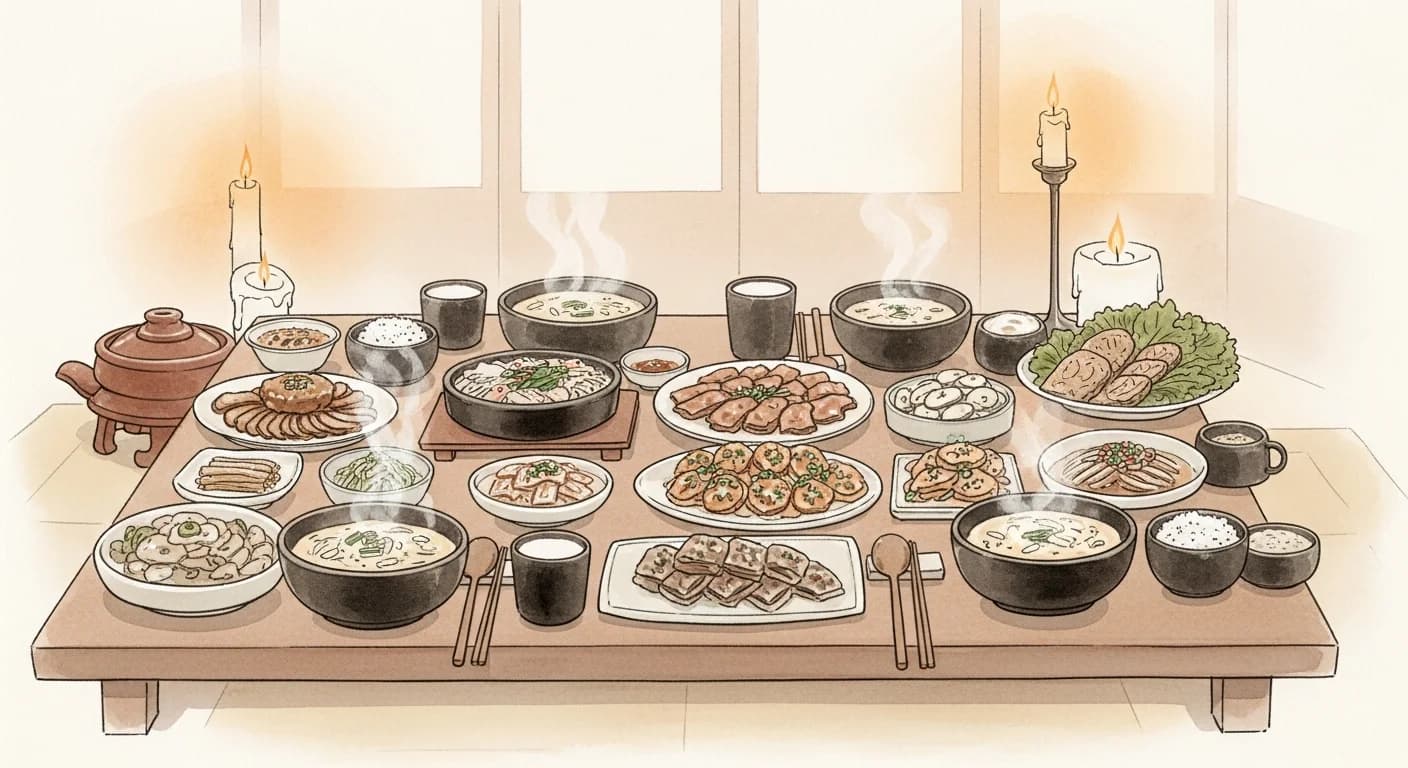
Eating warm, tasty food until you're comfortably full is one of the most celebrated lucky omens in Korean dream interpretation. It signals that current efforts will bear fruit, financial stability is approaching, and a worry-free period of life is ahead. Eating at a feast, banquet, or buffet takes this further — it's considered a powerful omen for unexpected windfalls or booming business. Enjoying high-quality or elaborate dishes suggests rising social status and honor. Sharing a meal with others is equally auspicious: it foretells improved relationships and success through cooperation. Eating peacefully with family signals household harmony and prosperity. Dining with a romantic interest may hint at budding romance or even marriage prospects.
Lucky Dream: Eating Fresh Fruit or Vegetables
Eating fresh, vibrant fruit or vegetables in a dream signals improving health and renewed vitality. Korean tradition holds that the brighter and more beautiful the fruit's color, the greater the incoming fortune. This dream often foretells reaping the rewards of past hard work or receiving unexpected good news. In Korean taemong (pregnancy dream) culture, receiving or eating fresh, beautiful fruit is considered a propitious sign for conceiving a gifted child.
Inauspicious Dream: Eating Spoiled Food or Vomiting After Eating
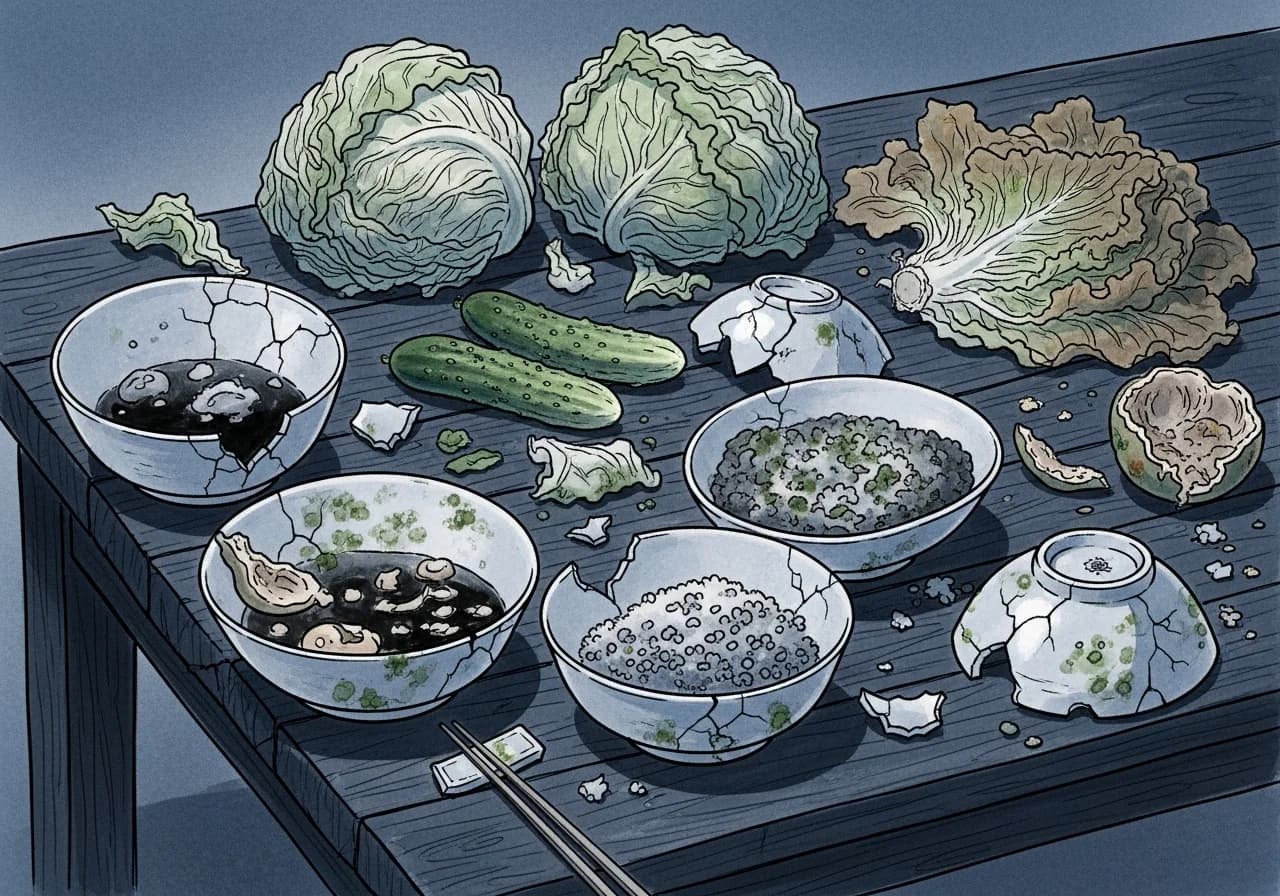
Eating spoiled or rotten food is one of the clearest inauspicious signs in Korean dream interpretation, warning of health deterioration or illness. It may also point to disappointment from trusted people or situations, or minor financial setbacks. The worse the food's condition in the dream, the greater the caution warranted. Vomiting after eating in a dream carries a warning that you may be overextending yourself, risking significant loss of wealth or opportunity. However, there is nuance: if you felt relieved and refreshed after vomiting in the dream, Korean tradition reads this as a positive sign of stress release and health recovery.
Inauspicious Dream: Eating Alone in a Gloomy Atmosphere
Eating alone in a sad or gloomy atmosphere symbolizes loneliness, isolation, or coming relationship troubles. If the food tasted bad or the setting felt desolate, it reflects feelings of disconnection or loneliness in waking life — a prompt to reach out to others. It is worth noting the distinction: if you ate alone but the food was delicious and you felt content, the dream instead reflects strong independence and self-reliance, which is not inauspicious.
Neutral: Overeating or Never Feeling Full
Overeating in a dream reflects a powerful drive to accomplish many things at once — abundant energy and ambition that, when channeled proactively, can yield strong results. However, extreme overindulgence may also warn of greed or a lack of self-regulation. Eating but never feeling full, on the other hand, suggests efforts may not produce proportional results, or points to unmet emotional needs and a sense of emptiness. If by the dream's end you finally felt satisfied, it carries a hopeful message: persistence and patience will ultimately bring the fulfillment you're seeking.
Dream Variations
Dream of Eating Delicious Food
Eating with great satisfaction is an auspicious dream indicating rising wealth and life stability. It reflects a confident, flourishing state in waking life and often precedes tangible financial gains.
Dream of Eating a Lot or Overeating
Overeating in a dream signals powerful ambition and abundant drive. Taking proactive action can lead to good results. However, extreme excess may also point to a need for greater self-control and balance.
Dream of Eating Alone
Eating alone in a dream symbolizes independence, solitude, or isolation. If the meal was enjoyable, it signals strong self-reliance. If the atmosphere was gloomy or the food tasteless, it warns of loneliness or potential relationship difficulties in waking life.
Dream of Eating with Others
Sharing a meal with multiple people foretells improved relationships and success through cooperation. Dining with a romantic interest or unfamiliar person of the opposite sex may hint at budding romance or even marriage prospects.
Dream of Eating Strange or Unusual Things
Eating strange or forbidden things in a dream reflects suppressed desires or a psychological urge to break rules. Eating unclean things like dirt or insects can warn of health concerns. Notably, dreaming of eating feces is a well-known exception in Korean folk tradition — an auspicious omen for unexpected wealth.
Dream of Vomiting After Eating
Vomiting after eating warns of overextending yourself and risking significant loss. It suggests that something gained — wealth or opportunity — may be lost again. However, feeling refreshed after vomiting is a positive sign of stress relief and health recovery.
Dream of Eating But Never Feeling Full
Never feeling full despite eating much signals that efforts may not produce proportional results. It symbolizes unmet needs or emotional emptiness. If you eventually felt full by the dream's end, it carries a hopeful message that perseverance will ultimately be rewarded.
Dream of Eating at a Feast or Banquet
Eating abundantly at a feast or buffet is one of the strongest lucky eating dreams in Korean tradition. It signals unexpected windfalls, flourishing business, or a major life-changing opportunity. Rising social honor and support from influential people are also common interpretations.
Dream of Eating Spoiled or Rotten Food
Eating spoiled or rotten food is one of the clearest inauspicious eating dreams, warning of health deterioration or illness. It may also point to disappointment from trusted people or minor financial setbacks. A health check-up or relationship review is advisable.
Dream of Eating Rice with Satisfaction
Eating warm, satisfying rice in a dream is an auspicious omen of economic stability and peace of mind. In Korean culture, rice symbolizes the foundation of life and vitality, so eating rice well in a dream signals a strong, stable foundation for daily life.
Cultural Context
In Korean tradition, food carries meaning far beyond nutrition — it symbolizes fortune (복, bok), wealth, abundance, and communal bonds. The saying 'rice is the best medicine' (밥이 보약) reflects how deeply a bowl of rice is associated with health and the foundations of life. In folk dream interpretation, eating dreams have long been considered auspicious omens for wealth and prosperity: the more abundantly one eats in a dream, the greater the fortune expected. Sharing festive food (잔치 음식) symbolizes communal joy and celebration, while eating peacefully with family foretells household harmony and prosperity. Eating alone unhappily or forcing down tasteless food, however, was interpreted as a warning of hardship or isolation. The type of food also matters: meat symbolizes abundance and health, rice represents vitality and stability, and fruit represents the fruits of one's labor. In Korean taemong (pregnancy dream) culture, receiving or eating fresh fruit and food is considered a propitious sign for conceiving a precious child.
Western Psychological Perspectives
Western psychology has long been fascinated by eating dreams. Freud connected them to oral-stage desires — food serves as a proxy for love, security, and maternal nurturing. Overeating in a dream may express unfulfilled emotional needs or suppressed drives surfacing through the unconscious. Dreams of wanting to eat but being unable reflect frustrated desires and unconscious feelings of deprivation.
Jungian psychology takes a different angle: the act of eating in a dream symbolizes assimilation — integrating external experiences into the self. Eating dreams can represent psychologically absorbing new knowledge, emotions, or life experiences. Eating communally at a feast connects to the collective unconscious archetype of community and social integration — a reminder that nourishment is never purely individual.
Modern psychology links eating dreams to real-life stress, emotional hunger, or a desire for control. While physical hunger can trigger food dreams, recurring eating dreams may reflect emotional dissatisfaction or unmet needs in waking life. Anxiety around body image or eating behaviors can also surface through food-related dreams, making them worth paying attention to if they recur.
Across cultures, eating dreams reflect fundamental survival instincts and wishes. In the Bible, feasts symbolize divine grace and abundance; in Indian tradition, food dreams can indicate karmic fulfillment. Chinese tradition similarly interprets eating dreams as auspicious omens for wealth — closely aligned with Korean folk interpretation. Universally, eating dreams tend to symbolize fulfillment, abundance, and the satisfaction of deep wishes, making them among the most cross-culturally resonant dream types.
Frequently Asked Questions
In Korean dream tradition, eating dreams are among the most meaningful and nuanced omens — their meaning turning on the food's taste, condition, and the company you keep. Eating abundantly and deliciously signals wealth, health, and harmonious relationships on the horizon. Eating spoiled food or dining alone in gloom, however, is a prompt to check in on your health and relationships. Whatever your dream table looked like last night, the tradition invites you to pay attention — because in Korean folk wisdom, a dream is never just a dream.
Related Dreams
Cooking Dream Meaning: What Korean Dream Tradition Reveals

Rice Dream Meaning — What Korean Dream Tradition Says About 밥꿈
Meat Dream Meaning: Korean Dream Interpretation Complete Guide

Fruit Dream Meaning — Abundance, Warning, or Pregnancy Omen?

Vomiting Dream Meaning — What You Expel Changes Everything