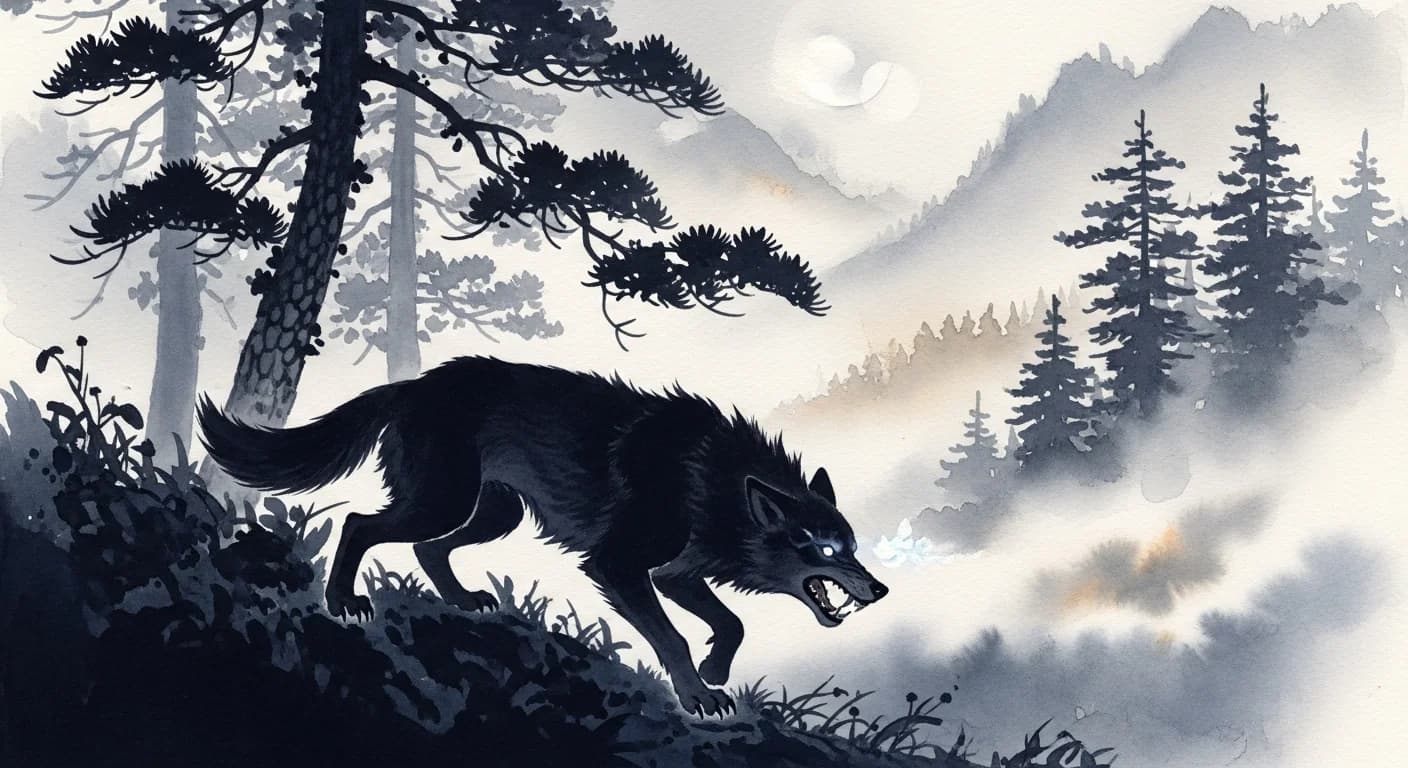
Wolf Attacking Dream Meaning — A Warning About Hidden Adversaries
If you woke up with the visceral image of a wolf lunging at you, Korean dream tradition reads that as a serious alert: a cunning, relentless threat is bearing down on you in waking life. In Korean folk interpretation (해몽), the wolf is not an open, honorable adversary like the tiger — it is the archetypal devious predator that circles in packs and strikes from the side you weren't watching. Here's the thing though — whether this dream is an omen of trouble or a sign of triumph depends entirely on what you did when the wolf attacked.
Wolf Attack Dream — The Warning Omen
A wolf suddenly lunging at you without provocation is one of the clearest warning signs in Korean dream lore. The unprovoked, ambush-style attack matters: if the wolf gave no warning before striking, it suggests that scheming may already be underway beneath the surface of your waking life, out of your direct sight.
The threats this dream tends to foreshadow are concrete and social in nature. A coworker who undermines you from behind the scenes, a business partner who is quietly planning betrayal, or a group conspiring to push you out — these are the scenarios Korean interpretation associates with a wolf attack. Like the wolf itself, the danger comes not from an acknowledged enemy, but from the direction you trusted.
If the dream involved being bitten and injured or bleeding, the omen is stronger. The body part bitten carries additional meaning: a bite to the neck or shoulder signals betrayal from a trusted person; a bite to the hand or arm warns of financial damage or plans going badly wrong. The deeper the wound, the greater the anticipated harm.
Fighting the Wolf and Winning — The Auspicious Outcome
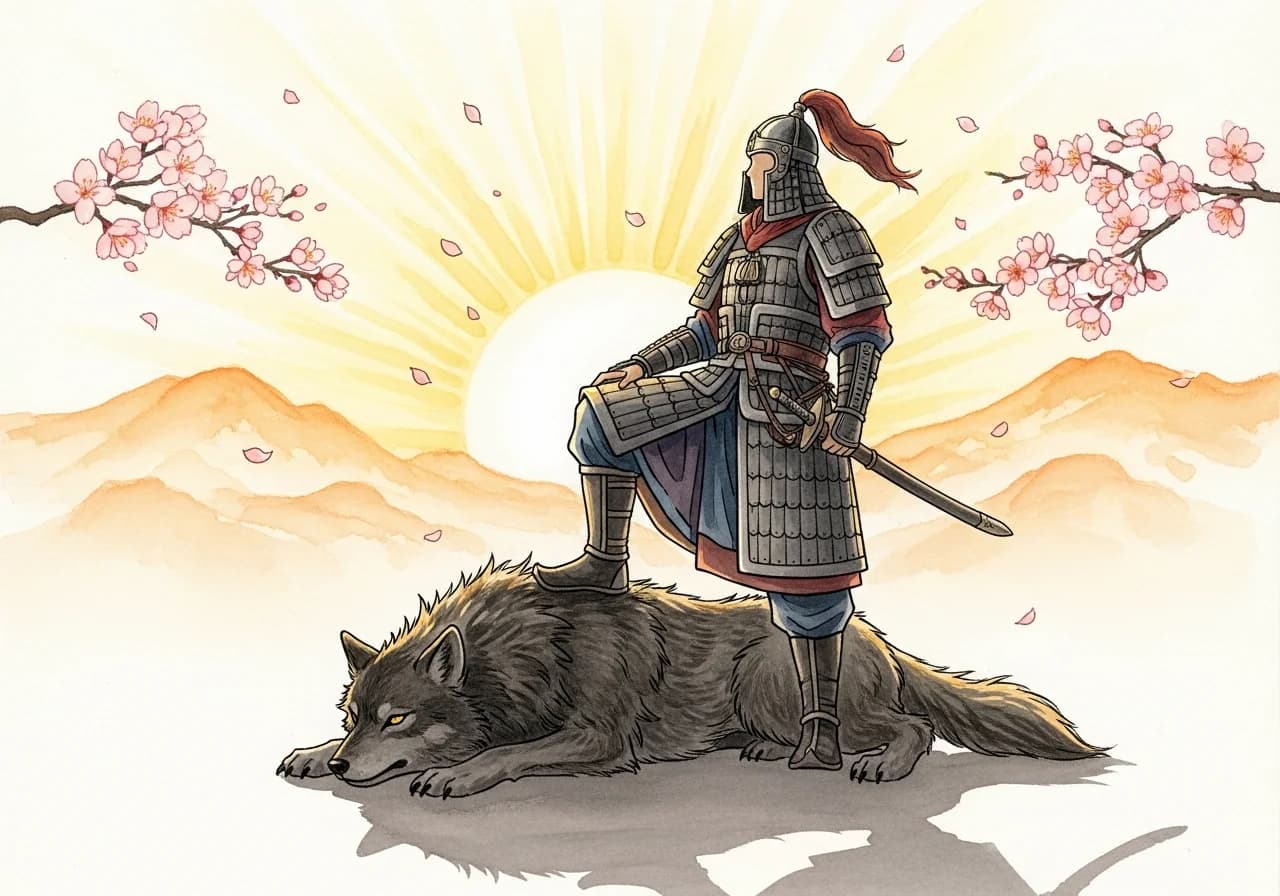
If the wolf attacks but you hold your ground, fight back, and win — that's a completely different dream. In Korean interpretation, this is a strong auspicious omen (길몽).
How you defeated the wolf matters far less than the fact that you did. Whether you wrestled it down with your hands, used a weapon, or simply drove it away — what counts is that the wolf was defeated. This dream predicts that you will overcome the cunning rivals or collective opposition you face in real life. It is particularly associated with workplace conflict resolution, winning a legal dispute, or gaining the upper hand in a competitive situation.
If you completely immobilized the wolf in the dream, or felt calm and settled after the victory, the auspicious energy is stronger — and long-term stability is likely to follow the win.
Attacked by a Wolf Pack — Collective Threat
Being attacked by multiple wolves simultaneously shifts the warning from the individual to the collective. Because wolves are natural pack hunters, a wolf-pack attack dream specifically evokes the experience of standing alone against many — outnumbered and isolated.
This dream may foreshadow coordinated pressure from multiple coworkers, organized social exclusion, or several problems erupting at once from different directions. Korean interpretation sees this as a prompt to assess your support network: do you have reliable allies around you, or are you becoming isolated within your current environment? The answer shapes how vulnerable you are to the collective threat the dream is pointing at.
Wolf Threatens but Doesn't Attack — A Neutral Signal
When the wolf snarls, growls, and postures aggressively but doesn't complete the attack — or charges and then abruptly backs away — Korean interpretation reads this as a neutral cautionary signal. The threat exists, but may not fully materialize in waking life.
This is the dream of someone under real pressure who, in reality, may not face the full-scale harm they fear. Stay alert and maintain your defenses, but don't let the anxiety become paralyzing. The dream is saying: the danger is manageable if you respond with care and strategy.
Dream Variations
Bitten by a Wolf Dream
Being bitten by a wolf goes beyond threat into actual harm, signaling that a long-suppressed conflict may erupt or that someone trusted will betray you. The body part bitten adds interpretive nuance: a bite to the arm or hand warns of financial trouble; a bite to the leg or foot suggests interference with an ongoing project. The deeper the wound in the dream, the greater the anticipated damage in real life.
Clawed by a Wolf Dream
Being clawed rather than bitten suggests a lighter degree of harm — public criticism, temporary reputational damage, or a minor financial setback. If the claw marks were deep and clearly visible, expect a more serious social blow; if superficial, anticipate temporary inconvenience. This variation also forewarns of gossip or rumors spreading in your workplace or social circle.
Attacked by a Wolf Pack Dream
Being attacked by a wolf pack signals a collective threat rather than a single adversary — perhaps multiple coworkers conspiring against you, being excluded by a group, or being hit by problems from several directions at once. Check the strength of your support network within your current environment and work to secure reliable allies, as isolation makes you more vulnerable to this type of coordinated pressure.
Fighting and Defeating a Wolf Dream
Successfully fighting and defeating the wolf is a strong auspicious omen, predicting that you will overcome your current difficulties and cunning opponents. The method of victory is secondary to the outcome itself. This dream is associated with real-world wins such as promotion, prevailing in a legal dispute, or gaining the upper hand in a competitive situation.
Evading a Wolf Attack Dream
Successfully evading or escaping the wolf's attack is a neutral-to-positive omen. The threat is real but you have the agility and judgment to avoid direct harm. The dream suggests that strategic avoidance and careful positioning are more effective responses right now than direct confrontation — trust your instincts and stay nimble.
Someone Else Attacked by a Wolf Dream
When someone else is attacked by the wolf in your dream, it warns that this person may face danger, deception, or betrayal in real life. If the victim is someone you know, check in on them and offer support or counsel if warranted. Alternatively, if the dream victim symbolizes an aspect of yourself, it may indicate that a personal value, goal, or relationship is under external threat.
Wolf Invading Home and Attacking Dream
Your home symbolizes your most trusted private space. A wolf breaching that space and attacking means the threat has already entered your inner circle — expect conflict or betrayal within family relationships, or in business terms, internal organizational fracture. Because the threat has penetrated your safe zone, this variation carries greater urgency than a wolf attack in an open or public setting.
Attacked by a Black Wolf Dream
Being attacked by a black wolf deepens the warning into territory of concealed, shadowy threat. Black symbolizes hidden intent and darkness, making the black wolf an emblem of someone who harms from the shadows without revealing their identity or motives. This dream suggests there may be a two-faced individual close to you, and urges caution about placing premature trust in new encounters or business proposals.
Attacked by a White Wolf Dream
Being attacked by a white wolf is an unusual variation. While white wolves typically symbolize purity or strength, an attacking white wolf may represent a warning about inner impulses being suppressed or behavior that goes against one's own principles. It can also signal that an adversary presenting themselves with seemingly righteous justification may actually be working against your interests in real life.
Cultural Context
In Korean folk tradition, while wolves lack the sacred status of the tiger, they have long been viewed as creatures combining cunning with ferocity — a dangerous duality captured in the Chinese character 狼 (이리/wolf), which carries connotations of treachery and predatory aggression. In traditional Korean narratives, wolves most often appear as raiders preying on flocks or invading villages, cementing their symbolic role as 'an enemy that appears manageable but is in reality relentless and devious.' The phrase '이리 떼' (wolf pack) remains a living idiom in modern Korean for a group that gangs up on the weak. During the Joseon period, folk belief held that dreaming of wolves signaled the presence of a petty, untrustworthy person (소인) in one's close circle — a prompt to be selective about relationships. Shamanic tradition also associated wolves with malevolent energy and viewed wolf-attack dreams as omens that slander and betrayal were being quietly orchestrated. This layered cultural memory ensures that a wolf-attacking dream is read today not merely as physical violence, but as a warning about cunning internal enemies and coordinated group pressure.
Western Psychological Perspectives
Western psychology interprets wolf-attack dreams from a different angle than Korean tradition — yet the two perspectives converge in surprising ways.
The most famous psychoanalytic treatment of wolf dreams comes from Freud himself: the 'Wolf Man' case. Freud analyzed his patient's recurring wolf dreams as expressions of deep-seated fear of the father figure and castration anxiety. From this perspective, the attacking wolf is a projection of repressed primal aggression or fear of powerful authority, given animal form by the dreaming mind. Successfully escaping or defeating the wolf can be read as the ego's attempt to safely process these suppressed conflicts within the theater of the dream.
Jungian analysis takes a broader view. An attacking wolf represents an intense activation of the Shadow archetype — the wild, instinctual energy that civilization pressures us to suppress. The wolf embodies repressed aggression, raw ambition, and untamed impulse charging through the threshold of conscious awareness. A wolf pack specifically may symbolize the collective shadow: the dark, repressed energy shared by the group the dreamer belongs to. Crucially, defeating the wolf in the dream represents a significant psychological advance — an act of integrating the Shadow rather than fleeing from it, a key step in what Jung called the individuation process.
Modern cognitive psychology and sleep science explain wolf-attack dreams through threat simulation theory: during REM sleep, the brain rehearses social threats — betrayal, group exclusion, power conflicts — to build response capacity for real dangers. Because wolves are archetypal pack hunters, dreaming of wolf attacks is a psychologically natural response for those experiencing workplace bullying, social ostracism, or group-coordinated pressure. Recurring wolf-attack dreams in this framework are a signal that chronic social anxiety or interpersonal stress has reached a level worth addressing with professional support.
Across all these frameworks, one thread is consistent: both Korean tradition and Western psychology agree that a wolf pack is a more alarming signal than a lone wolf. And across both cultures, the wolf carries the universal symbolic meaning of hidden, two-faced threat — seen in the Western idiom 'a wolf in sheep's clothing' and the werewolf motif — making the wolf-attack dream a cross-cultural warning about deception and concealed aggression.
Frequently Asked Questions
A wolf-attack dream is unsettling, but the message it carries is worth heeding. Cunning threats rarely announce themselves from the front — they come from directions you trusted. If this dream visited you, treat it as a prompt to take a clear-eyed look at your relationships and circumstances. And if you defeated the wolf in the dream, hold onto that. The dream is telling you that you have what it takes to win the real confrontation ahead.
Related Dreams
Wolf Dream Meaning in Korean Interpretation — Warning, Power, and Victory

Tiger Attacking Dream Meaning (Korean Interpretation)
Dog Attacking Dream Meaning in Korean Tradition

Bear Attacking Dream Meaning (Korean Dream Interpretation)
Snake Attacking Dream Interpretation
Lion Attacking Dream Meaning — When Surviving the Attack Brings Fortune