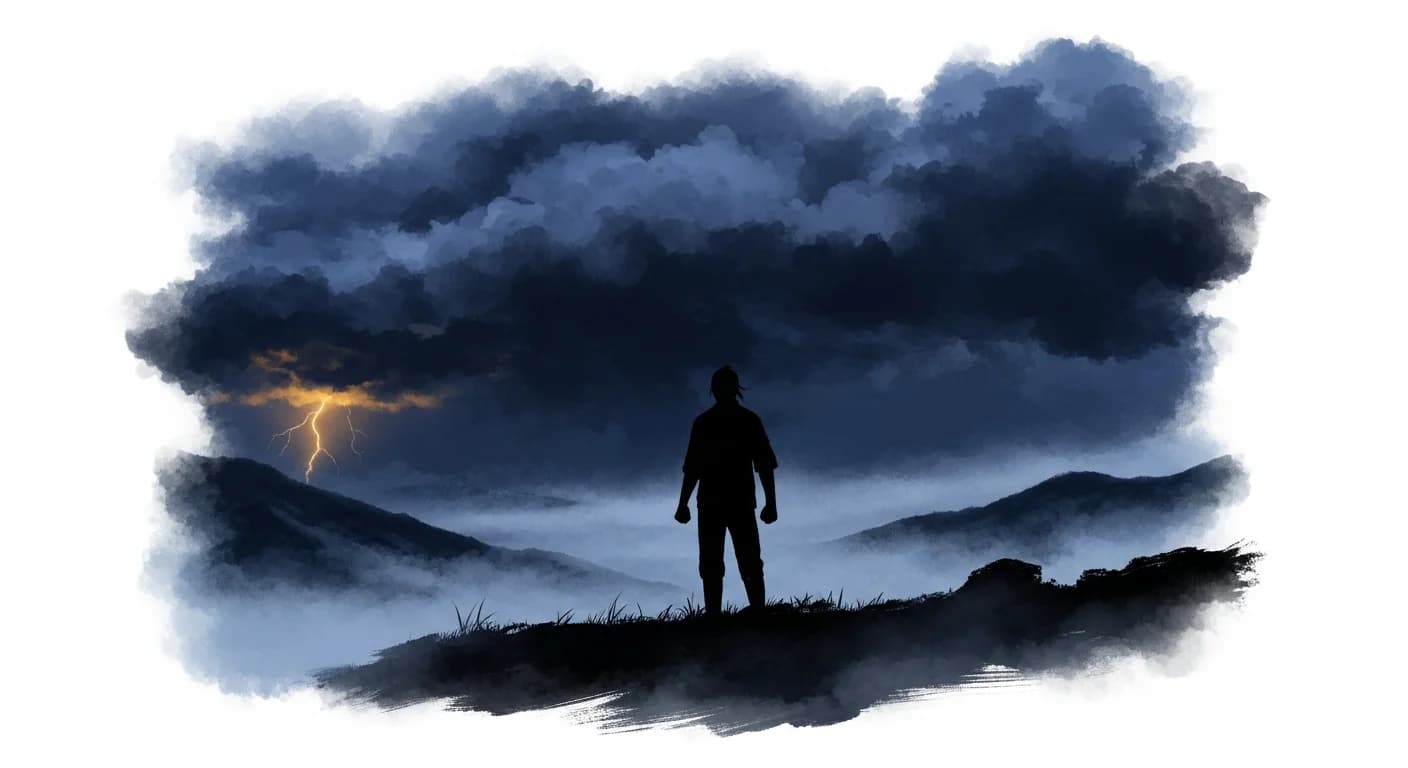
Anger Dream Meaning: What Korean Dream Tradition Says About Dreams of Rage
Waking up from a dream full of anger — yours or someone else's — can leave you unsettled for hours. But in Korean dream tradition, an anger dream is rarely just a replay of your daily frustrations. Whether it predicts a romantic breakthrough or signals that something inside you has hit its limit depends entirely on one thing: who is getting angry in your dream.
Auspicious: When Anger in a Dream Predicts Good Fortune
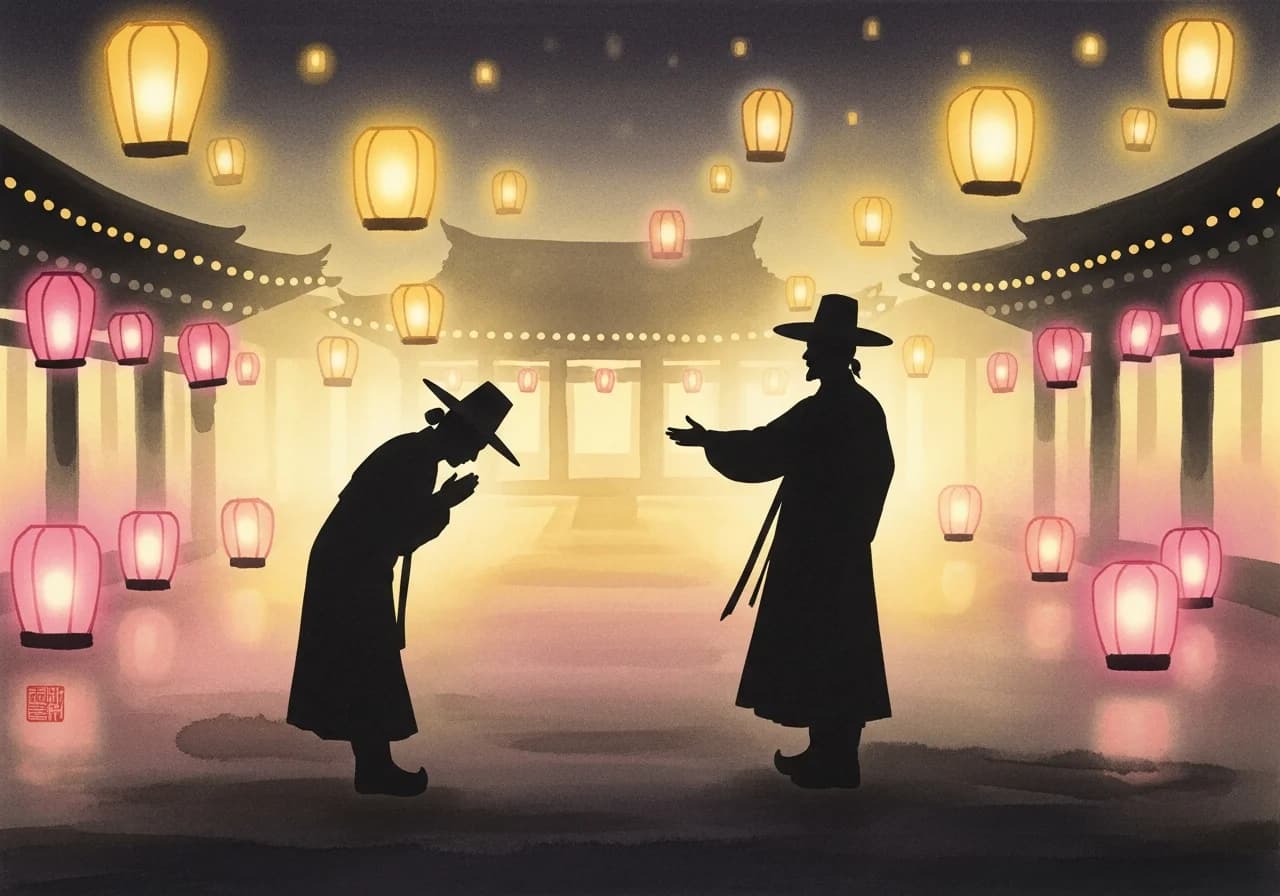
One of the most distinctive features of Korean dream interpretation is the principle of 'reversed dreams' (역몽, yeokmonng) — the idea that what happens in a dream often predicts its opposite in waking life. Anger dreams are among the strongest examples of this principle.
If a stranger or unknown person gets angry in your dream, Korean tradition reads this as a clear positive omen. The stranger's rage predicts that a third party will bring you good news in real life. The more dramatic the anger in the dream, the more favorable the waking outcome is said to be.
A dream where your romantic partner or spouse gets angry at you is also interpreted as auspicious for your love life. Paradoxically, the partner's anger is seen as a symbol of deepening emotions between you two. If the relationship has been cooling or strained recently, this dream signals that reconciliation and warmth are on the way.
Angry confrontations with a boss or workplace colleague in a dream carry a similar upward meaning. Standing your ground against unfair treatment in a dream — even getting into a heated argument — predicts that your professional abilities will be recognized, or that your standing among colleagues will improve.
Inauspicious: When an Anger Dream Is a Warning

When you are the one exploding with rage in a dream, Korean interpretation shifts toward caution. Violent or uncontrolled anger originating from you is read as a warning that suppressed emotions have reached a breaking point in your waking life. If the same dream recurs, it signals accumulating stress and conflict — at work, at home, or in relationships — that has yet to be addressed.
Getting angry at someone you dislike or have conflict with in waking life falls into this category too. This dream is understood as the unconscious releasing words and emotions you have been unable to express to that person. Rather than resolving anything, the dream reflects ongoing interpersonal tension that demands attention.
Dreaming of getting angry at a parent or elder is also viewed with concern. It is interpreted as the subconscious expression of frustration with expectations, control, or pressure in that relationship — a signal that patience in the waking relationship is wearing thin.
Neutral: Anger Dreams as an Emotional Mirror
Some anger dreams are neither clearly auspicious nor inauspicious — they function more like a mirror held up to your current emotional state.
Dreaming of trying to get angry but being unable to make a sound, or having your anger fall on deaf ears, is one of the most common and telling variations. This dream reflects a feeling in waking life of being unheard, invisible, or unable to advocate for yourself. It often appears when you are navigating a one-sided relationship dynamic or a situation where you feel your voice does not count.
A family member getting angry at you in a dream tends to be read as a neutral prompt for relationship reflection. It signals unresolved emotional tension or mismatched expectations within that family bond — not necessarily predicting disaster, but prompting you to check in with that relationship and consider having an honest conversation.
Dream Variations
Dream of Lover or Partner Getting Angry
An auspicious sign for your romantic life. The partner's anger in the dream symbolizes deepening feelings between you two, and the relationship moving toward a new, more committed stage. If there has been friction or distance, reconciliation and recovery are predicted soon.
Dream of Getting Angry at Your Boss
In reality, this dream predicts recognition of your professional abilities or an improvement in your relationship with authority figures at work. If you stood up to unfair treatment in the dream, it suggests you will gain the trust and respect of your colleagues.
Dream of Getting Angry at Parents
Reflects suppressed frustration with parental expectations, pressure, or control surfacing from the unconscious. If real-life conflict already exists, this dream warns that patience is running thin. Not a moral judgment — a psychological signal worth heeding.
Dream of a Stranger Getting Angry
Interpreted as auspicious following the reversed-dream principle. A stranger's anger in a dream predicts that a third party will bring you good news. The more intense the stranger's rage, the more favorable the real-world outcome is said to be.
Dream of Getting Angry at Someone You Dislike
Represents accumulated words and emotions you have been unable to express to that person in waking life. This dream signals ongoing interpersonal stress and unresolved suppressed feelings — an indicator that the underlying conflict needs to be addressed.
Dream of Trying to Get Angry But Losing Your Voice
Symbolizes the waking frustration of feeling unheard or unable to convey your thoughts and feelings. Suggests you may be in a one-sided communication dynamic and need to practice more assertive self-expression in your daily relationships.
Dream of a Family Member Getting Angry at You
Reflects unresolved emotional tension or mismatched expectations in that family relationship. Neither strongly auspicious nor inauspicious — more a message from the unconscious that an honest, caring conversation is overdue.
Dream of Crying Out of Anger
Reflects a mixed emotional state combining anger and deep sadness or hurt. Represents emotions from unjust or hurtful situations in waking life that have not been fully expressed. Commonly appears during periods of emotional exhaustion or burnout.
Anger Dream That Leaves You Feeling Lighter
If you wake up feeling relieved or lighter after getting angry in a dream, it suggests that pent-up emotions were safely released through the dream itself. This is sometimes read as a sign that real-life conflicts will begin to resolve naturally, without direct confrontation.
Cultural Context
In traditional Korean dream interpretation, emotionally charged dreams carry special weight. The emotion of anger is deeply connected to the Korean concept of 'han' (한) — a complex, untranslatable emotion encompassing accumulated sorrow, resentment, and a sense of unresolved injustice that sits at the heart of the Korean cultural psyche. Dreaming of anger was understood as the release of this suppressed 'han' during sleep, the unconscious giving voice to what waking social norms demanded be silenced.
The Joseon-era scholar Yi Ik noted in his work 'Mongnamron' (몽감론) that extreme feelings of injustice could reach a person's spirit during sleep and manifest as vivid dreams — an observation that applies directly to anger dreams. Korean folk tradition also applies the principle of 'reversed dreams' (역몽) to anger, meaning that anger in a dream can be a positive omen for peace and good fortune in reality. In shamanic (무속) tradition, a spirit's anger appearing in dreams was treated as an unresolved grievance requiring a ritual (굿) to bring peace — showing how seriously emotional dream content was taken across all levels of traditional Korean society.
Western Psychological Perspectives
Western Psychological Perspectives on Anger Dreams
Freud viewed dreams as disguised wish-fulfillments of repressed unconscious desires, and anger was no exception. Anger suppressed by the waking ego and superego undergoes 'dream-work' — through displacement, condensation, and symbolism — and surfaces in a transformed form during sleep. A common pattern Freud described involves transferring anger toward authority figures (bosses, parents) onto a safer, more neutral dream character. Freud noted that the emotional content in dreams — including anger — tends to be genuine and undisguised, even when the people or objects it is directed at are symbolic stand-ins for deeper targets.
Jungian psychology adds another layer: anger in dreams often signals a confrontation with the Shadow — the dark side of the psyche containing traits we consciously deny, such as aggression, resentment, and self-serving impulses. When a menacing stranger or faceless figure expresses rage in a dream, Jung would read this as a projection of the dreamer's own disowned anger. Rather than viewing this negatively, Jung saw encountering the Shadow through dreams as a vital step in the individuation process — the path toward psychological wholeness. The key, he argued, is to consciously acknowledge and integrate the energy contained in the dream anger rather than repressing it further.
Modern neuroscience offers the most mechanistic explanation. During REM sleep, the amygdala — the brain's emotional processing center — becomes highly active, while the prefrontal cortex, responsible for logic and impulse control, significantly reduces its activity. This creates conditions where emotions suppressed during the day surface without their usual filters. Chronic stress, anxiety, and unresolved trauma measurably increase the frequency of anger dreams. Research also suggests that anger dreams can function as a neural 'pressure valve,' allowing the brain to safely rehearse emotional confrontation and, in some studies, improving emotional regulation in waking hours after the dream.
What is striking is that both Korean tradition and Western psychology share the same core intuition: unexpressed emotions do not disappear — they find their way into dreams, and those dreams carry a message worth heeding.
Frequently Asked Questions
Anger dreams can leave you unsettled, but they carry some of the most nuanced messages in the Korean dream tradition. Who is angry, who they are angry at, and how the dream feels upon waking all shift the interpretation dramatically. Remember the reversed-dream principle — the rage you feel in a dream is often the most direct signal your unconscious has for predicting peace, resolution, or a deepening of bonds in waking life. Pay attention to what this dream is pointing toward, and use it as a prompt to check in with the relationships and emotions that matter most to you.
Related Dreams

Frustration Dream Meaning — When the Dream Signals What Words Cannot
Anxiety Dream Meaning — What Korean Dream Interpretation Reveals

Betrayal Dream Meaning — When Trust Breaks in Your Sleep
Sadness Dream Meaning — Why Korean Tradition Says Tears Bring Good Fortune
Fear Dream Meaning — What Your Nightmare Is Really Telling You
Nightmare Dream Meaning — What Korean Tradition Says About Bad Dreams