Cemetery Dream Meaning — What Graveyard Dreams Tell You in Korean Tradition
If you dreamed of calmly walking through a cemetery or watching light rise from an ancestral grave, Korean dream tradition reads that as one of the most powerful auspicious signs there is. Far from being a death omen, the graveyard in Korean culture is a living bridge between the ancestors and the living — a space where the family's vital energy (기, ki) flows continuously downward to bless descendants. Korean ancestral veneration, rooted in Confucian filial duty and the geomantic tradition of 풍수지리, has shaped an entire system of meaning around cemetery dreams that Western culture simply doesn't have. Here's what makes this fascinating: the same cemetery can signal great wealth in one dream and a serious health warning in another, and the difference lies entirely in a few key details.
Auspicious Cemetery Dreams — When the Ancestors Send Good Fortune

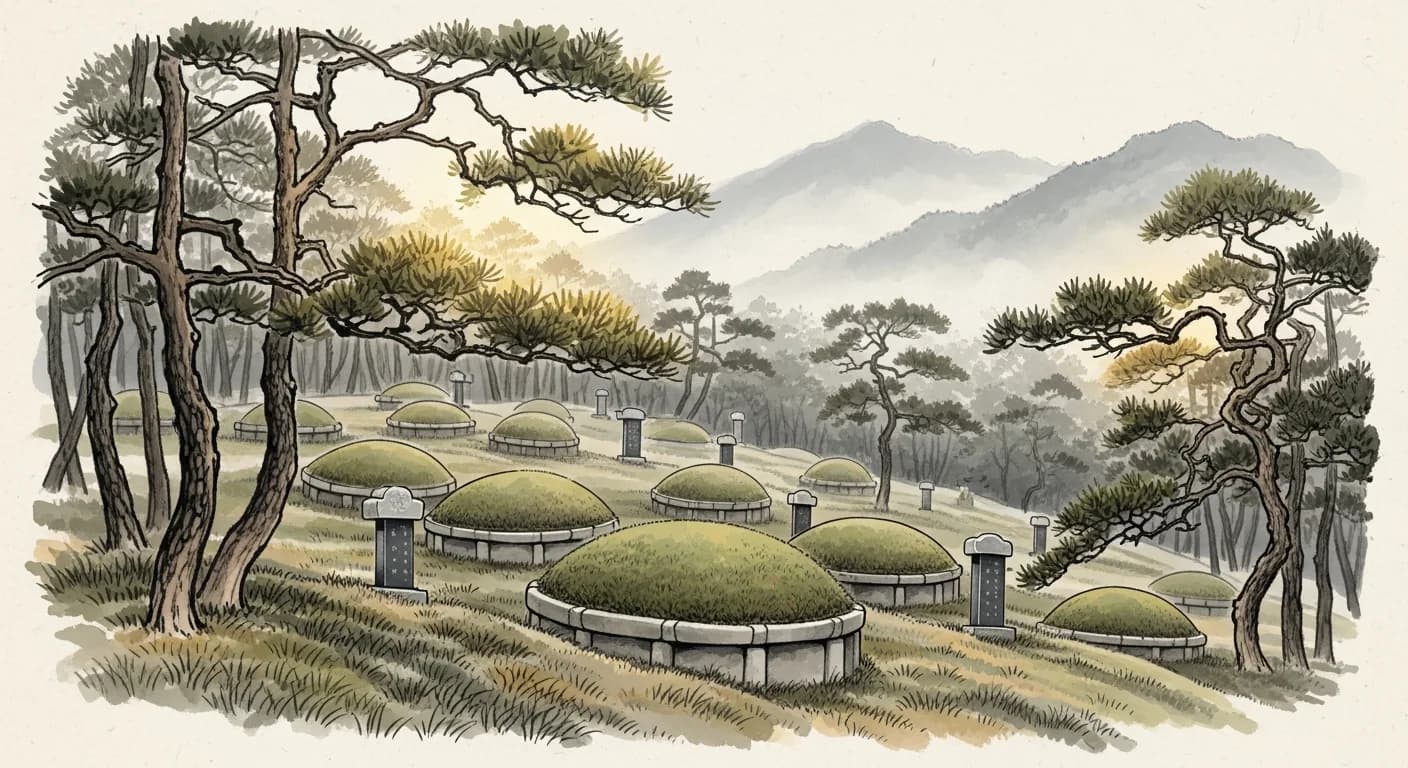
Calmly walking through a well-tended cemetery, visiting and paying respects at an ancestral grave (성묘, seongmyo), seeing a grave with flowers blooming on it, or watching light rise from a tomb — all of these are read as strong auspicious omens in Korean dream interpretation. Light rising from a grave is especially significant: it signals ancestral blessings at their absolute peak and portends great fortune in wealth, reputation, and examinations. Some Korean dream specialists go further, linking this image specifically to lottery luck or unexpected windfall. Dreaming of the earth opening at a cemetery and receiving something from it symbolizes hidden opportunities or an unexpected inheritance coming to light. If a deceased ancestor appears at the grave looking bright and kind, it is traditionally read as ancestral wisdom guiding you toward the right choice at a critical decision point — or protecting you from a looming danger.
Inauspicious Cemetery Dreams — Warnings to Heed
Not every cemetery dream brings good news. Being chased by a frightening apparition at a cemetery, discovering your own tombstone, or watching grave markers crumble and collapse — these carry warning messages. Seeing your own grave is most commonly read as a health warning: if you have been pushing through exhaustion or ignoring symptoms, this dream urges you to stop and get checked out. A desecrated cemetery or collapsed grave marker warns of household troubles ahead, or the risk of something carefully built over years being undone. Getting lost and wandering in an unfamiliar graveyard reflects genuine inner confusion — if this dream comes while you are facing a major life decision, treat it as a signal to slow down and reset before committing.
Wealth and Fortune — Reading the Money Signs in Cemetery Dreams
When it comes to wealth luck, Korean interpreters focus on two images above all others: light and flowers. Light rising from a grave and flowers blooming abundantly on a tomb are both considered among the strongest wealth omens in Korean dream tradition — the light image in particular is sometimes connected to lottery fortune or completely unexpected income. Dreaming of receiving an object or treasure from inside the earth at a cemetery similarly foretells hidden wealth or an unforeseen windfall. On the other side, losing an object or money in a graveyard dream warns of financial loss or unanticipated expenses. The overall emotional tone of the dream matters greatly — a luminous, peaceful cemetery reads very differently from a dark, oppressive one, even when the core imagery is similar.
Family Fortune and Health — The Ancestral Connection
Cemetery dreams in Korean tradition are intimately tied to the fortune of the entire family, not just the individual. Tending an ancestral grave or conducting 성묘 in a dream signals that the whole household's vital energy is reviving — good news like a pregnancy, exam success, or a new job for someone in the family may be on the way. A neglected or overgrown cemetery, by contrast, warns of health problems or brewing conflict within the family. If a deceased family member appears looking sad or worried, it is traditionally interpreted as a warning that someone in the family may soon face difficulty. The key question to ask after a cemetery dream: was it one of care and connection, or one of abandonment and decay?
Dream Variations
Dream of Walking Through a Cemetery
The interpretation turns almost entirely on how you felt during the walk. Moving through a cemetery calmly and without fear is an auspicious sign of ancestral protection and rising fortune in both wealth and health. Walking with dread or urgency, trying to escape, reflects a waking desire to avoid a difficult situation — or a significant psychological burden you have been carrying.
Dream of Tending an Ancestral Grave
Visiting and paying respects at an ancestral grave — clearing weeds, placing offerings, bowing in reverence — is a strong auspicious omen in Korean tradition. It foretells the revival of the family's vital energy and the arrival of good fortune for the whole household: expect success in business or exams, and renewed harmony if family tensions have been running high.
Dream of Seeing Your Own Grave
Finding your own tombstone or grave in a dream is generally a cautionary signal to re-examine your health and lifestyle. If you have been overextending yourself, this dream is worth taking seriously — a check-up would not be out of place. That said, the Korean principle of 역몽 (reversal dreams) means some interpreters read this as a positive signal of imminent major transformation, so consider the dream's overall tone alongside what is happening in your life.
Dream of a New Grave Being Dug
Watching a new grave being dug suggests that change is coming to someone close to you — possibly a separation, a major transition, or the end of an important chapter in a relationship. It can also be read positively as a sign of closure: one phase is completing, and something new is about to begin.
Dream of Meeting a Ghost at a Cemetery
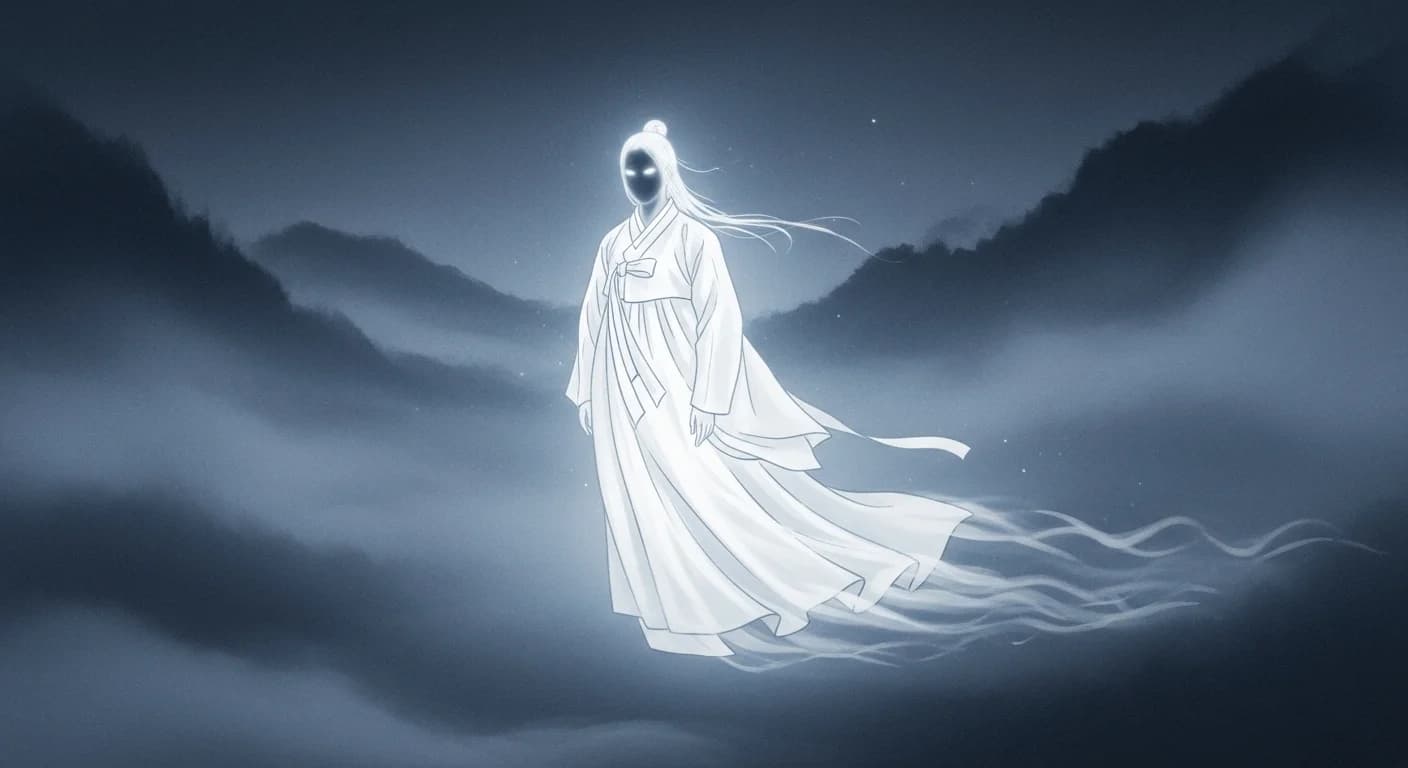
Encountering a ghost or frightening presence at a cemetery signals that suppressed fears or unresolved past wounds are surfacing. Treat it as a warning to stay vigilant about conflict or potential betrayal in your closest relationships. If the ghost takes a recognizable human form, it is worth examining your current relationship with that person.
Dream of Flowers Blooming on Graves
Seeing flowers bloom beautifully across a cemetery is one of the strongest positive omens the setting can offer. It heralds a blossoming of wealth luck and fortunate human connections — a long-lost relationship may revive, or joyful news may arrive from a completely unexpected direction. In some cases, Korean interpreters also read this as a pregnancy omen.
Dream of a Large Public Cemetery
A sprawling public cemetery in a dream represents collective change — a period of significant transition for a group you belong to, whether a workplace, community, or social circle. On a personal level, it signals that the time has come to redefine your life's direction and core values.
Dream of Light Emanating from a Grave
Light rising from a grave is one of the most powerfully auspicious dream images in Korean tradition — ancestral blessings at their absolute peak. Great fortune across all areas of life is indicated: business, finances, examinations. Some Korean dream interpreters link this specific image to lottery luck or windfall fortune.
Dream of Meeting a Deceased Family Member at a Cemetery
A deceased family member appearing at the cemetery and speaking or walking with you is understood as receiving a message or protection from the departed. A bright, kind expression on their face signals good fortune through ancestral blessing; a sad or worried expression warns that a family member may be heading into difficulty.
Dream of Relocating a Grave
Exhuming and relocating a grave symbolizes a major life transition — moving homes, changing careers, or a significant shift in living circumstances. In most Korean interpretations, the change being foretold is directionally positive: a move toward better circumstances, not away from stability.
Dream of a Bright and Beautiful Cemetery
A cemetery bathed in sunlight, or one that looks more like a flower garden than a burial ground, represents inner peace with life's natural cycles and deep psychological stability. Something that has been weighing on your mind is approaching comfortable resolution — and a genuine sense of contentment with your present circumstances may not be far off.
Cultural Context
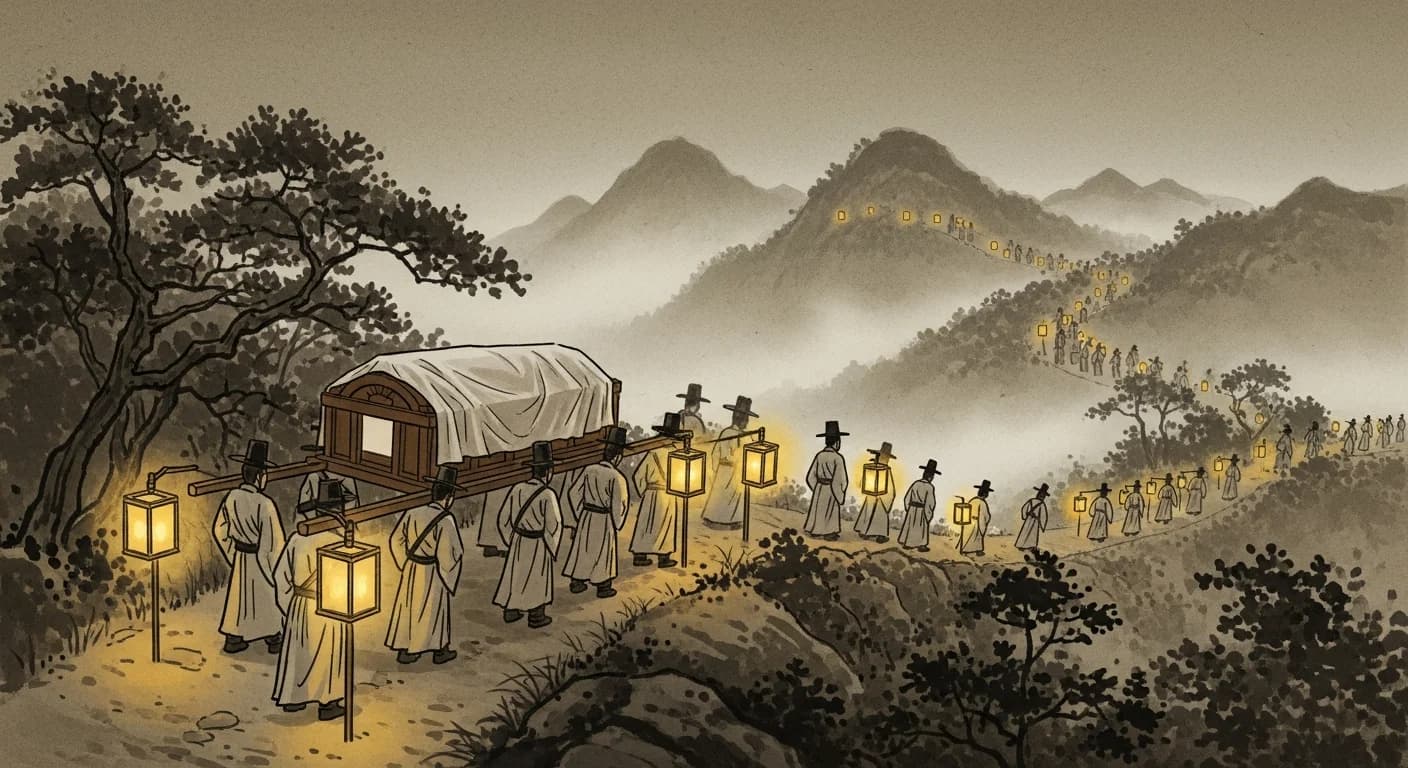
In Korean culture, a cemetery (묘지) is far more than a resting place for the dead — it is a sacred space where the living and the deceased remain spiritually and energetically connected. Rooted in Confucian filial piety and the ancient tradition of ancestral veneration, maintaining one's ancestors' graves has long been considered a core duty of descendants. This duty finds its most visible expression in 성묘 (seongmyo): family grave visits conducted around Chuseok (the autumn harvest festival) and Seollal (Lunar New Year). These are not quiet, private affairs — they involve the whole family clearing weeds, placing food offerings, and bowing in formal reverence at the ancestral grave, all underpinned by the folk belief that a well-tended grave channels blessings down to living descendants.
Equally significant is 풍수지리 (pungsu jiri, or Korean geomancy), which profoundly shaped how families chose burial sites for generations. Placing ancestors in 명당 — auspicious sites where mountain and water energies naturally converge — was believed to channel the earth's life energy (생기) through the grave and into the fortunes of the family line itself. This practice of 음택 풍수 (geomancy for the dead) continues to influence modern Korean families, particularly in rural areas. Cemetery dream interpretation draws directly from this tradition: an ancestral grave in a dream is not a morbid image but a living symbol of the family's energy and fortune.
Western Psychological Perspectives
Western psychology and Korean dream tradition approach the cemetery from remarkably different angles — and understanding both adds depth to any interpretation. From a Freudian standpoint, cemetery dreams express the unconscious tension between the death drive (Thanatos) and the life drive (Eros). The grave symbolizes the fear of annihilation that the conscious mind refuses to acknowledge directly. Deceased family members appearing in the dream may point to unresolved grief or suppressed guilt — emotions that haven't completed their natural processing arc. Seeing your own grave, in Freudian terms, can be an expression of self-punishing impulses or deep inner fragmentation.
Jung's analytical psychology takes a more transformative view. For Jung, the cemetery is a central symbol in the individuation process — the lifelong journey toward psychological wholeness. The grave represents the space where an old, outgrown version of the self dissolves so that a more integrated Self can emerge. Encountering ancestors in a cemetery dream can signify connection with archetypal wisdom that runs through the family's collective unconscious — something Korean culture has institutionalized through centuries of ancestral veneration practice. Jung's concept of 'archetypal memory within the collective unconscious' resonates deeply with what Korean tradition expresses through 음덕 (ancestral virtue).
Modern psychological research offers a more grounded perspective: cemetery dreams become significantly more frequent during periods of heightened mortality awareness — after losing someone important, after a serious diagnosis, or simply as part of the natural reckoning with aging. Rather than treating them as omens, contemporary therapists understand them as part of the mind's healthy grief-processing mechanism. They also commonly appear at life transition points — career changes, relationship shifts, relocations — where the psyche uses the imagery of 'symbolic death' to mark that one chapter is genuinely ending.
Cross-culturally, this combination of ancestor reverence and cemetery dream significance appears across East Asia and Latin America: Japan's Obon festival and Mexico's Día de los Muertos both embody the same fundamental worldview that bonds between the living and the dead are not severed at death but continue to shape the fortunes of the living. Korean cemetery dreams sit squarely within this ancient, globally shared human sensibility.
Frequently Asked Questions
Cemetery dreams occupy a unique space in Korean dream tradition — one that defies the Western instinct to see graveyards as inherently gloomy. What the ancestors have left behind continues to shape the living, and a dream set among graves is often the psyche's most direct way of channeling that connection. Whether you wake from a cemetery dream feeling unsettled or strangely at peace, the details hold the key: how the light fell, how the graves looked, and above all how you felt walking through them. Those details are where the real message lives.