CPR Dream Meaning — What It Means to Revive Someone in a Dream
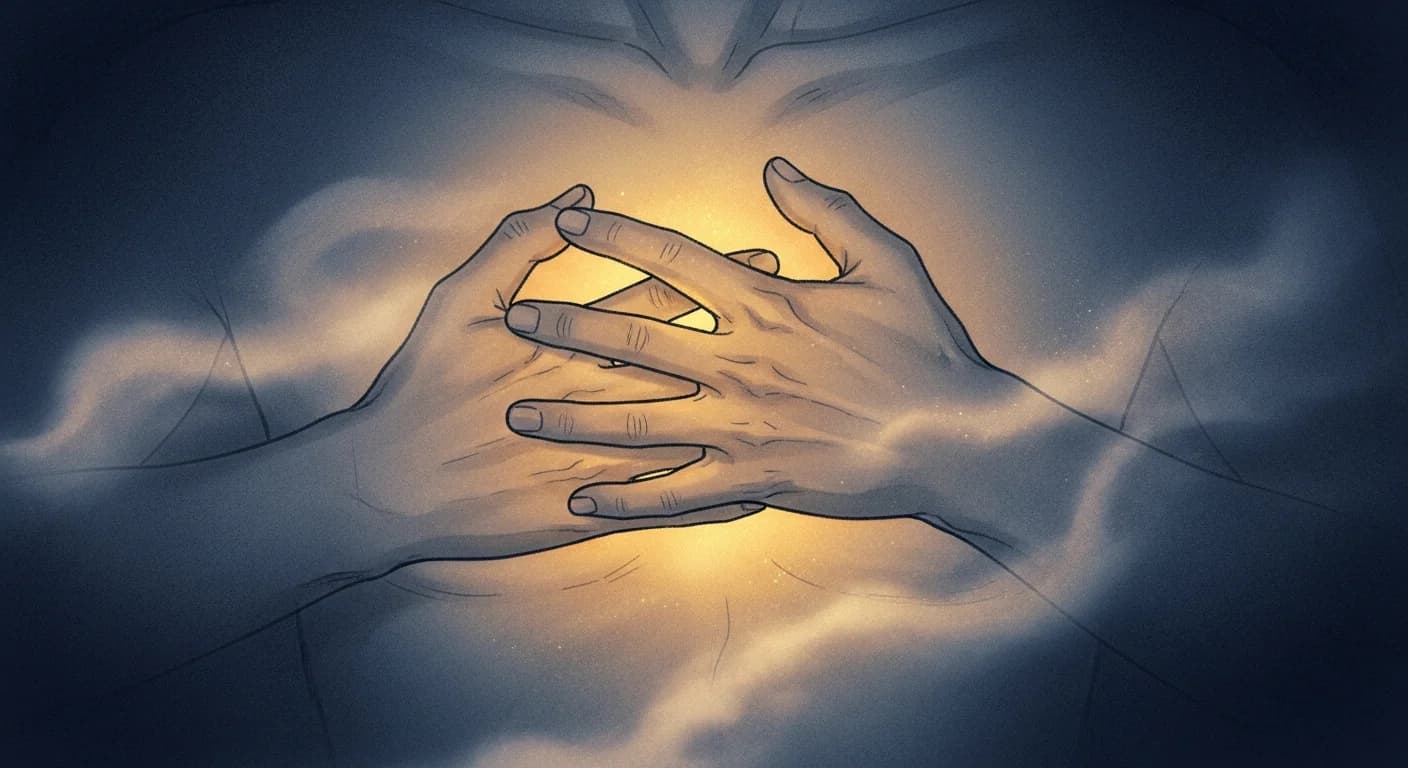
If you dreamed of pressing your hands onto someone's chest, fighting to bring them back, Korean dream tradition has a surprisingly hopeful message for you. The concept of 'banmong' — the idea that a dream's content manifests in reverse in waking life — means that witnessing revival in a dream has long been read as a powerful positive omen. But here's where it gets interesting: the meaning shifts dramatically depending on whether you succeeded, failed, were doing the CPR, or were on the receiving end.
Successful CPR Dream — A Dramatic Reversal Is Coming
Performing CPR and watching someone revive in your dream is a classic auspicious omen (길몽) in Korean dream tradition. It signals that a situation you had nearly written off — a stalled project, a damaged relationship, or a career opportunity — is about to be dramatically reversed. Korean dream interpreters associate this with entering a second prime: something believed to be finished rises again against all odds. If you performed the CPR with confidence and strength in the dream, that reflects real inner reserves of capability ready to be deployed in waking life.
Performing CPR on a Stranger — A Benefactor Is Approaching
When the person you revive in the dream is someone you don't recognize, Korean interpretation points to an upcoming encounter with a 'gui-in' — a benefactor, mentor, or influential ally. The stranger symbolizes someone not yet in your life who will arrive and play a decisive supportive role. A new collaborator, mentor, or unexpected partner may be closer than you think. Stay open to new connections in the near future.
Receiving CPR in a Dream — Help Is on Its Way
Finding yourself the one being resuscitated — someone else's hands pressing on your chest — is a positive omen indicating that support from others will prove crucial. This dream is particularly reassuring for anyone who has been trying to manage a difficult situation entirely alone. It suggests that reaching out and accepting help is not just acceptable but necessary right now. Energy and recovery are on the horizon, carried in by people around you.
Failed CPR Dream — A Warning Against Overextension
When the CPR fails regardless of how hard you try, the dream shifts into cautionary territory (흉몽). Korean tradition reads this as a warning against chasing two goals at once and losing both, or pouring effort into something that has already run its natural course. The exhaustion you feel in the dream mirrors a real-life depletion of energy on a cause that may no longer be viable. The dream invites a candid audit: what needs to be released?
Frozen and Unable to Perform CPR — Paralysis and Responsibility
Knowing someone needs CPR but being unable to act — frozen, paralyzed, helpless — is one of the more psychologically revealing CPR dream scenarios. It typically processes guilt over a past moment of inaction, or anxiety about an upcoming situation that demands decisive behavior. The gap between knowing what should be done and feeling unable to do it is the dream's central tension. If this resonates, it may be worth examining what responsibilities you have been avoiding in waking life.
Dream Variations
Performing CPR on a Family Member
This variation often signals the potential healing of a strained family bond. A long-dormant conflict may be approaching resolution, or a distant relationship within the family may find new warmth. If a family member is genuinely unwell, the dream may also be expressing waking-life concern for their health rather than carrying purely symbolic meaning — worth paying attention to either way.
Performing CPR on a Romantic Partner
Dreaming of reviving your partner reflects a strong desire to breathe life back into a relationship that has grown distant or stagnant. The dream does not signal the relationship is over — quite the opposite. If the CPR succeeds, it points toward genuine potential for reconciliation and a new, deeper chapter. Real effort — honest conversation, deliberate reconnection — is both needed and likely to succeed.
Performing CPR on a Stranger
An unknown person being revived by your hands points to a benefactor arriving unexpectedly. Korean dream tradition reads the stranger as a symbol of someone not yet known who will enter your life and significantly alter your path — a mentor, an investor, or a partner who arrives at exactly the right moment.
Receiving CPR in a Dream
A generally positive sign: the help you need exists and is coming. This dream calls the dreamer to step back from the exhausting habit of going it alone, and to accept that collaboration and support are not signs of weakness but the very thing that will carry you through. Let people in.
Failed CPR Dream
A caution against overextension and misplaced persistence. Energy poured into a lost cause is energy not available for things that can thrive. The dream suggests that strategic acceptance — releasing what cannot be saved — is not giving up but wisdom. What would it feel like to put that effort somewhere it could actually take root?
Performing CPR on a Child
Children in dreams often symbolize the dreamer's own inner child, creative potential, or long-abandoned aspirations. Reviving the child suggests it is time to reconnect with a dormant part of yourself — a talent set aside, a dream deferred, an authentic impulse that got buried under adult responsibilities. Something worth reviving lives inside you.
Giving Mouth-to-Mouth to a Drowning Person
This combines two powerful symbolic registers: water (emotion, the unconscious) and resuscitation (rescue, intervention). The dreamer may be called to play a pivotal supportive role for someone drowning in emotional difficulty, or may themselves be surfacing from a period of emotional overwhelm. Either way, breath — and with it, relief — is close.
Learning CPR in a Dream
Dreaming of a CPR training scenario is about preparation and growing capability. The dreamer is developing the inner resources — practical skills, emotional resilience, or crisis-management instincts — needed to navigate future difficulties. This is an encouraging dream: you are not yet in the crisis, and you are getting ready.
Cultural Context
In traditional Korean dream hermeneutics, death and revival are not simply ominous events but carry powerful symbolism of reversal and transformation. The concept of 'banmong' (反夢) — the idea that dream events manifest in opposite form in waking life — means that witnessing a resuscitation in a dream was historically taken as a strong positive omen, not a cause for alarm. CPR is a modern medical act, but its core symbolic weight — forcibly returning life to a stilled body — maps directly onto ancient Korean motifs of divine resurrection and spiritual intervention. In a culture with deep reverence for ancestral spirits, the act of reviving another person in a dream was sometimes interpreted as fulfilling a sacred duty, and the dreamer's willingness to fight for another life was read as evidence of profound moral character and communal responsibility. The values of 의리 (righteous loyalty) and 인 (benevolent humanity) — central to Confucian Korean tradition — are embodied in the dream image of someone refusing to let go of another's life.
Western Psychological Perspectives
From a Freudian perspective, the CPR dream stages an unconscious confrontation between Eros — the life drive — and Thanatos, the death instinct. Breathing life into another person carries symbolic undertones of libidinal energy transfer, while the forceful repetition of chest compressions reveals an ambivalent mixture of aggression and tenderness. The dream, in Freud's framework, expresses a powerful wish to resurrect something — a desire, a relationship, a suppressed dimension of the self — alongside a deep fear of irrevocable loss.
Jungian analysis reads the CPR dream as a striking individuation symbol. The person being resuscitated typically represents a neglected or repressed aspect of the dreamer's own psyche — the Shadow, the Anima or Animus, or a dormant potential long denied access to conscious life. The act of reviving this figure reflects the Self's drive toward wholeness: the ego fighting to integrate what has been pushed underground. The dream is a call to ask honestly: what part of yourself has been left for dead?
Modern cognitive and neurological research views CPR dreams primarily as stress-response events. For healthcare workers or people who have witnessed real-life resuscitation attempts, these dreams may form part of PTSD reprocessing cycles — the brain replaying high-stakes memories in search of resolution. For the general population, the dream typically surfaces during periods of perceived loss of control, when something important feels like it is slipping away and the mind urgently rehearses intervention.
Across world cultures, reviving the dead carries mythic weight that transcends any single tradition. The Christian raising of Lazarus, the healing powers of Asclepius in Greek myth, the life-restoration narratives of East Asian folklore — all treat the act of returning breath to a stilled body as the supreme act of virtue and divine capability. In Indian tradition, the breath exchange symbolizes the transfer of prana, life energy itself. The CPR dream taps into this universal human preoccupation with the boundary between life and death, and the fierce refusal to accept that boundary as final.
Frequently Asked Questions
CPR dreams occupy some of the most charged emotional territory in the dream world — the threshold between letting go and fighting back. If your CPR succeeded, take it as a sign that something you thought was lost is worth one more serious effort. If it failed, the dream may be offering you the gentler gift of permission to release. Either way, the very fact that you're dreaming this dream signals that something matters deeply to you — and that kind of commitment, pointed in the right direction, is rarely wasted.
Related Dreams
Dream of Dying — Meaning & Interpretation
Dreaming of a Dead Person — What Korean Dream Tradition Tells You

Drowning Dream Meaning — What Korean Dream Tradition Really Says

Hospital Dream Meaning — A Space of Transformation in Korean Dream Interpretation

Accident Dream Meaning — Is It a Warning or a Sign of Fortune?