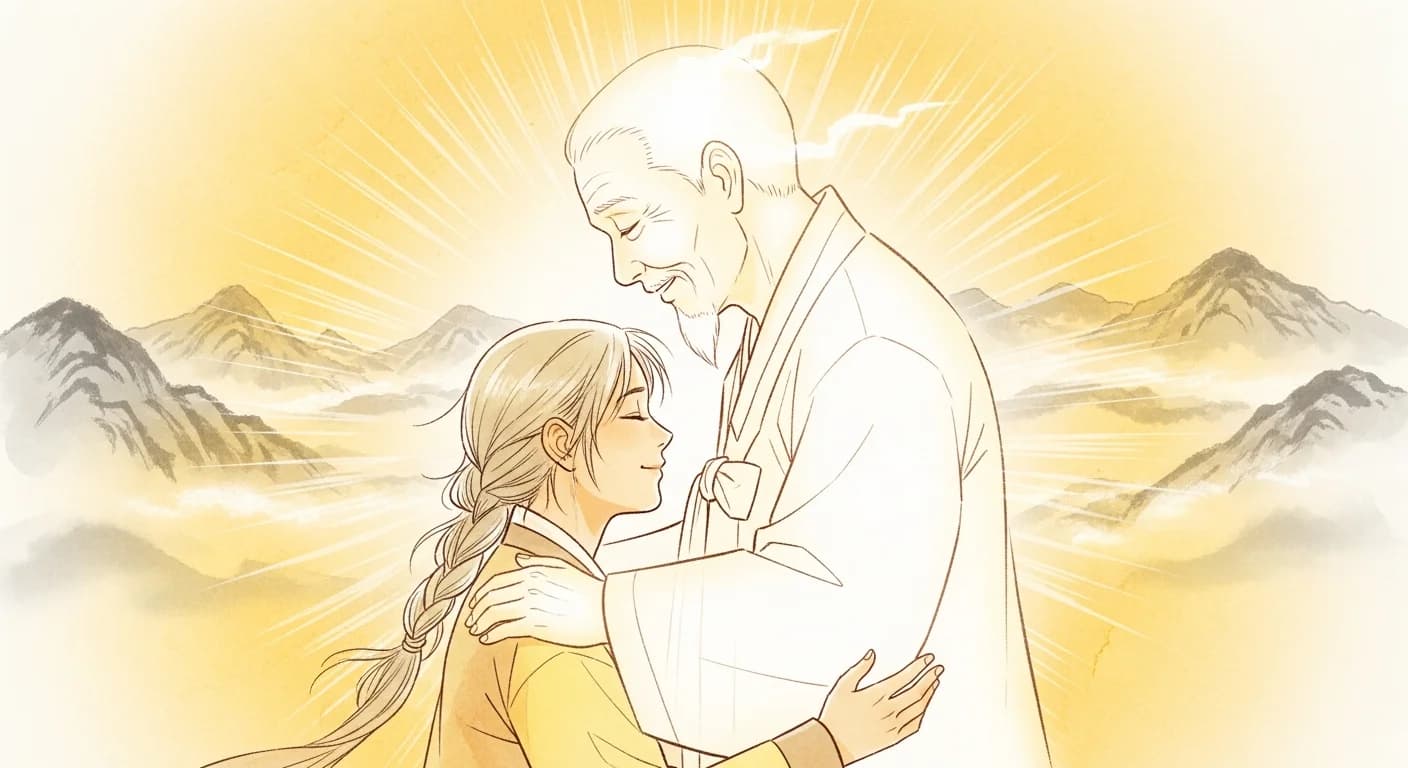
Dream of Hugging a Dead Person — Complete Meaning and Interpretation
In Korean dream tradition, hugging a deceased person is overwhelmingly a good omen — a sign that blocked plans will suddenly clear and unexpected fortune is on its way. This interpretation is rooted in Korea's deep Confucian ancestor-veneration culture, where the departed are believed to remain spiritually present, watching over their descendants even after death. But here's what most dream interpretation guides leave out: the emotional quality of the hug changes everything. Warm embrace versus a grip that won't let you go — the difference between blessing and caution could not be more stark.
Auspicious Meaning: When the Dream is a Good Omen

When you hug a deceased person in a dream and the encounter feels warm, peaceful, and the departed appears with a bright or content expression, Korean dream tradition (꿈해몽) interprets this as a highly auspicious sign. Plans you have been pursuing are likely to move forward smoothly, and financial gains or unexpected good fortune may be approaching. Dreams of embracing deceased parents or grandparents are considered especially powerful good omens — in this context the ancestors are understood to be delivering a direct message of protection and blessing to you. If it was the deceased who initiated the embrace, reaching out to hold you first, the positive meaning is amplified further: this signifies that the spirit of the departed is actively rooting for you and that help will arrive from an unexpected source during a difficult time.
Cautionary Meaning: When the Dream Carries a Warning
When the deceased appears with a sad or troubled expression, or holds you forcefully in a way that feels like they will not let go, the dream carries a different message. Korean dream interpretation views this as a cautionary sign — a potential warning to pay careful attention to your health or to avoid hasty decisions in important matters. If the deceased is a stranger who forcibly embraces you or seems to be pulling you away, extra care regarding health and safety is advised. Traditionally, Koreans who received such dreams would perform a memorial ritual (jesa) for the departed, offer prayers, or visit the ancestral grave — acts of remembrance believed to restore balance and ward off potential misfortune.
A Healing Dream: The Grief Psychology Perspective
For those who have recently lost someone, recurring dreams of hugging the deceased carry a different primary meaning: healing. Modern grief psychology classifies these as 'bereavement dreams' or 'visitation dreams' — a natural and healthy part of the mourning process. The brain, in sleep, processes the shock of loss in ways waking life cannot always accommodate. The dream embrace completes what life did not: a final goodbye, words left unsaid, love not yet fully expressed. If you wake from this dream feeling lighter, more at peace, or even briefly comforted, that is not coincidence — it is the psychological catharsis the dream was designed to provide. Accept it as the gift it is.
Fortune and Prosperity Signals
Beyond its spiritual and psychological dimensions, the dream of hugging a deceased person in Korean tradition is directly linked to fortune and material luck. It is commonly interpreted as a sign that financial obstacles will dissolve, that income will arrive from an unexpected direction, or that a long-stalled project will finally succeed. When the embrace occurs alongside other positive dream elements — the deceased offering a gift, delivering reassuring words, or appearing in a bright and peaceful setting — the fortune signals are particularly strong. In practical terms, Korean tradition encourages those who have had this dream to pursue new opportunities actively, as the timing for important decisions may be favorable.
Dream Variations
Dreaming of Hugging Deceased Parents
Warmly embracing deceased parents in a dream is interpreted as an auspicious sign of family good fortune — a promotion, a business success, or an important achievement coming your way. If the parents appear smiling while holding you, the ancestral blessing is considered particularly strong. For those going through a difficult period, this dream carries an additional layer of meaning: it is often received as a message that your parents are spiritually present, watching over you still.
Dreaming of Hugging Deceased Grandparents
Embracing a deceased grandmother in a dream symbolizes gaining stability, inner wisdom, and a protective presence in your life. Hugging a deceased grandfather foretells finding clarity in an important decision. When grandparents appear joyful in the embrace, Korean tradition holds that good fortune is on its way to the entire family — not just the dreamer alone.
Dreaming of Hugging a Dead Friend
Hugging a deceased friend in a dream reflects longing for that person alongside feelings of loneliness or a need for emotional support in waking life. It can also signal the healing of unresolved tension or guilt from that friendship. If the hug felt warm and easy, it is a sign you are moving toward inner peace and reconciliation with the past.
Dreaming of Hugging an Unknown Dead Person
An unfamiliar deceased person appearing for an embrace in a dream often symbolizes unmet emotional needs or suppressed feelings within the dreamer — loneliness, a desire for comfort, or emotional emptiness. This dream does not need to be interpreted as ominous. It is better understood as an invitation from the unconscious to reconnect with others, strengthen relationships, or attend more carefully to your own emotional needs.
Dreaming of Being Hugged by a Deceased Person
When the deceased initiates the embrace — reaching out to hold you rather than the other way around — Korean dream tradition considers this an especially powerful good omen. It is interpreted as a message of direct spiritual protection and encouragement, a sign that unseen help is coming during a difficult time. If the embrace felt warm and peaceful, it also signals that grief is healing in a positive direction.
Dreaming of Hugging a Deceased Spouse or Partner
This is among the most emotionally resonant bereavement dreams. Psychologically, it completes in dream form the final farewell or expression of love that circumstances may have prevented in life. In Korean tradition, it is received as a warm message that the partner's spirit is still watching over the family left behind. Waking from this dream with a sense of peace rather than distress is a sign that healing is progressing.
Dreaming of Hugging a Deceased Child
Among the most profound of all bereavement dreams, this is understood in Korean tradition as a spiritual visitation — a message that the child is at peace, well cared for in the ancestral realm, and sending a signal of reassurance to the parent not to worry. Psychologically, it represents an important threshold in the healing of deep parental grief, a moment where the unconscious acknowledges what the heart cannot yet accept in waking life.
Dreaming of Crying While Hugging a Dead Person
Crying while embracing a deceased person in a dream is a cathartic dream — suppressed grief or emotional tension releasing through the safety of sleep. Many people feel noticeably lighter upon waking. Traditional Korean dream interpretation does not view this negatively; it is a sign that unresolved emotions are gradually moving toward resolution. In psychological terms, this is exactly what healing looks like.
Cultural Context
In Korean culture, dreaming of hugging a deceased person carries profound spiritual and cultural significance beyond simple unconscious expression. In a culture deeply rooted in Confucian ancestor veneration, the deceased are regarded as beings who maintain their connection with family even after death, watching over their descendants. Rituals such as jesa (제사, ancestral memorial rites) and charye (차례, ritual offerings during holidays) periodically renew the bond between the ancestors and the living, and encounters in dreams are interpreted as spiritual visitations in which the ancestor directly delivers a message. In shamanic tradition (Muism), a deceased person appearing in a dream to embrace or touch the dreamer is also seen as a sign that their spirit has peacefully settled in the afterlife. Conversely, if the deceased appears sad or troubled in the dream, it may be received as a warning that ancestral rites have been neglected or that there are unresolved issues within the family. Traditionally, it was common practice to perform a memorial ritual or offer prayers after having such a dream.
Western Psychological Perspectives
Western psychology offers rich, multi-layered interpretations of dreams about hugging the deceased — and its conclusions often align in surprising ways with Korean spiritual tradition.
Freud viewed dreams as 'disguised fulfillments of repressed wishes.' Through his lens, hugging a dead person in a dream represents the surfacing — in the safe space of sleep — of deep unconscious longing or a love that has been suppressed since the loss. It is a form of wish fulfillment: completing the farewell or expressing the love that waking life did not allow. At times, Freud would note, unresolved guilt or conflict with the departed is what transforms into the imagery of an embrace — the dream doing the emotional work the conscious mind has resisted.
Jung brought a different perspective, viewing dreams as purposive messages from the unconscious rather than simply backward-looking wish fulfillment. In his framework, the deceased figure in the dream may not primarily represent the actual person but an aspect of the dreamer's own inner world — the qualities that person embodied: wisdom, strength, unconditional love, guidance. The act of embracing becomes a symbolic integration of those qualities into the self. Jung also notably left open the possibility that dreams with vivid, physically felt contact — a hug that you can actually feel — may represent genuine 'visitation dreams' rather than purely symbolic content. This openness to the literal spiritual dimension places him unexpectedly close to the Korean traditional view.
Modern grief psychology has validated what many bereaved people already intuitively know. Research published in The American Journal of Hospice and Palliative Medicine and similar journals categorizes these as 'bereavement dreams' or 'visitation dreams,' finding that vivid dreams of hugging or being held by a deceased loved one positively impact grief acceptance, spiritual comfort, and overall quality of life. If the dream leaves you with warmth rather than distress, it is a reliable signal that your grief is moving in a healing direction — and psychologists recommend accepting these experiences rather than suppressing them.
Across world traditions, this dream is strikingly universal. Islamic tradition views such dreams as evidence of genuine spiritual contact, a sign the deceased is at rest. Hindu belief connects them to unresolved karmic bonds finding resolution. Mexico's Día de los Muertos culture is founded on the belief that the bond between the living and the dead continues beyond the grave. From Seoul to Cairo to Mexico City, humans across cultures seem to reach for the same image when they need to reconcile loss: an embrace that death itself cannot quite sever.
Frequently Asked Questions
Dreaming of hugging a deceased person is, in most cases, a profound gift rather than a cause for alarm. Korean dream tradition sees in it the continued presence of those we have loved — ancestors and family still watching over us, still capable of reaching across the boundary that separates the living from the dead. If the dream left you feeling warm or comforted, trust that message: fortune may be closer than you think, and grief — if that is what you carry — is healing. The love that made such a dream possible does not end with death. It finds its way to you still, even in sleep.
Related Dreams

Attending a Funeral Dream — Why Korean Tradition Calls It Lucky
Hugging Dream Meaning: What Korean Dream Interpretation Says About Embraces
Crying Dream Meaning: The Korean Paradox Where Dream Tears Become Real Joy
Praying Dream Meaning — When the Unconscious Reaches Toward Heaven
Giving a Gift Dream Meaning — Generosity, Fortune, and Hidden Warnings