
Near-Death Dream Meaning — What Surviving Death in a Dream Tells You
If you survived a brush with death in last night's dream, Korean dream tradition has strikingly good news for you. Far from an omen of real danger, a near-death survival dream is classified among the strongest auspicious signs in Korean folk belief — a signal that a long struggle is ending and a powerful new chapter is beginning. This interpretation is rooted in centuries of shamanic and Buddhist thought, which frame death not as an ending but as the threshold through which transformation happens. Here is the nuance that changes everything, though — your emotional state during the dream is the deciding factor in how it should be read.
Why Surviving Death in a Dream Is Good News
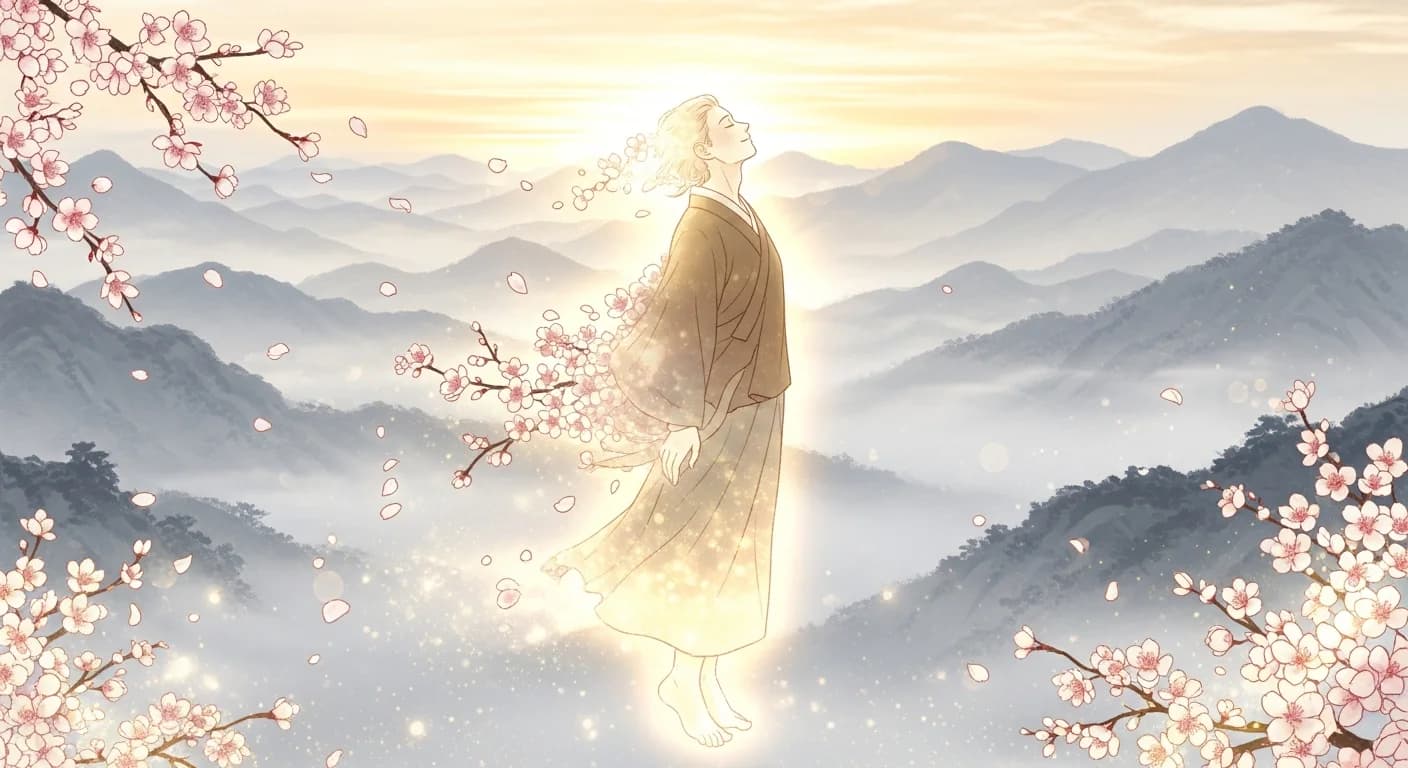
The core logic of Korean dream interpretation treats a near-death survival as a symbol of death-and-rebirth. The moment of crisis represents the dissolution of an old self — old habits, accumulated hardships, and stagnant energy — while the act of surviving represents the arrival of something new and stronger. This is not wishful thinking: the same symbolic framework runs through Korean shamanism, where the shaman's calling involves a near-death illness through which the initiate passes to gain spiritual power. In dream form, that same passage predicts a turning point in fortune, health, relationships, or career.
Auspicious Interpretations — Rebirth and New Fortune

For those in business, a near-death survival dream often precedes a reversal of stagnation — a new contract, unexpected partnership, or long-blocked opportunity finally opening up. Students and job applicants frequently cite this dream before passing a competitive exam or landing a position. For anyone dealing with health concerns, a dream of surviving illness or injury is read as one of the clearest omens of recovery. Across the board, the dream suggests that whatever has been blocked, delayed, or struggling is on the verge of breaking through.
When the Dream Carries a Warning
Not every near-death dream is auspicious. If the dominant emotion throughout the dream was overwhelming terror and despair — with no sense of relief at surviving — or if the same dream keeps recurring, it may be reflecting severe stress and psychological pressure rather than predicting fortune. In that case the dream functions less as a prophecy and more as a mirror: your mind showing you that it has reached its limit. The appropriate response is not to seek omens but to seek rest, support, and relief from whatever is driving the anxiety.
Reading the Dream by Emotional Tone
The clearest guide to interpretation is how you felt after surviving. Relief, lightness, and a sense of freedom firmly point toward the auspicious reading — a turning point is near, and the burden you have been carrying is about to lift. Fear, resentment, and lingering dread after surviving suggest suppressed conflict or unresolved stress. Both readings share one consistent message: a significant change is approaching. The question is only whether you are ready to move toward it or still bracing against it.
Dream Variations
Dream of Nearly Drowning but Surviving
Water in Korean dream tradition represents the flow of wealth and emotion. Surviving a near-drowning therefore symbolises escaping financial crisis or emotional overwhelm — and the improvement in those areas that follows. This is one of the most commonly cited auspicious variations, often interpreted as a sign of improved finances and the smooth resolution of long-blocked matters.
Dream of Nearly Burning to Death
Escaping a fire just before being consumed carries the symbolism of purification and renewal — fire destroys but also clears the ground for new growth. This dream frequently appears before a breakthrough after a prolonged period of stagnation, and is associated with rises in financial fortune or public recognition.
Dream of Nearly Falling to Death
Surviving a near-fatal fall — stopping just before impact or landing safely — signals that a feared failure or loss of control will not materialise. It is reassurance from the dreaming mind that stability is being restored. If you are facing an important decision you are afraid of getting wrong, this dream often appears as an encouragement to proceed.
Dream of Nearly Dying in a Traffic Accident
Surviving a serious traffic accident in a dream is widely interpreted as an omen of passing a significant threshold — an exam, job application, business deal, or important life hurdle. It is one of the most commonly cited near-death dream variations in Korean online dream communities, particularly among people facing competitive assessments.
Dream of Nearly Being Killed by Someone
Surviving an attack or murder attempt in a dream reflects a threatening relationship or competitive situation in waking life. The survival is an auspicious sign that you will prevail over a rival or emerge from a threatening circumstance stronger. If the attacker is someone you know, the dream may predict a shift in power dynamics in that relationship.
Dream of Dying and Coming Back to Life
Dying completely and then returning to life is considered the most powerful near-death variation in Korean tradition — a step beyond nearly dying into complete dissolution and full rebirth. It often precedes major business success, significant financial gain, or recovery from serious illness. The message is that the transformation will be total and the new chapter will look nothing like the old one.
Dream of Nearly Dying in War or Disaster
Surviving an uncontrollable catastrophe — war, earthquake, flood — symbolises enduring a life crisis that was beyond your power to prevent or control. The survival points to a stronger inner character emerging on the other side, along with new opportunities that only become visible after the ordeal is over.
Dream of Someone Else Nearly Dying
When someone close to you nearly dies in a dream, Korean folk tradition often reads it as a reverse dream (역몽) — an omen that the person will actually experience improved health or fortune. It may also reflect genuine worry about that person or signal a meaningful shift in your relationship with them.
Cultural Context
Korean dream tradition has long viewed death not as ending but as transformation. The near-death survival dream is the most dramatic expression of this principle, and its classification as a powerfully auspicious omen is rooted in multiple layers of Korean cultural and spiritual history. In Korean shamanism, the shaman's awakening typically involves a near-death crisis called sinbyeong (신병) — a period of severe illness through which the initiate must pass to receive spiritual power. The belief that one must face death's threshold to be truly reborn runs deep in the culture. Buddhist cosmology reinforces this further: death is a stage in the cycle of reincarnation (윤회), with each ending being another beginning. Together, these threads created the enduring folk interpretation that dreaming of surviving a death crisis predicts passage through a real-world gate — after which improved fortune, health, or opportunity is waiting.
Western Psychological Perspectives
Western psychology approaches the near-death dream from a strikingly different angle, yet often arrives at a similar destination. Freud would have read the dream as an expression of the unconscious conflict between the death drive (Thanatos) and the life instinct (Eros). Overwhelming real-life circumstances and suppressed emotions — rage, despair, helplessness — surface in sleep as imagery of mortal peril. The fact that the dreamer survives, in this reading, represents the life instinct asserting dominance over the pull toward annihilation.
Jung took a more expansive view. He regarded death in dreams as a central archetype in the individuation process — the lifelong transformation of the self into its fullest expression. A near-death survival dream, for Jung, symbolises the dissolution of an outdated persona or shadow element, creating space for a new psychological equilibrium. This was not abstract theory for Jung: he underwent his own near-death experience following a heart attack and emerged convinced that death-and-rebirth imagery is universally encoded in the collective unconscious. He called such dreams powerful communications from the Self — the deepest layer of the psyche — urging radical inner change.
Modern cognitive neuroscience explains the phenomenon through Threat Simulation Theory: the brain uses REM sleep to rehearse responses to dangerous scenarios, building resilience and problem-solving capacity. A death-crisis dream is the most extreme version of this rehearsal. Research consistently shows these dreams clustering around periods of extreme stress, burnout, or major life transitions — the sleeping brain's signal that the waking mind is approaching its limits and needs to address the underlying pressure.
The Korean and Western traditions converge on one point: whether framed as a cultural omen of rebirth or a psychological signal of transformation, the near-death dream marks the end of a chapter and the beginning of something new.
Frequently Asked Questions
A near-death dream can feel terrifying in the moment, but Korean tradition has consistently read it as one of the most hopeful signs the dreaming mind can send. Surviving death means the old chapter is closing and something new is breaking through. If you woke feeling relief or unexpected lightness, trust that signal — a turning point you have been waiting for may be closer than you think. The courage to step into the new chapter is already in you.
Related Dreams
Dream of Dying — Meaning & Interpretation

Drowning Dream Meaning — What Korean Dream Tradition Really Says

Falling Dream Meaning — Is It Always a Bad Omen?

Accident Dream Meaning — Is It a Warning or a Sign of Fortune?
Funeral Dream Meaning — Why This Dream Signals New Beginnings, Not Bad Luck
Ghost Dream Meaning: Korean Interpretation Complete Guide