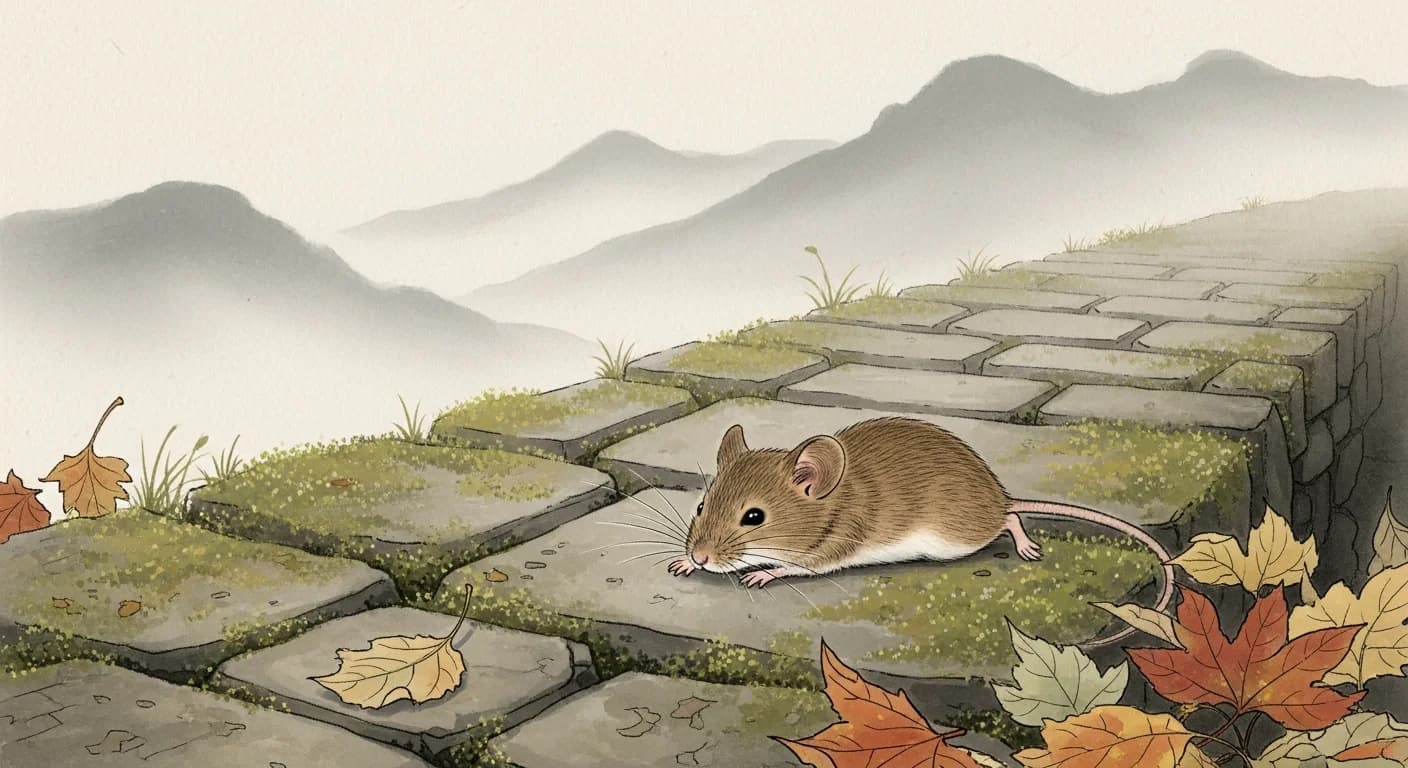
Dead Mouse Dream Meaning — Liberation or Warning?
If you dreamed of a dead mouse last night, Korean dream tradition reads it as a strong signal that something which has been quietly gnawing at you — a worry, a petty adversary, an unresolved tension — is finally being extinguished. In Korean 해몽 (dream interpretation), the mouse occupies a complex symbolic space: honored as the first of the twelve zodiac animals, yet also associated with secretive troublemakers and nagging anxieties due to its nocturnal, gnawing nature. Here's the thing, though — whether this dream is a good omen or a cautionary one depends entirely on how you felt when you saw that dead mouse in the dream.
The Auspicious Reading — Liberation from Worry

When you felt relief, lightness, or calm upon seeing the dead mouse in your dream, Korean tradition classifies this as an auspicious sign (길몽). The mouse in Korean dream symbolism represents secretive troublemakers, workplace gossip, and those small but persistent anxieties that drain your energy without ever fully resolving. Its death signals that those negative forces have been extinguished. This dream is particularly encouraging for people who have been dealing with prolonged interpersonal conflicts, whisper campaigns at work, or recurring minor financial drains — it suggests a clean resolution and the opening of a new chapter. The more vivid your sense of relief in the dream, the stronger the positive indication.
The Cautionary Reading — Unresolved Problems
The same dead mouse carries a very different message when accompanied by strong feelings of disgust, anxiety, or dread. Since mice also represent small financial gains in Korean symbolism, a rotting or foul-smelling dead mouse in a dream can warn of a minor expected income or opportunity falling through. If many dead mice appeared simultaneously and the scene felt overwhelming rather than relieving, the dream may warn that multiple unaddressed problems have been accumulating and could surface at once. In these cases, reviewing key relationships and financial commitments is advisable.
Killing the Mouse Yourself — Active Problem-Solving
Dreaming that you personally killed the mouse carries a distinct message: it reflects a strong, active drive to resolve a problem on your own terms rather than waiting for it to disappear. This dream often emerges when someone faces a situation requiring a firm, decisive move — in a relationship, a professional conflict, or a long-postponed decision. Successfully killing the mouse in the dream is a confident omen that the decisive action you take in waking life will yield positive results. If the attempt failed, the dream mirrors real-world frustration that a solution is not yet in reach, suggesting outside help or a fresh approach may be needed.
Dream Variations
Finding a Dead Mouse Unexpectedly
Stumbling upon a dead mouse in an unexpected place suggests that an obstacle has been removed without any direct effort on your part. A competitor or troublesome person may quietly withdraw on their own, or a worry you have been carrying may resolve itself naturally — no confrontation required.
Watching a Mouse Die in Front of You
Witnessing a mouse collapse and die before your eyes foretells that an ongoing conflict or dispute will conclude swiftly. If you felt relieved watching it happen, the resolution is likely to favor you — the dream is signaling that events are moving in your direction.
Killing a Mouse Yourself
Actively killing a mouse by hand or with a tool symbolizes decisive will and the capacity to act. Korean dream tradition reads this as a sign that a bold decision is close at hand — and that making it will significantly improve your situation. Successfully finishing the job in the dream reinforces the positive outcome in waking life.
Dead White Mouse Dream
A white mouse normally symbolizes good fortune and wealth in Korean and broader East Asian tradition. Dreaming of a dead white mouse carries mixed signals: if it died naturally and peacefully, many interpreters view it as a transitional omen — a brief dip followed by greater fortune ahead. If the dream carried a strong sense of loss, exercise some financial caution in the near term.
Many Dead Mice Dream
Seeing many mice dead at once can be a powerfully auspicious sign that multiple simultaneous worries are being resolved. However, if the scene felt shocking or deeply unpleasant, it may warn that problems have been building unnoticed and could erupt all at once. The emotional tone — relief versus dread — is the single most important guide to interpretation.
Cat Killing a Mouse Dream
Dreaming of a cat killing a mouse suggests that a powerful outside ally or protective force is clearing obstacles on your behalf. A problem you struggled to handle alone may be resolved through someone else's intervention or a favorable shift in circumstances — you do not have to fight this one by yourself.
Disposing of a Dead Mouse Dream
Cleaning up or discarding a dead mouse in a dream symbolizes actively putting old grievances, resentments, and stale conflicts behind you. It is a positive dream of psychological cleansing — a readiness to close a difficult chapter and step into something new, lighter, and unencumbered.
Dead Mouse Coming Back to Life Dream
A dead mouse reviving in your dream is a pointed warning: a problem or conflict you believed resolved is not fully gone and may flare up again. This is especially relevant to interpersonal disputes or deep-rooted stressors. Rather than assuming the matter is settled, the dream advises staying alert and watching for signs of recurrence.
Cultural Context
In Korean folk dream tradition, the mouse (쥐) holds a uniquely dual role in the symbolic imagination. As the first of the twelve zodiac animals — associated with fertility, wealth, and sharp intelligence — the mouse's appearance in dreams was considered auspicious. Yet its nighttime habit of gnawing through hidden stores and dark corners made it equally a symbol of secretive adversaries, petty troublemakers, and nagging, persistent anxieties. This duality shapes the interpretation of dead mouse dreams: when the mouse represents a negative force, its death signals liberation from long-held anxiety and the end of gossip or conflict; when it represents a small financial resource, its death warns of minor economic setback. White mice occupied an especially sacred place across East Asian cultures — venerated as divine messengers of luck and prosperity, connected in some traditions to the goddess of grain. The death of a white mouse was therefore rarely read as a simple bad omen, but rather as a transitional moment: one cycle of fortune closing, another larger one opening.
Western Psychological Perspectives
Western psychology has long associated mice and rats with deeply uncomfortable emotional territory. Sigmund Freud's famous 'Rat Man' case study — one of his most detailed analyses — positioned rats as symbols of anal fixation, ambivalence toward money and authority, and a profound fear of punishment. Viewed through this lens, dreaming of a dead mouse suggests that a repressed impulse, guilt-laden conflict, or anxiety that has been gnawing at the psyche is finally being brought under control. The death of the mouse becomes a visual metaphor for the mind successfully containing what had previously felt threatening and uncontrollable. Carl Jung's interpretation reaches further. For Jung, the mouse is a small but telling manifestation of the Shadow archetype — that part of the unconscious which harbors fears, insecurities, and impulses we prefer not to consciously acknowledge. Its habit of operating in darkness, gnawing at hidden things, perfectly mirrors the way our shadow material operates below the surface of awareness. A dead mouse in a dream, from this angle, represents a meaningful step in the individuation process: the Ego has faced and integrated a piece of its shadow, achieving a degree of psychological wholeness that was not possible before. It is a dream of maturation. Modern cognitive dream research offers a more grounded perspective. Dream scientists view mouse-related dreams — particularly those involving death or killing — as part of the brain's emotional regulation process. Minor daily stressors are symbolically dramatized during sleep, and the dead mouse represents the brain successfully downgrading those stressors from active threat to resolved matter. Waking up from such a dream feeling genuinely lighter is not coincidental; it suggests the overnight emotional processing was effective. Across cultures, the distinction is worth noting: Western tradition's long association of mice and rats with plague and contamination means that a dead mouse in a Western dreamer's subconscious often carries an especially powerful sense of purification and removal of poison. East Asian dreamers, by contrast, carry the additional layer of the mouse's auspicious associations — making context and emotional tone even more critical to getting the interpretation right.
Frequently Asked Questions
A dead mouse dream carries a message worth sitting with. For most dreamers, it marks the quiet end of something that had been draining them — a worry, a conflict, an adversary operating in the shadows. The emotional note you wake with tells you everything: lightness means liberation is near; dread means there is still work to do. Either way, the dream is asking you to pay attention to what has been resolved and what still lingers. The space left behind is yours to fill.
Related Dreams
Catching a Mouse in a Dream — Korean Dream Interpretation (꿈해몽)

White Mouse Dream Meaning — A Sacred Omen of Wealth and Fortune
Dead Cat Dream Meaning — Transformation, Loss, and Renewal

Dead Bird Dream Meaning — Warning Sign or Signal of Transformation?

Dead Snake Dream Meaning: Korean Interpretation (Good or Bad Omen?)

Dead Dog Dream Meaning — Warning Sign or Welcome Turning Point?