Wolf Howling Dream Meaning — Korean Dream Tradition's Most Urgent Warning
If a wolf's howl pierced through your dream last night, Korean dream tradition treats that sound with dead seriousness. For centuries, the cry of a wolf in the night was one of the most feared omens in Korean villages — a herald of disaster or death drawing near. That ancient fear lives on in the modern dream, with the howl carrying much of its original weight. Here's what makes this dream more nuanced than it first appears — the same sound that signals danger can also carry an entirely different message depending on how close it was and how you felt when you heard it.
The Howling Wolf as Warning Omen
In Korean dream interpretation (해몽), a wolf howling close by is one of the clearest inauspicious (흉몽) signals. It warns that misfortune may be approaching your household — a family member could face health or safety issues, or an unexpected crisis may be close at hand. If the howl felt loud, piercing, and spine-chilling in the dream, Korean tradition treats this as an intuitive alarm your inner mind is raising about real circumstances around you. A wolf howling in complete darkness is even more pointed: it hints at a hidden enemy, a scheme being quietly constructed against you, or betrayal from someone you trust. When the howling seemed to grow progressively louder during the dream, the danger may be accelerating — it is time to take stock of health, finances, and key relationships without delay.
A Wolf Pack Howling — Threats from All Sides
When multiple wolves howl together in a dream, the warning escalates. This is not a single adversary but a coordinated threat — problems erupting from several directions simultaneously, collective pressure in a workplace, organized defamation or rumor campaigns, or a competing group working systematically against you. If the howling surrounded you from all sides, Korean dream lore cautions that you could be headed toward an isolated, cornered position. Now is the time to identify where the pressure is really coming from and build your defenses before it closes in.
Facing the Wolf Fearlessly — The Auspicious Reading
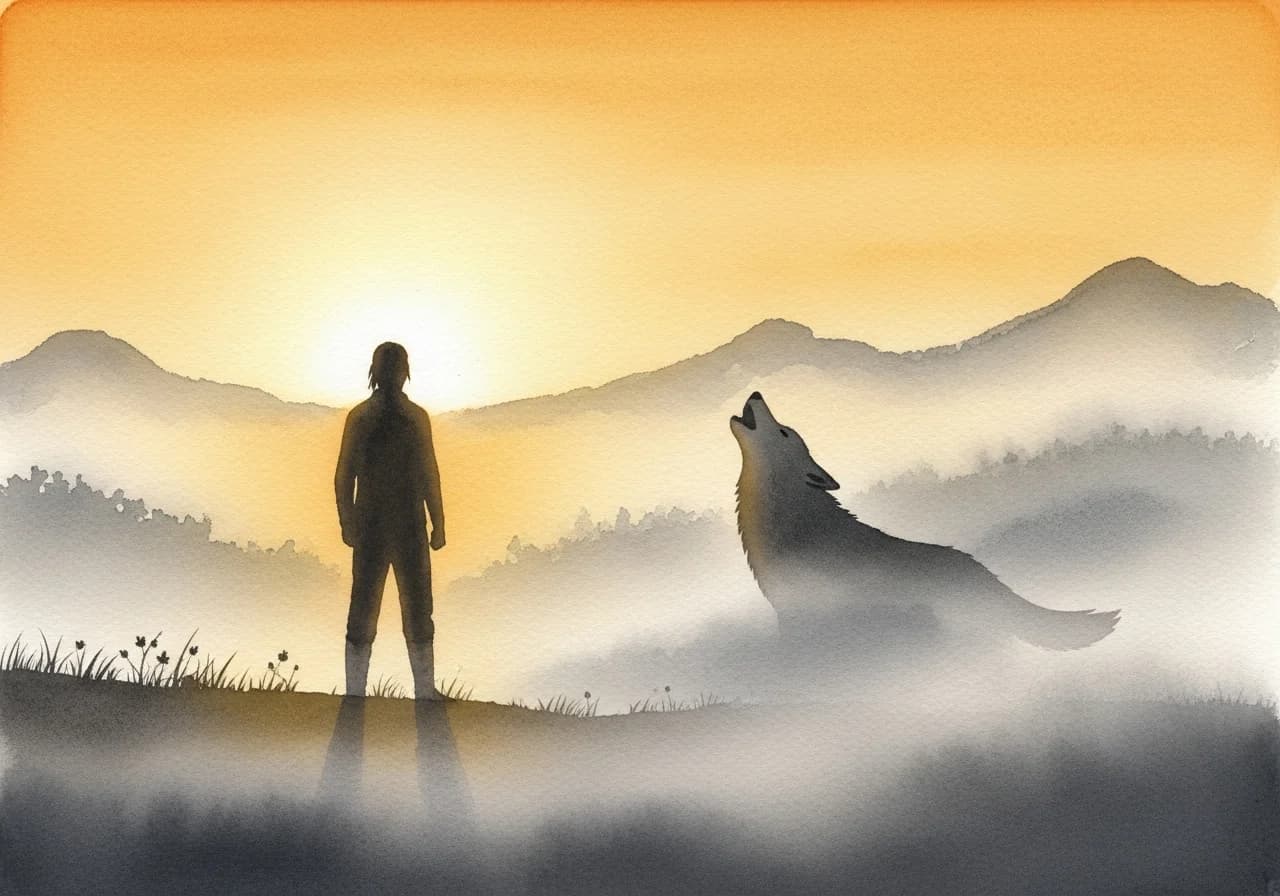
Not every howling wolf dream is a warning. If you heard the wolf howl and felt no fear — or better yet, if you boldly confronted and drove the wolf away — the interpretation flips completely into the auspicious (길몽) column. This dream reveals an unshakeable inner strength that can carry you through threatening real-world situations. The louder and more ferocious the wolf, and the more steadfast your response, the stronger the omen: you will overcome an adversary or threatening force in your waking life. In a tradition that takes howling wolves seriously as omens, turning to face one without flinching is a remarkable act — and the dream rewards it accordingly.
A Distant Howl — Inner Voice or Coming Change
A howl heard faintly from a distance carries a softer message than one right outside the door. Korean dream tradition reads this as a preemptive signal — your subconscious has picked up on something in your environment that has not yet become an obvious problem but could grow if ignored. It may also represent the unconscious trying to surface something important you have been overlooking, or a deep emotional need calling for attention. If the distant howl produced calm contemplation rather than fear, the dream may simply be flagging that a significant life change is approaching — not necessarily a threat, but a turning point worth paying attention to.
Dream Variations
Dream of a Wolf Howling at the Moon
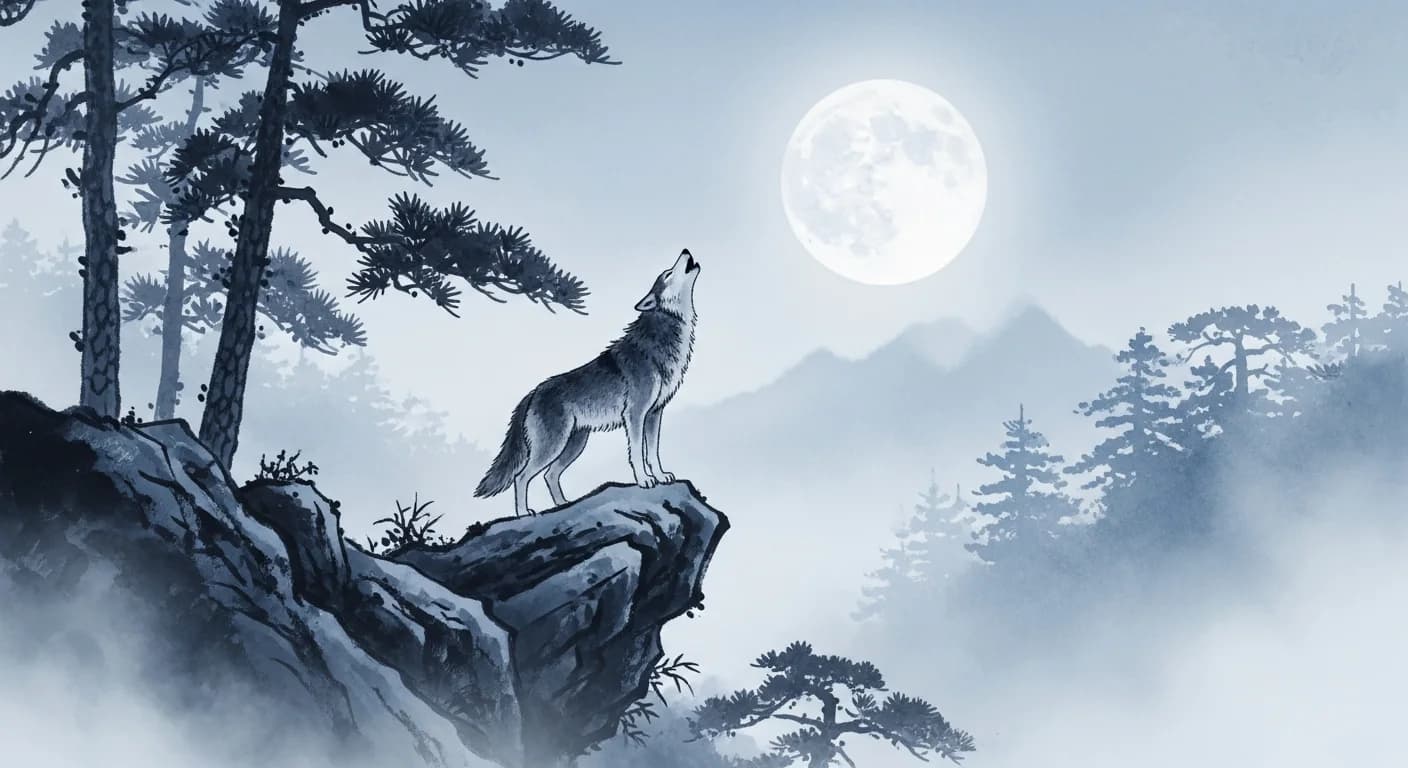
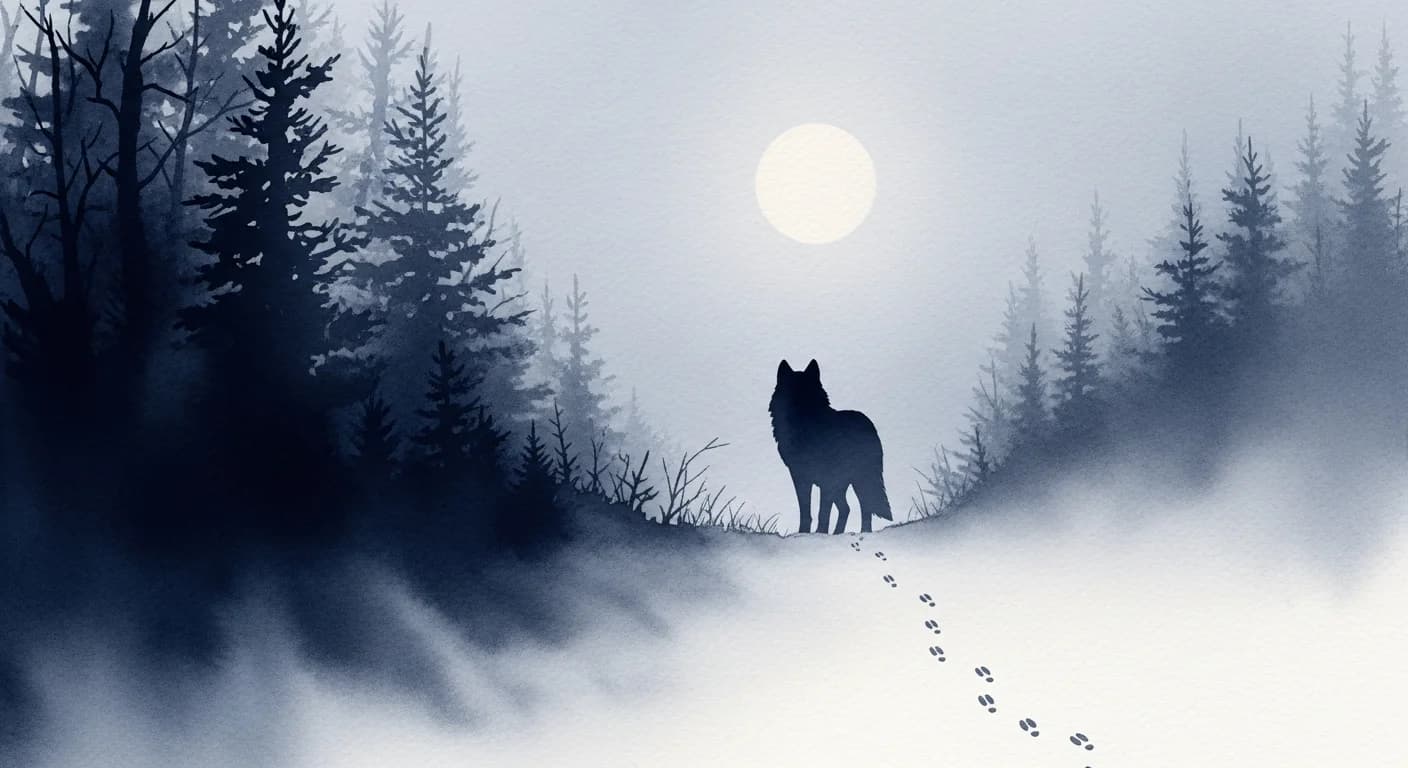
A wolf howling at the moon is one of the most evocative dream images in Korean tradition. It suggests that long-suppressed emotions or desires are on the verge of breaking through — a decision you have postponed, a feeling you have held down, a truth you have avoided. The moon itself is key: a bright, full moon suggests the change that follows will ultimately lead somewhere positive; a dim or partially obscured moon signals an uncertain outcome to the transformation ahead.
Dream of a Wolf Pack Howling in Unison
Multiple wolves howling together is a clear signal of collective threat. You may face simultaneous pressures from several people — coordinated rumors, workplace bullying, or opposition from a rival group acting in concert. Korean interpretation specifically flags this as a pattern to watch for in social or professional environments. Developing a proactive defensive strategy is the advised response.
Dream of a Distant Wolf Howl
A howl heard from far away is a preemptive rather than immediate warning. Your intuition has registered a potential problem that has not yet materialized in waking life. This dream is an invitation to review your circumstances — finances, relationships, ongoing projects — and address small issues before they grow. If the emotional tone was more contemplative than frightening, treat it as a heads-up, not an alarm.
Dream of a Wolf Howling Right Beside You
A wolf howling within arm's reach is an urgent inauspicious omen. An immediate crisis may be forming in your waking life, or someone very close to you may be harboring hidden intentions that could harm you. The more intense the fear in the dream, the more pressing the need for action — examine health, finances, and your most important relationships for warning signs that demand attention right now.
Dream of a Wolf Howling Then Attacking
When a dream progresses from howling to attack, the message is direct: warning signals that go unheeded lead to real damage. If there have been unmistakable red flags in your waking life — a troubling situation you have been rationalizing, a relationship where something feels off, a health symptom you have been ignoring — this dream is an emphatic push to stop delaying and act.
Dream of a White Wolf Howling
A white wolf howling carries a distinctly different energy from an ordinary wolf howl. In Korean tradition, white represents purity and the sacred — so the white wolf's cry can be read as a spiritual message or a herald of major life transition rather than a straightforward bad omen. If the dream evoked wonder or awe rather than terror, the change coming your way may ultimately prove to be a profound and positive transformation.
Cultural Context
In Korean folk tradition, the wolf was known as '이리' (iri) — a fearsome livestock predator long associated with danger and misfortune. The phrase 'like a pack of iris (wolves)' described greedy groups preying on the weak, reflecting the deeply negative cultural image of the animal. The sound of wolves howling at night was a classic bad omen in village life: wolf cries near a settlement meant disaster or death was approaching. This fear carried directly into dream interpretation, making the howling wolf one of the most consistently inauspicious symbols in Korean dream lore. In shamanistic tradition, the wolf's howl was sometimes read as a 'summons from the realm of the dead,' specifically associated with dreams that come when a family member is gravely ill. The contrast with the domestic dog was sharp: dogs were loyal protectors of the home, while the wolf represented wild, untamed force threatening human order from outside. The Korean wolf (a Gray Wolf subspecies native to the peninsula) declined rapidly after the 1970s and was effectively declared extinct in 1997 when the last captive individual died at Seoul Grand Park. Yet the howl lives on in Korean dreams, its symbolic weight undimmed — proof that collective cultural memory runs deeper than living experience.
Western Psychological Perspectives
Western psychology offers its own rich framework for interpreting the howling wolf dream, one that complements — and sometimes challenges — the Korean folk reading.
Freudian psychology reads the wolf's howl as suppressed primal impulses attempting to push to the surface of consciousness. Aggression, sexual drive, or forbidden desires that social norms keep underground may erupt through this intense image. Freud's landmark 'Wolf Man' case study demonstrated that the wolf can function as a proxy for fear of the father and castration anxiety — one of the most analyzed dreams in the entire history of psychoanalysis. If the howl felt terrifying, Freud would say something powerfully suppressed is now pressing toward conscious awareness and demanding to be faced.
Jungian analysis takes a broader view. For Jung, the howling wolf is the Shadow archetype making itself heard: the wild self buried through socialization, a deep longing for freedom, or profound discontent with collective life rising up in a form that can no longer be ignored. Jung held that the Shadow must be integrated — not suppressed — to achieve genuine psychological balance. In this reading, the howling wolf dream is an invitation rather than purely a threat: a repressed part of you is asking to be acknowledged, and doing so with courage can ultimately make you stronger and more whole.
Modern cognitive dream research connects the howling wolf primarily to real-world stress and the brain's threat-processing mechanisms. Being startled by threatening animal sounds in a dream is part of how the sleeping mind rehearses responses to danger. The intensity of fear in the dream often correlates with actual stress levels — a particularly vivid or terrifying howl may be a sleep-stage indicator of elevated anxiety in waking life.
Cross-culturally, the howling wolf carries surprisingly consistent weight. Norse mythology linked it to Fenrir's apocalyptic roar. Russian and Eastern European folklore used it to signal death or a witch's call. Yet in many Native American traditions, the wolf's howl is read positively — sacred communication that binds a community and carries wisdom. Celtic traditions associated it with transformation and warrior strength. The Korean warning omen, then, is part of a nearly global conversation about what it means to hear the wild crying out in the dark.
Frequently Asked Questions
The wolf's howl in a dream is one of Korean tradition's most arresting warnings — but it is a warning worth hearing, not running from. Whether it signals danger from without or a voice calling from within, this dream is asking for your attention. Note how close the sound was, how it made you feel, and whether you faced it or fled. Those details are the real message. The people who catch the warning early are the ones who sidestep the crisis that follows.
Related Dreams
Wolf Dream Meaning in Korean Interpretation — Warning, Power, and Victory
Wolf Attacking Dream Meaning — A Warning About Hidden Adversaries
Being Chased by a Wolf Dream Meaning
Barking Dog Dream Meaning

Tiger Dream Meaning — Korea's Most Powerful Dream Symbol
Fox Dream Meaning: What Does a Fox in Your Dream Signify?